
High Molecular-Weight Polysaccharide Characterization by SEC-MALS Using GTxResolve™ 1000 and 2000 Å SEC Columns
Katayoun Morakabi, Sophia Kenrick, Michelle Chen
Wyatt Technology, LLC
Published on January 30, 2026

Abstract
Polysaccharides play critical roles across various industries, including food, cosmetics, and pharmaceuticals. Their molecular and structural properties affect physicochemical functions, such as thickening and formulation stability, as well as biological roles in vaccine development. However, their structural complexity poses significant challenges for quantifying critical quality attributes (CQAs) about the molar mass distribution and molecular architecture with traditional size-exclusion chromatography (SEC). In this application note, the use of multi-angle light scattering (MALS) coupled with SEC utilizing GTxResolve Premier SEC Columns is highlighted for robust, high-resolution characterization of high-molecular weight (HMW) polysaccharides. The results demonstrate excellent chromatographic separation, low light scattering baseline noise, and how these columns are fit-for-purpose for quantification of polysaccharide molar mass distributions.
Benefits
- Superior resolution for water-soluble polysaccharide samples afforded by the large pore size distribution of Waters GTxResolve 1000 and 2000 Å SEC Columns
- Ideal SEC separation confirmed by MALS photometer and in-line DLS module
- Enhanced chromatographic performance over traditional aqueous polymer columns
Introduction
Polysaccharides are a class of naturally occurring biopolymers composed of monosaccharide units linked via glycosidic bonds. Polysaccharides can be highly polydisperse, with each product encompassing a wide molecular weight distribution (MWD) and varying conformations or degrees of branching. Carefully controlling and quantifying the MWD, size, and conformation is critical to producing polysaccharides with the desired structural and functional properties in solution. For example, polysaccharide molar mass, which can vary from a few kilodaltons to tens of megadaltons, can regulate biological activity.1 Notably, polysaccharide MWD is a CQA in the design and manufacture of vaccines.2 Molar mass and branching also affect solubility and viscosity, which influence the thickening and emulsification effectiveness of food polysaccharides like guar gum or can impact the formulation stability of cosmetics and personal care products. Lastly, branching can alter the conformational structure of polysaccharides and can be modulated to regulate the release of encapsulated drugs.3
Although biophysical characterization of polysaccharides is essential for understanding their structure and function, the heterogeneity in their molar mass distributions, chain length, and branching can present significant analytical challenges. For SEC, polysaccharides can be subjected to shearing degradation, interactions with the stationary phase, and pore anchoring. Moreover, branching, and other variations in conformation mean that the elution volume is a poor indicator of the polysaccharide molar mass. Incomplete separation can lead to underestimation of polydispersity and may miss key details about the MWD. Thus, ideal SEC methods combined with rigorous detection and quantification are required to ensure consistent product performance.
Aqueous SEC columns commonly used for polysaccharide analysis feature either hydrophilic polymer or silica-based stationary phases. Polymer columns typically offer broad pH compatibility and are more suitable for separating water-soluble polymers, but their larger particle size typically results in lower pressure stability and efficiency. Silica columns offer higher pressure stability and resolution, but they are less favored for polymer analysis due to their limited pH compatibility and potential interactions from unreacted silanol groups on the silica surface.
The Waters GTxResolve Premier SEC Columns incorporate a high-strength silica packing bonded with polyethylene oxide (PEO) and ethylene bridged hybrid (BEH™) crosslinks, which help minimize electrostatic and hydrophobic interactions. The GTxResolve Premier SEC Columns, available with pore sizes of 1000 Å and 2000 Å, feature a large pore size distribution, making them well suited for resolving large analytes, such as plasmids, viral vectors, and large protein complexes. The small particle size and shorter column formats enable faster separation, increasing chromatographic throughput. Although designed for gene-therapy applications, they are also effective in profiling polymeric samples in routine analysis.
Coupling SEC to multi-angle light scattering (SEC-MALS) is essential for determining absolute molar mass, size, and conformation and for aggregate quantification. Polysaccharides vary in density, conformation, branching, and column interactions – all of which can introduce uncertainties in the molar mass distributions determined with traditional SEC-RI experiments. With SEC-MALS, molar mass is determined at each eluting slice and does not rely on assumptions about the polymer shape or density. In a single SEC-MALS run, polysaccharide CQAs including molar mass, molar mass distribution, size, and conformation can be measured. Furthermore, SEC-MALS can help diagnose non-ideal or incomplete separation, improving method development.
This application note demonstrates the capabilities of the GTxResolve SEC columns combined with multi-attribute quantification by MALS to characterize common polysaccharides.
Experimental
Sample Preparation
Pullulan reference standards (100 kDa, 400 kDa, and 800 kDa) and 250 kDa Dextran were obtained from the U.S. Pharmacopeia (USP™) and were reconstituted in mobile phase at 5 mg/mL.
LC Conditions
|
LC system: |
Arc™ Premier LC System with a Quaternary Solvent Manager (QSM) |
|
Detection: |
Arc Premier 2998 Photodiode Array Detector, DAWN™ MALS Photometer with WyattQELS™ Online DLS Detection Module, and an Optilab™ differential refractive index (dRI) Detector |
|
Vials: |
LCGC Certified Clear Glass 12 x 32 mm Screw Neck Vial, Total Recovery, with Cap and Preslit PTFE/Silicone Septum, 1 mL Volume (p/n: 186000385C) |
|
Column(s): |
1. Waters GTxResolve 2000 Å SEC Column, Max-Peak™ Premier Column 3 µm, 7.8 x 150 mm (p/n:186011348) connected in series with a GTxResolve Premier SEC Column 1000 Å, 3 µm, 7.8 x 150 mm (p/n:186010737) 2. Shodex™ OHpak™ Columns, LB-806 (13 µm, 8 x 300 mm), LB-805 (13 µm, 8 x 300 mm), and LB-804 (10 µm, 8 x 300 mm) all connected in series |
|
Column temperature: |
35 °C |
|
Sample temperature: |
25 °C |
|
Injection volume: |
Pullulan standards were injected at 100 µL. The Dextran standard was injected at 15 and 30 µL. |
|
Flow rate: |
1 mL/min |
|
Seal wash: |
20% HPLC-grade isopropanol / 80% Milli-Q® water (v/v) |
|
Mobile phase: |
10 mM sodium chloride, 20% acetonitrile, and 200 ppm sodium azide |
Data Management
|
Chromatography software: |
HPLC CONNECT™ 4 Software |
|
Data analysis software: |
ASTRA™ 8 Software |
Results and Discussion
Ideal and Robust SEC-MALS Method for Polysaccharide Standards
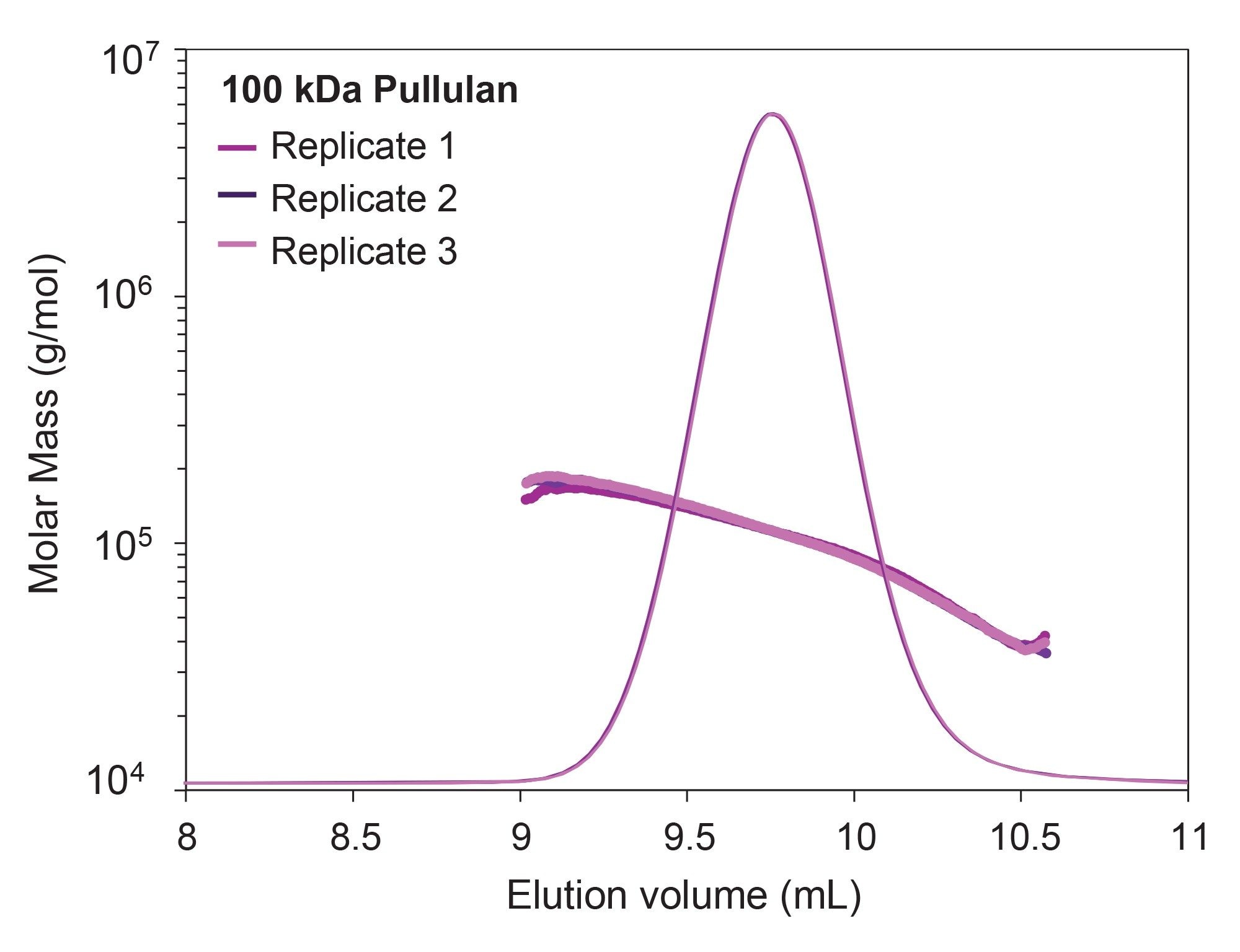
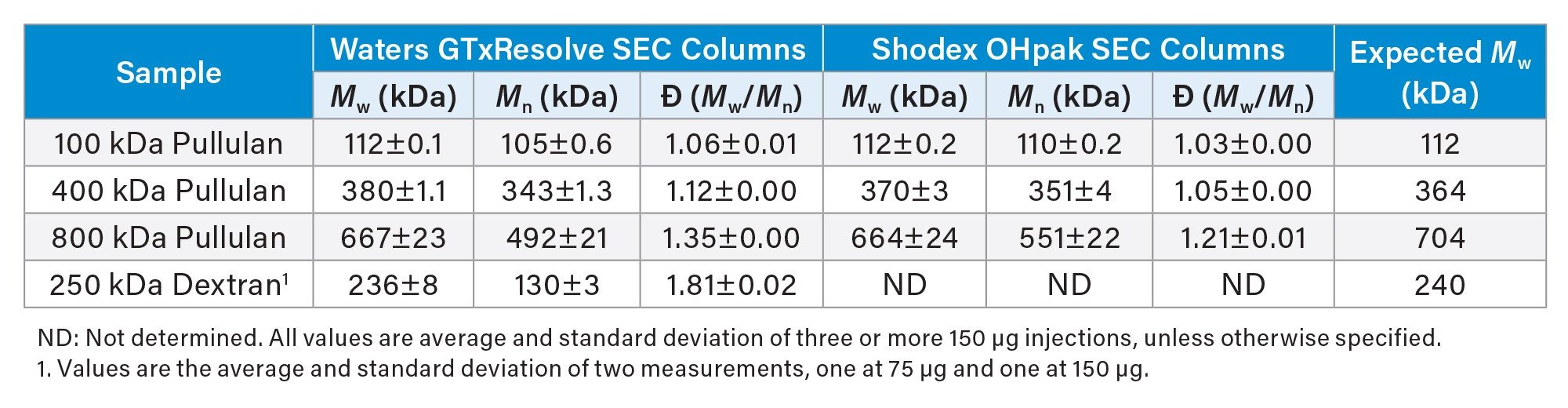
SEC-MALS injections of all polysaccharide standards demonstrated excellent separation, highly repeatable chromatography, and a high signal-to-noise ratio. Figure 1 illustrates a representative example of repeatable chromatography for 100 kDa pullulan. Elution volumes and total peak areas remained consistent across all replicate injections. The measured weight-average molar mass (Mw) of 112±0.1 kDa was within the expected range for this reference standard (Table 1). Coupled with a mass recovery of 99±0.2 %, these results indicate minimal analyte loss due to adsorption or shear-induced degradation.
SEC separation for all samples produced relatively symmetric peaks with no obvious tailing (Figure 2). The elution order and relative elution volume for the three pullulan standards was as expected. The measured molar mass for all three pullulan samples decreased monotonically across the elution volume. However, the dextran eluted much later relative to the pullulan standards. Moreover, the measured molar mass for dextran was significantly higher than that for the pullulan at the same elution volume. This seemingly nonideal SEC highlights the need for MALS to quantify the molar mass of each polysaccharide and determine whether the unexpected elution order is due to differences in conformation or to column interactions.
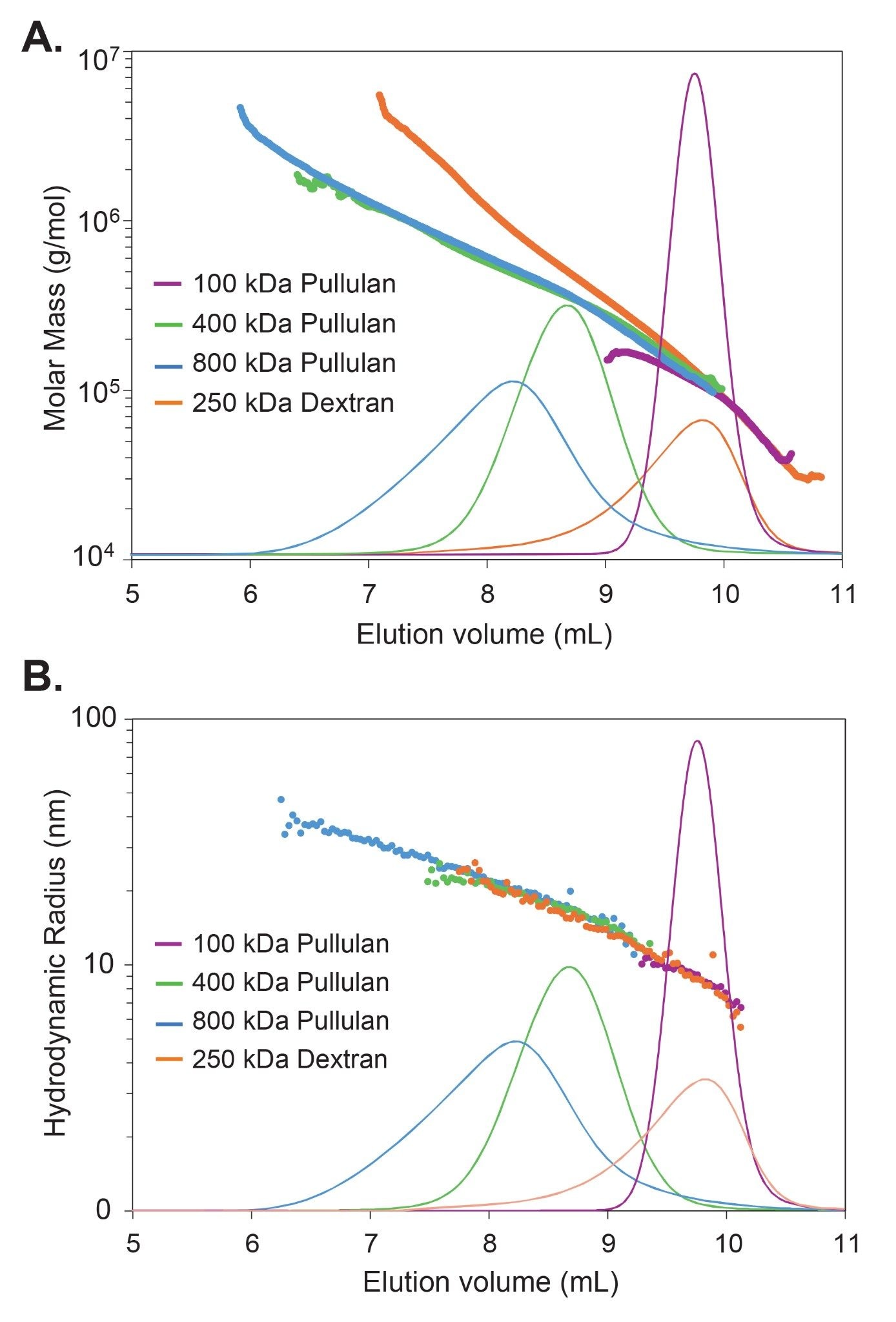
Since SEC separates by hydrodynamic size, the effectiveness of an SEC column or method can be investigated by measuring hydrodynamic radius as a function of elution volume by online DLS (as shown in Figure 2, bottom) or by differential viscometry. In this case, the measured hydrodynamic radius across all the peaks revealed ideal separation by the Waters GTxResolve Columns. As shown in Figure 2 (bottom), consistent hydrodynamic radii were measured at each elution volume, independent of the sample. This is especially evident in the 250 kDa dextran. Though it has a higher measured molar mass at a given elution volume compared to pullulan, the hydrodynamic size is the same. This is consistent with dextran being highly branched and more compact than pullulan and confirms ideal SEC behavior.
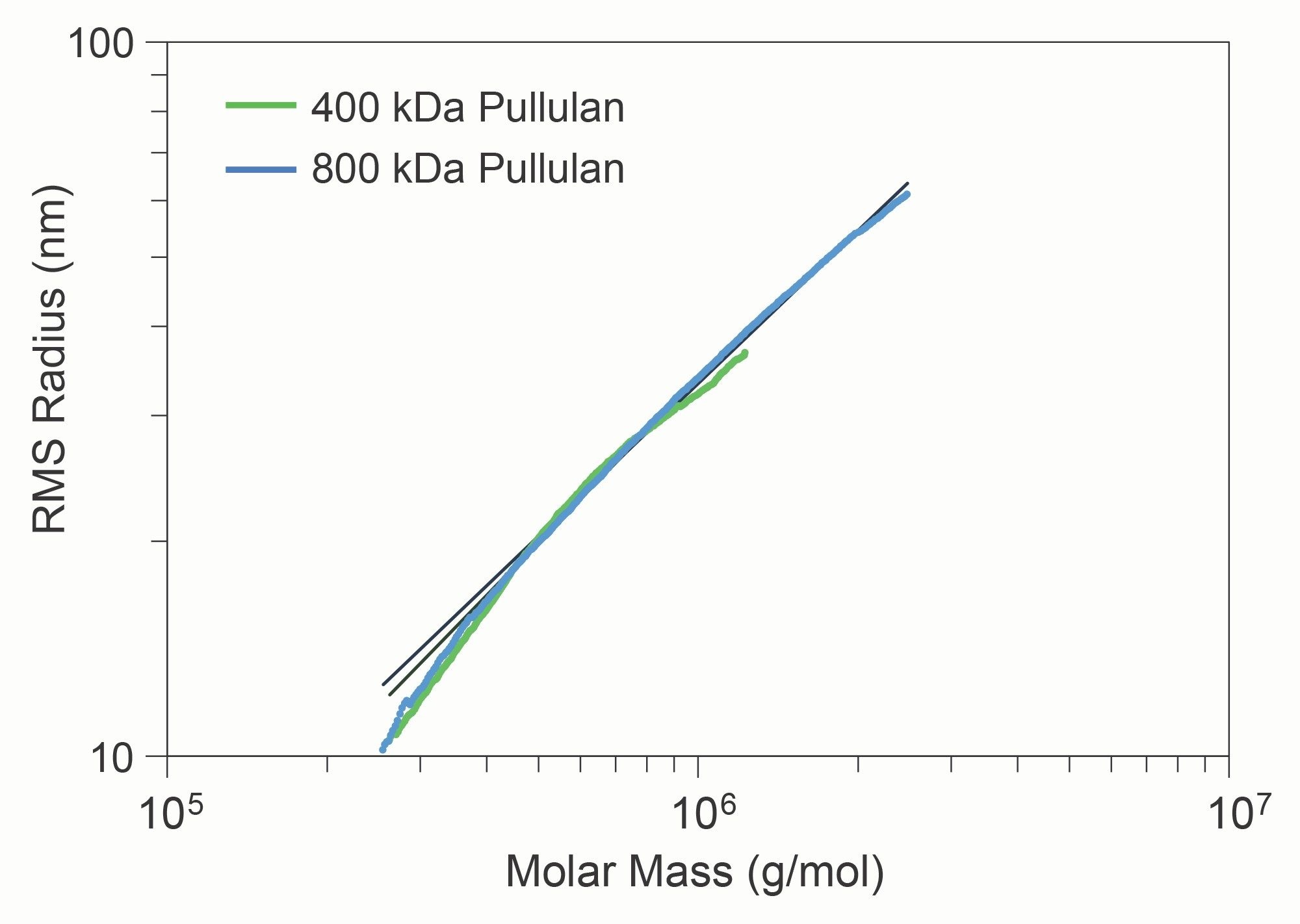
In addition to confirming an optimal SEC method, SEC-MALS can provide more quantitative information about the conformation of the different polymer molecules. Since the 400 kDa and 800 kDa pullulan have RMS radius (Rg) greater than 10 nm, SEC-MALS can be used to evaluate how Rg varies with molar mass (Figure 3). The slope of the RMS conformation plot was 0.69±0.02 for 800 kDa pullulan and 0.74±0.02 for 400 kDa pullulan, suggesting random coil conformation in solution.
Comparison to Traditional Aqueous Polymer Columns
SEC-MALS analysis using a series of typical aqueous polymer columns resulted in a reduction of separation efficiency of the pullulan standards and increased column interaction (Figure 4, top). While the measured Mw for the 100 kDa pullulan remained the same at 112 kDa, the 400 kDa pullulan exhibited a slight reduction in Mw on the polymer columns, suggesting nominal sample adsorption or shearing degradation (Table 1). The 400 kDa and 800 kDa pullulans exhibited a higher Mn and lower dispersity on the aqueous polymer columns – suggesting less efficient separation despite utilization of three columns – compared to two GTxResolve columns.
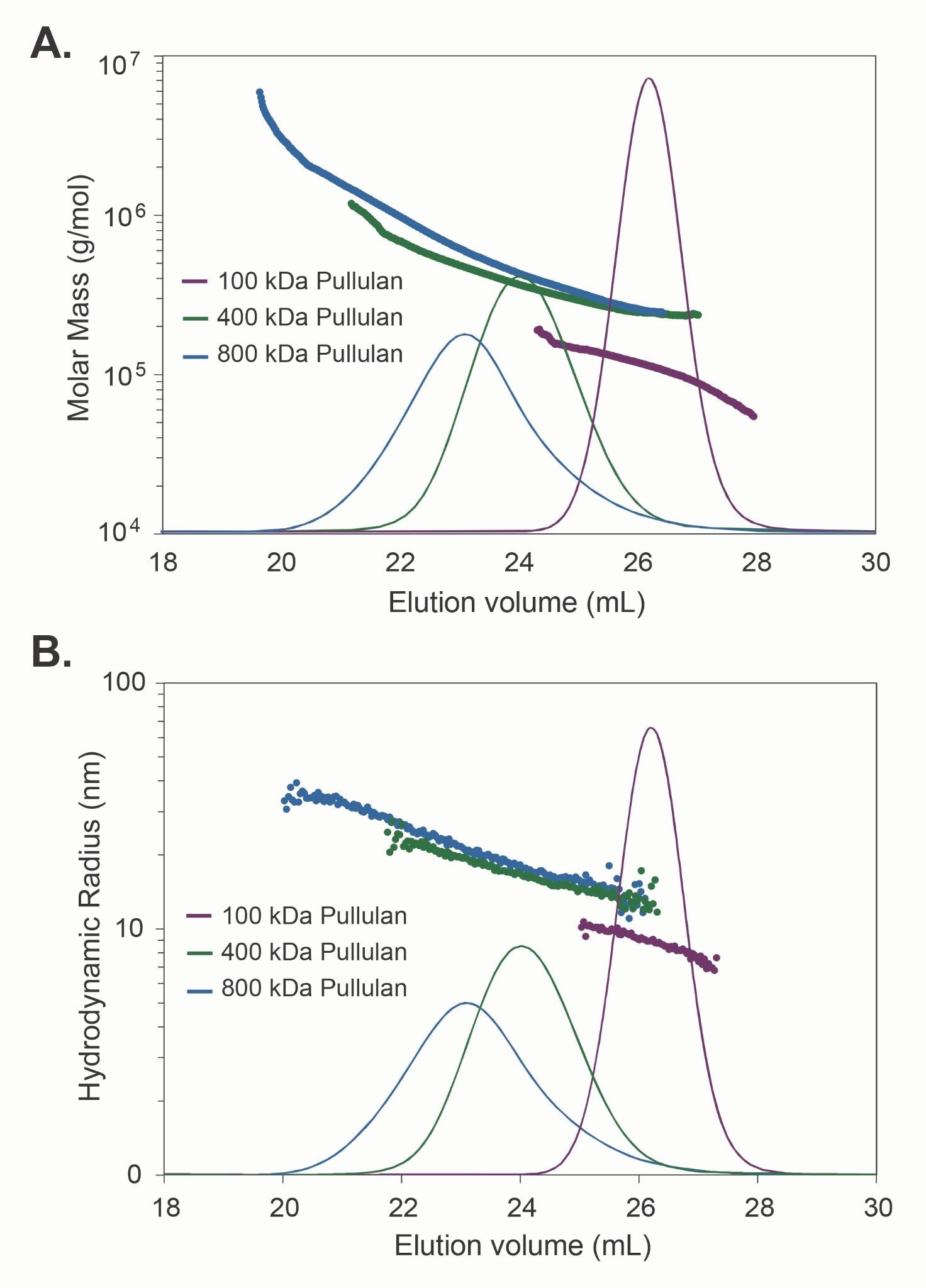
Inspection of the measured molar mass across the chromatogram indicates evidence of poor separation and column interactions. The 100 kDa pullulan appears to elute earlier than expected relative to the 400 kDa and 800 kDa pullulan. Despite similar elution volumes (~24–27 mL), the measured molar mass (90–188 kDa) is significantly less than what was measured at the same elution volume for the 400 kDa and 800 kDa pullulan (~240–340 kDa, Figure 4, top).
In this case, the unexpected molar mass for the 100 kDa pullulan compared to the 400 kDa and 800 kDa pullulan is due to nonideal SEC. Unlike the GTxResolve Column, the elution volume is not directly proportional to hydrodynamic volume for this polymer column. As shown in Figure 4 (bottom), the measured hydrodynamic radii of the 400 and 800 kDa pullulan are significantly larger than the hydrodynamic radius of the 100 kDa pullulan eluting at the same part of the chromatogram.
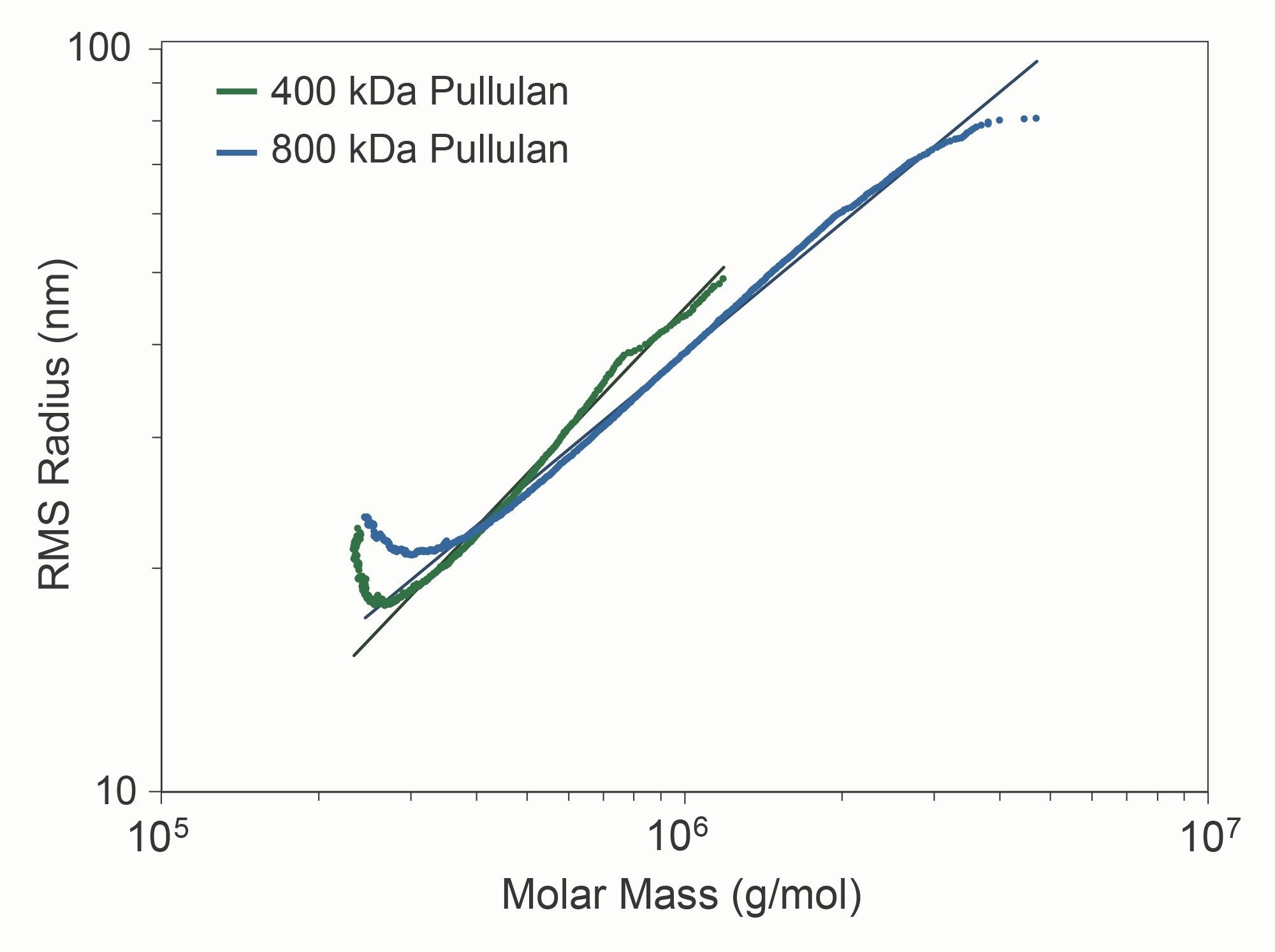
Although nonideal separation was not immediately obvious from the molar mass in Figure 4, the RMS radius provided evidence of incomplete separation. Since MALS measures the z-average RMS radius, it is expected that a small number of large molecules or particles can impact the measured Rg and that this can be a more sensitive indicator of nonideality. The RMS conformation plots for 400 kDa and 800 kDa pullulan exhibited a characteristic hook shape (Figure 5), indicating populations of species with apparent low molar mass and both large and small size (RMS radius). This behavior is typical of large species being retained on the column and coeluting with small species in the tailing region of the peak. Such coelution may result from restricted diffusion, pore anchoring, or other column interactions. Despite the nonideal behavior, the overall slope (conformation) is similar to that observed with the GTxResolve Columns (Figure 5).
Conclusion
In this study, the performance of the GTxResolve Premier SEC columns was evaluated for separation of linear and branched polysaccharides using SEC-MALS. Excellent chromatographic separation over a wide range of molar masses and polydispersity, consistent performance, high mass recovery, and low MALS noise were observed. Additionally, the shorter column format enabled faster chromatographic separation. Chromatographic separation of these standards was compared on typical aqueous polymer columns and reduced performance was observed despite a larger column volume. SEC-MALS enabled diagnosis of non-ideal SEC behavior and detailed molar mass, size, and conformational analysis. Although the GTxResolve Premier SEC columns are designed for gene therapy applications, they can be considered for screening of polysaccharides with similar MW ranges – such as chitosan, alginate, and hyaluronic acid – as well as other water-soluble polymers, addressing the growing industry demand of polysaccharide characterization.
References
- Wang, Z.; Zhou, X.; Shu, Z.; Zheng, Y.; Hu, X.; Zhang, P.; Huang, H.; Sheng, L.; Zhang, P.; Wang, Q.; Wang, X.; Li, N. Regulation Strategy, Bioactivity, and Physical Property of Plant and Microbial Polysaccharides Based on Molecular Weight. Int. J. Biol. Macromol. 2023, 244, 125360. https://doi.org/10.1016/j.ijbiomac.2023.125360.
- Howard, J. G.; Zola, H.; Christie, G. H.; Courtenay, B. M. The Influence of Molecular Weight on the Immunogenicity, Tolerogenicity and Antibody-Neutralizing Activity of Type III Pneumococcal Polysaccharide. Immunology 1971, 21 (3), 535–546.
- Münster, L.; Fojtů, M.; Capáková, Z.; Muchová, M.; Musilová, L.; Vaculovič, T.; Balvan, J.; Kuřitka, I.; Masařík, M.; Vícha, J. Oxidized Polysaccharides for Anticancer-Drug Delivery: What Is the Role of Structure? Carbohydr. Polym. 2021, 257, 117562. https://doi.org/10.1016/j.carbpol.2020.117562.
Featured Products
720009217, January 2026


