

Application Brief
- Main
-
This is an Application Brief and does not contain a detailed Experimental section.
David Farrell, Gareth Hammond, Robert Wardle
Waters Corporation, United States
Published on May 20, 2026
This is an Application Brief and does not contain a detailed Experimental section.
For research use only. Not for use in diagnostic procedures.
This application note demonstrates the high analytical sensitivity and quantitative performance of the Xevo TQ Absolute XR Mass Spectrometer for the analysis of serum estrogens for clinical research.
The two major biologically active estrogens in non-pregnant humans are 17β-estradiol (E2) and estrone (E1). E2 is produced primarily in the ovaries and tests by the aromatization of testosterone, whereas, most of E1 is derived from androstenedione. E2 can be metabolized to E1 and conversion of E1 to E2 is also possible, making the measurement of both compounds desirable.
The greatest challenge when analyzing E2 and E1 is the requirement to measure down to low concentration levels for certain clinical research applications. Currently, some immunoassay techniques lack analytical sensitivity and more commonly selectivity, while published LC-MS/MS methods use large sample volumes with complex sample extraction, often including derivatization.
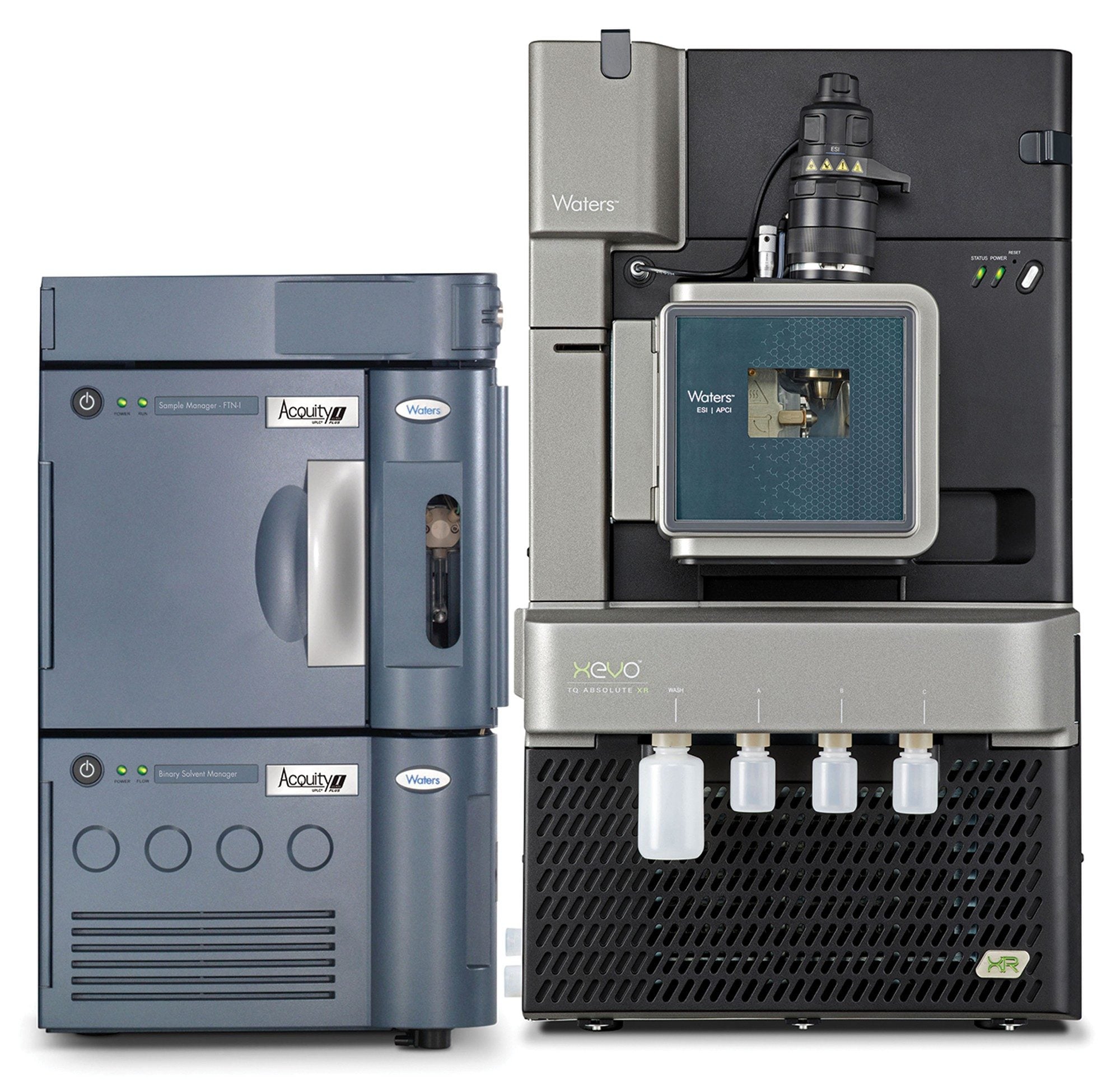
Enhanced analytical sensitivity, robustness, and reliability over six orders of linear dynamic range is achieved using the Xevo TQ Absolute XR Mass Spectrometer, featuring eXtended Dynamic Range (XDR) and eXtreme Robustness (XR) StepWave™ Ion Guide. When combined with a simple sample preparation method and UHPLC separation of estrogens, the method provides highly selective and analytical sensitivity method for the clinical research analysis of E2 and E1.
Ultra-Performance Liquid Chromatography-Tandem Mass Spectrometry (UPLC™-MS/MS) Analysis
E2 and E1 certified reference solutions and their stable labeled internal standards (13C3) were purchased from Merck (Gillingham, UK). Calibrators were prepared in a surrogate matrix of MSG4000 stripped serum purchased from Golden West Biologicals (Temecula, CA). The calibration range for E2 was 2–1000 pg/mL and 1–1000 pg/mL for E1. The QC samples were prepared in a surrogate matrix of MSG4000 stripped human serum purchased from Golden West Biologicals (Temecula, CA) at 3.0 pg/mL, 10.0 pg/mL and 700 pg/mL. Water, methanol and ethyl acetate were purchased from Fisher Scientific (Loughborough, UK). Ammonium fluoride and hexane were purchased from Merck (Gillingham, UK).
To convert conventional mass units (pg/mL) to SI units (pmol/L), multiply by 3.671 for E2 and 3.699 for E1.
To 250 μL of sample, 20 μL of internal standard was added and mixed. Liquid/liquid extraction was performed by adding 1 mL of 85:15 (v:v) hexane:ethyl acetate, mixing thoroughly for 10 minutes. Samples were centrifuged at 12,000 g for 2 minutes prior to 700 μL of the top organic layer being transferred into a 96-well plate containing 1 mL glass inserts (Waters, p/n: 186000855). Samples were evaporated to dryness and reconstituted in 20 μL of methanol followed by 30 μL of distilled water and mixed thoroughly for 10 minutes.
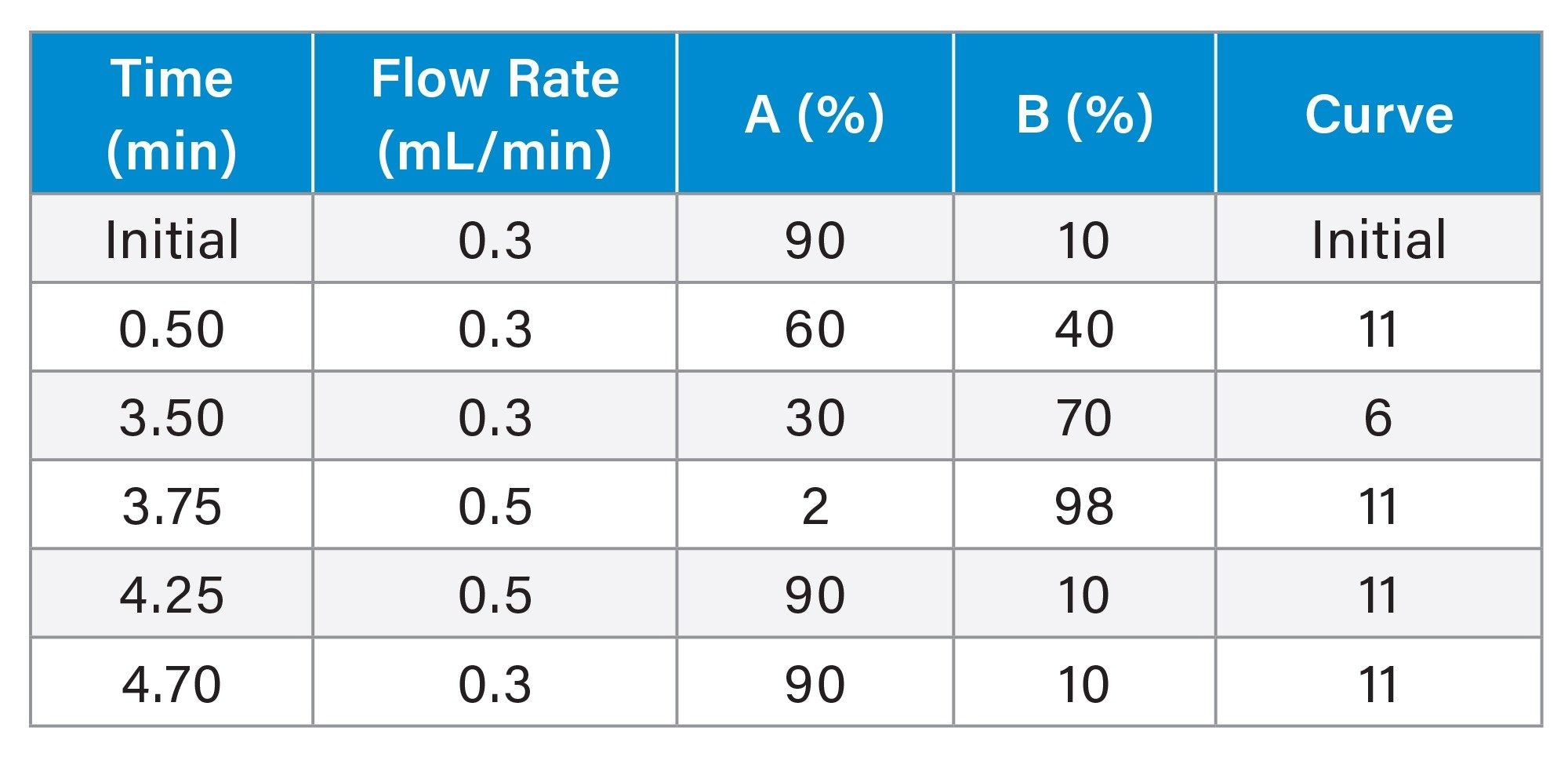
Samples were subsequently injected onto an ACQUITY UPLC I-Class FL System and Xevo TQ Absolute XR Mass Spectrometer, utilizing a water/methanol/ammonium fluoride gradient and a Waters CORTECS™ Phenyl Column (Waters, p/n: 186008319) heated to 50 °C as shown in Table 1.
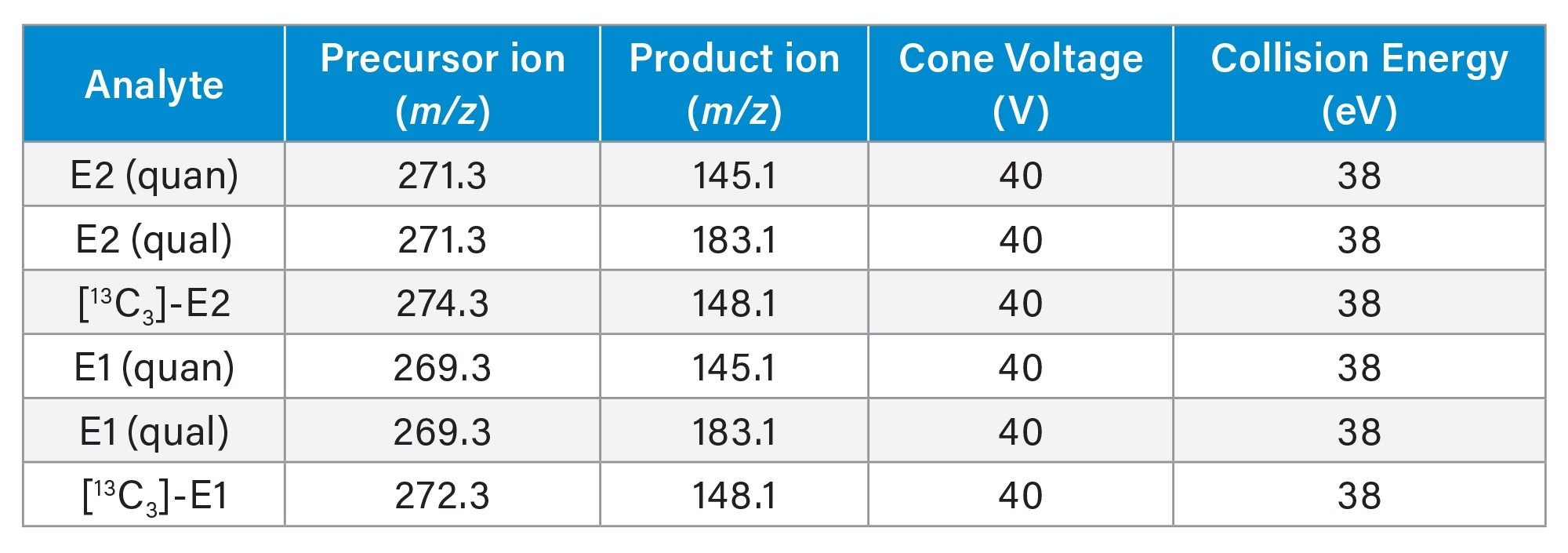
Multiple reaction monitoring (MRM) transitions, quantifier (quan) and qualifier (qual), for the detection of all analytes are shown in Table 2, having a capillary voltage of 2.2kV in electrospray negative ionization mode, with resolution settings at 0.7 FWHM for MS1 and MS2.
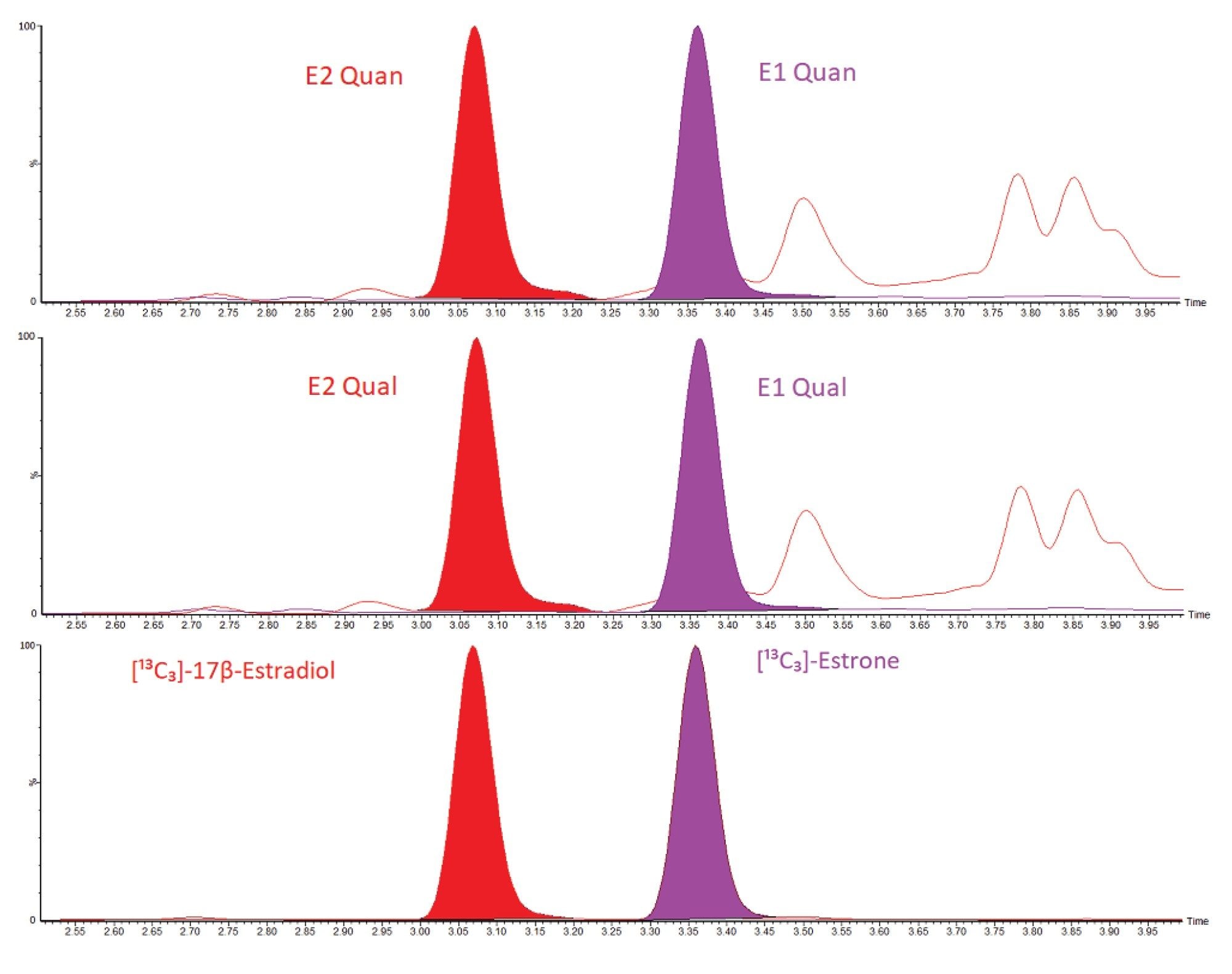
Chromatographic separation was achieved for E2 and E1, having a total injection cycle time of approximately 5.75 minutes. A typical chromatogram is shown in Figure 2.
Calibration curves were shown to be linear over the calibration ranges described, having correlation coefficients of >0.999 and %bias of within ±15% (±20% for Calibrator 1) for E2 and E1 across five occasions.
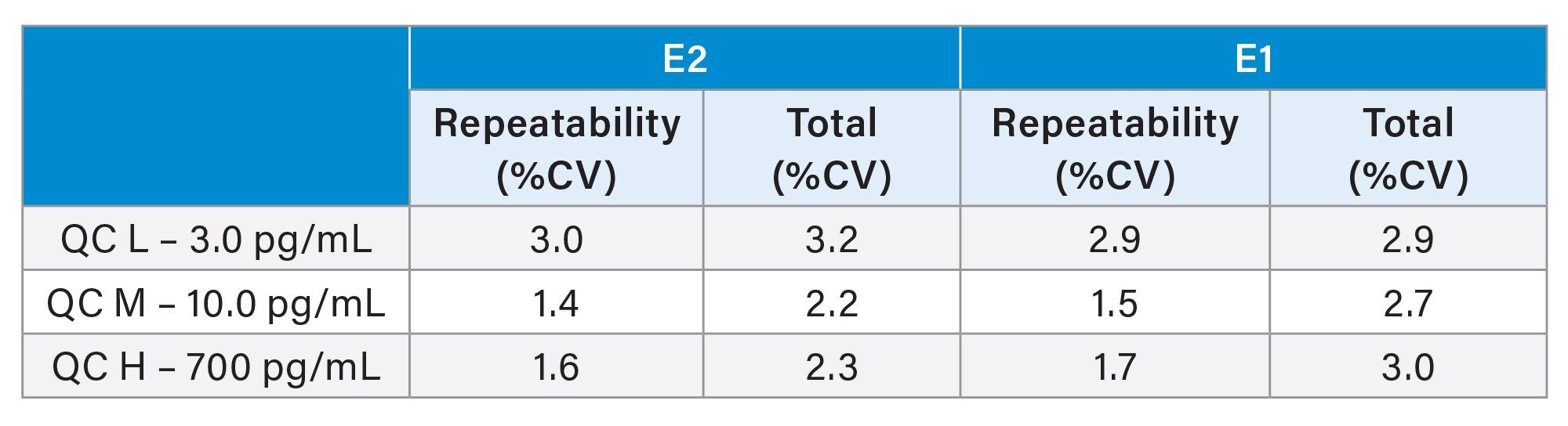
Precision performance was assessed by extracting and analyzing five replicates of the low, mid and high QC samples on each of five occasions. Within-run and total precision were ≤3.2% CV for all steroid hormones for all concentration levels and is summarized in Table 3.
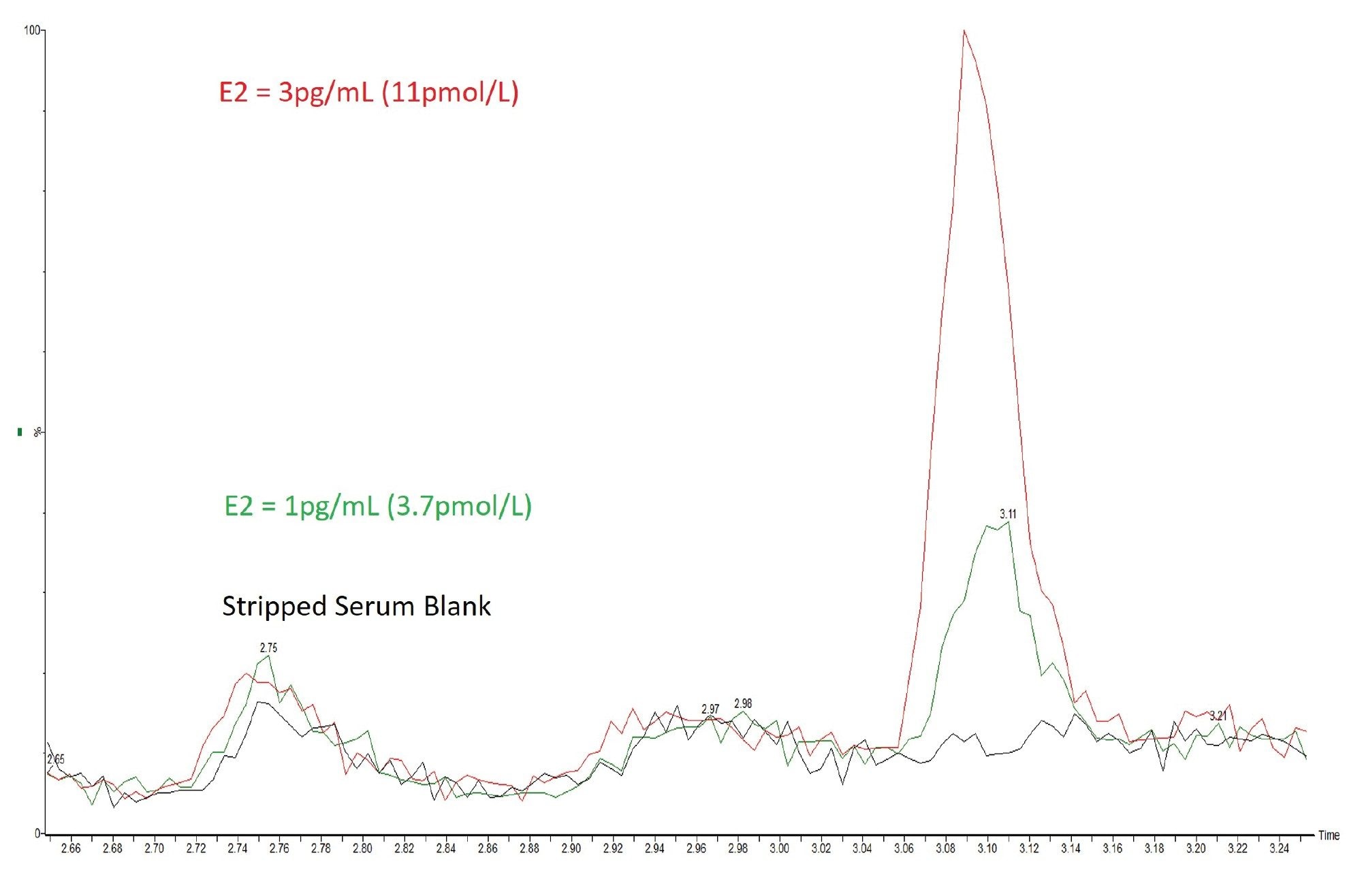
Analytical sensitivity was assessed by spiking Golden West Biologicals MSG4000 stripped serum at low concentration levels. Ten replicates of each sample were then extracted and analyzed on each of four occasions. %CVs of ≤20% and biases of ≤15% were obtained at 1.0 pg/mL for E2 and E1, however, a signal to noise ratio (peak to peak) of ≥10:1 was not achieved at this level for E2, therefore a lower limit of quantification (LLOQ) of 3 pg/mL was selected for this analyte. Figure 3 shows typical chromatograms of E2 and E1 at these concentrations. While an LLOQ of 1 pg/mL was not achieved, a blank stripped serum sample can be differentiated from the same serum spiked at 1 pg/mL of E2.
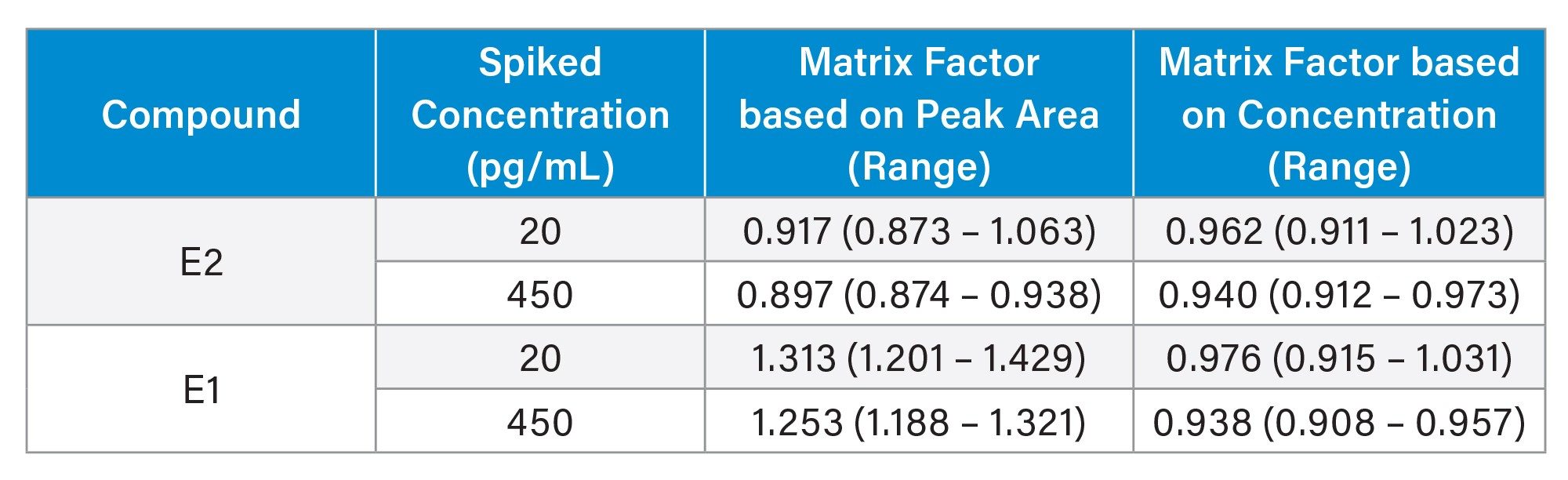
Matrix effect investigations were previously performed on a Xevo TQ Absolute Mass Spectrometer using serum from six individuals. The endogenous peak areas were separately quantified and post-spiked samples at low and high concentration levels were adjusted using the mean peak areas to enable comparison to solvent spiked samples. While some suppression and enhancement in the matrix factor results were observed when looking at the peak areas, these were compensated for by the internal standard (Table 4).
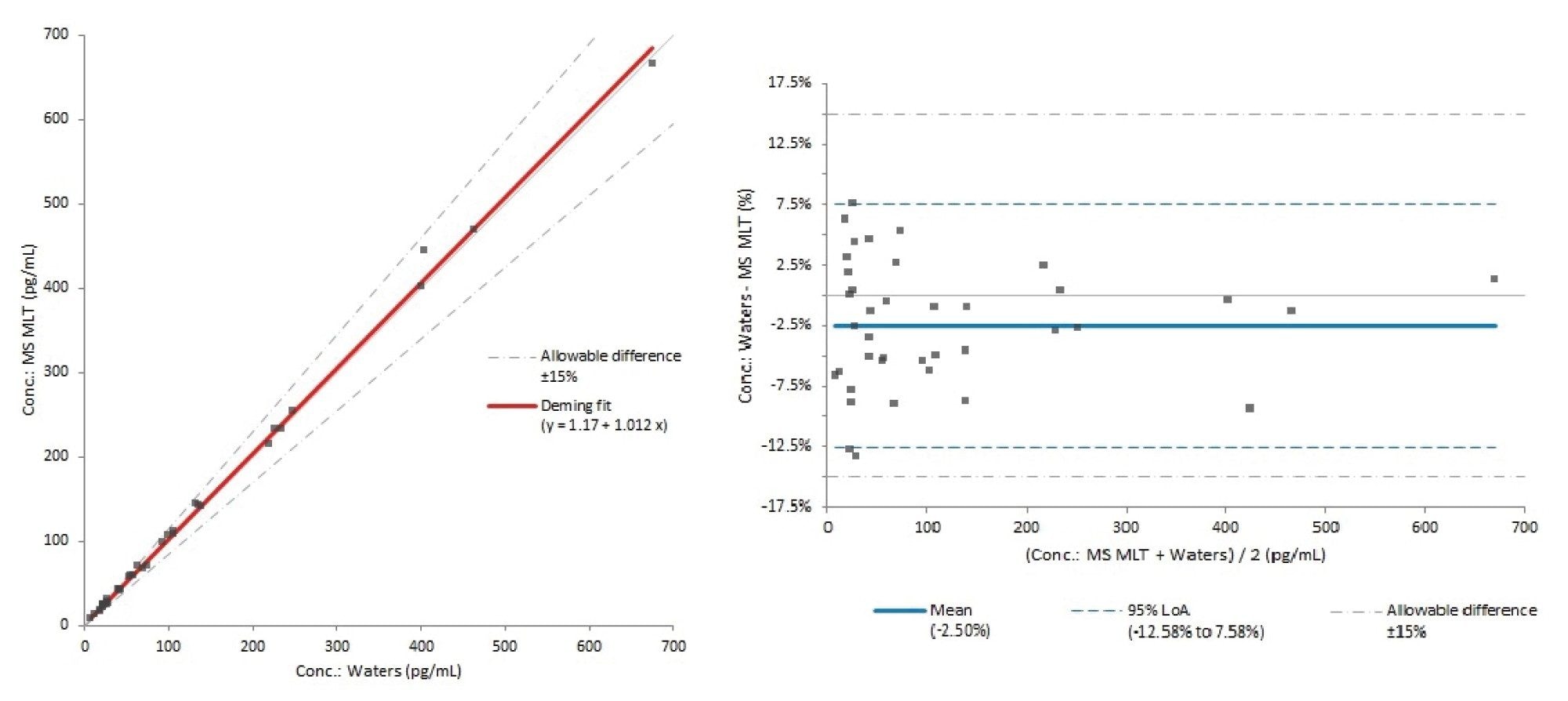
Accuracy was assessed by analyzing 39 UK NEQAS E2 samples with calculated concentrations compared to the mass spectrometry laboratory trimmed means. The correlation for E2 can be seen in Table 5 and Figure 4, showing excellent agreement with the EQA scheme.

The Xevo TQ Absolute XR Mass Spectrometer has demonstrated excellent analytical sensitivity and quantitative performance for the analysis of E2 and E1 for clinical research, having the following method performance characteristics:
Waters, Xevo, StepWave, ACQUITY, UPLC and CORTECS are trademarks of Waters Corporation or its affiliates.
720009343, May 2026


