
A 30,000 Injection Assessment of Xevo™ TQ Absolute XR Mass Spectrometer Quantitative Stability and Uptime for Analysis of Naltrexone for Clinical Research
Henry Foddya, David Farrellb, Sally Hannamb, Peter Hancocka, Nikunj Tannac, Robert S. Plumbc
a Waters Corporation, United Kingdom
b Synexa Group, Macclesfield, United Kingdom
c Waters Corporation, United States
Published on May 21, 2026

Abstract
This study evaluates long-term LC–MS/MS performance over a 30,000 injection sequence for the quantitative measurement of naltrexone and its primary active metabolite, 6β-naltrexol, in human plasma, under conditions representative of sustained clinical research analysis. Throughout the extended analytical testing, key performance indicators relevant to clinical laboratory operations were monitored, including signal stability, accuracy, precision, chromatographic integrity, and carryover. The Xevo TQ Absolute XR Mass Spectrometer, incorporating the StepWave™ XR Ion Guide, maintained consistent analytical sensitivity and quantitative integrity across more than 30,000 plasma injections, including at sub-ng/mL concentrations relevant to clinical research. The stable, downtime-free performance of the instrument across the full injection sequence presents the Xevo TQ Absolute XR Mass Spectrometer as a robust solution for high-throughput testing, supporting greater productivity, sample throughput, and cost efficiency for clinical laboratories.
Benefits
- Demonstrated long-term performance over more than 30,000 matrix injections and over 21 mL of human plasma injected into the system, with no instrument downtime, demonstrating suitability for high-throughput discovery and analytical laboratory applications
- Bias and precision maintained throughout, generating robust and reliable quantification at sub-ng/mL levels in complex human plasma matrix
- Streamlined data review in waters_connect™ for Quantitation Software, enhancing analyst efficiency and overall workflow productivity
Introduction
Quantitative analysis is a fundamental cornerstone in the safe and effective deployment of drug treatments in a clinical setting. Central to this analysis is the need for analytical platforms capable of accurately quantifying low-level analyte concentrations, often at sub-ng/mL, in complex biological matrices such as plasma or serum.
Liquid chromatography coupled with tandem quadrupole mass spectrometry (LC–MS/MS) has become the established benchmark for such analyses, providing high selectivity, analytical sensitivity and throughput, for targeted quantification. As clinical laboratories manage both an increasing volume and a broader spectrum of sample methods, instrumentation must be capable of withstanding diverse workflows, while maintaining reliable analytical performance.
For such laboratories, operating under high-throughput conditions with long-term method stability and uptime are essential for sustained productivity. However, these workflows often involve the quantification of trace-level analytes in complex biological matrices where matrix effects, ion suppression, and signal variability, present significant analytical challenges. Achieving reliable performance under these conditions requires instrumentation capable of maintaining consistent method performance over prolonged, demanding analytical workflows.
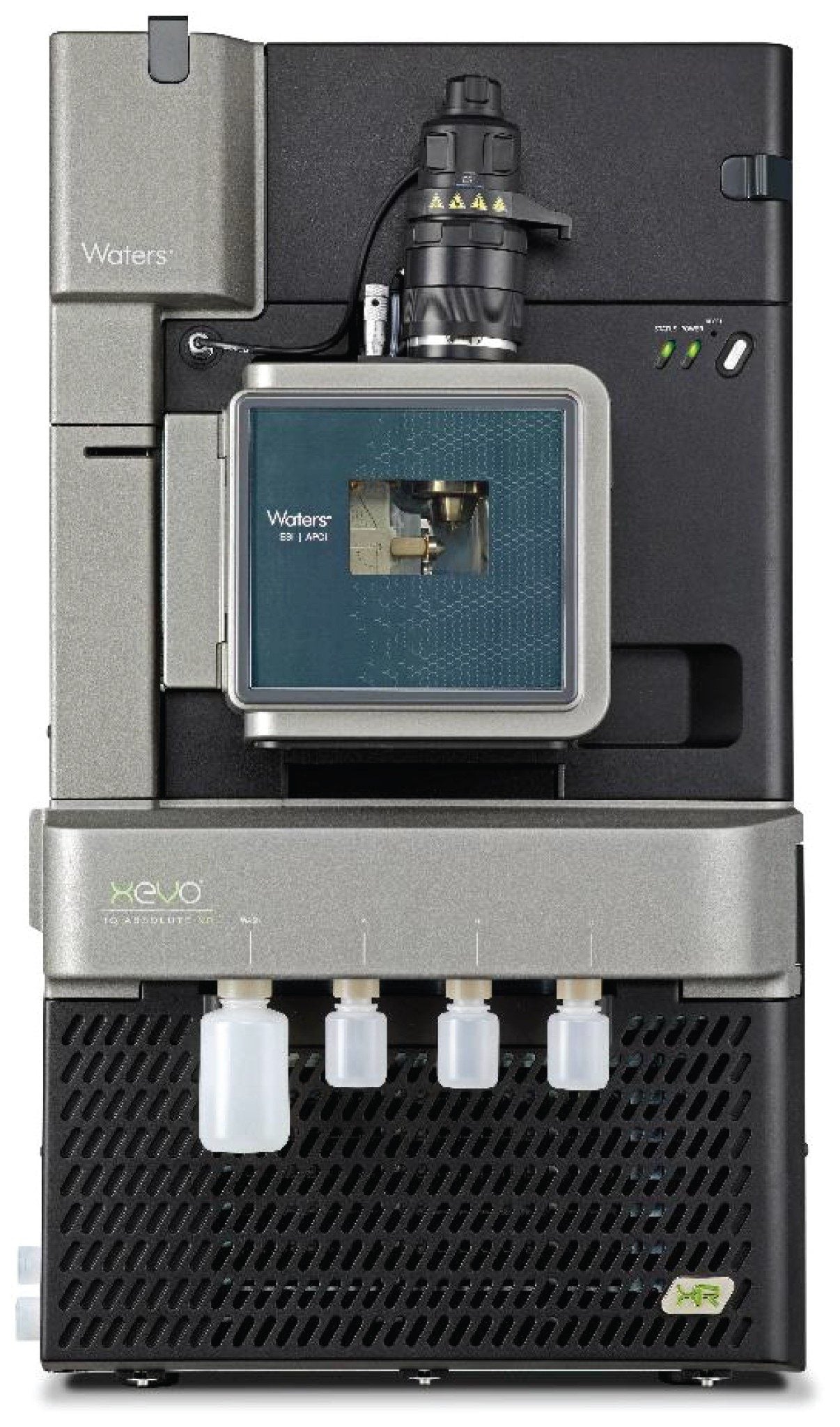
In practice, large-scale analytical sequences comprising thousands of injections further amplify these demands, as gradual contamination of the MS ion path can compromise reproducibility and increase maintenance frequency. Maintaining instrument robustness is therefore essential to sustaining productivity, accelerating data delivery, and supporting cost-effective, confident decision-making while maintaining trace-level analytical performance.
The StepWave XR Ion Guide, a novel slotted bandpass ion guide within the Xevo TQ Absolute XR Mass Spectrometer, effectively mitigates MS1 quadrupole contamination by preventing unwanted high mass ion transmission. Filtering out high m/z ions from biological matrices, it prevents quadrupole charging and associated losses in analytical sensitivity observed from the accumulation of these ions on the MS1 quadrupole rods.
Naltrexone and its primary active metabolite, 6β-naltrexol, were selected as representative analytes. Plasma concentrations are known to vary widely between individuals, reflecting age-related metabolic differences and genetic polymorphisms affecting drug biotransformation.1,2 As circulating levels are typically low, their quantification requires highly sensitive and selective LC–MS/MS methodologies.3
Experimental
Sample Preparation
Standards of naltrexone and 6β-naltrexol were purchased from Sigma Aldrich (Gillingham, UK), supplied as 1.0 mg/mL certified solutions in methanol. Internal standards of naltrexone-d3 and 6β-naltrexol-d3 were also purchased from Sigma Aldrich, as was the formic acid used throughout the analysis. An in-house supply of 18.2Ω ultrapure water was used as mobile phase, while methanol was purchased from Fisher Scientific. A calibration line was constructed for naltrexone and 6β-naltrexol in human plasma over the range of 0.2 – 100 ng/mL, QCs were also constructed in human plasma at concentrations of 0.2, 0.6, 40.0, 80.0 and 100.0 ng/mL.
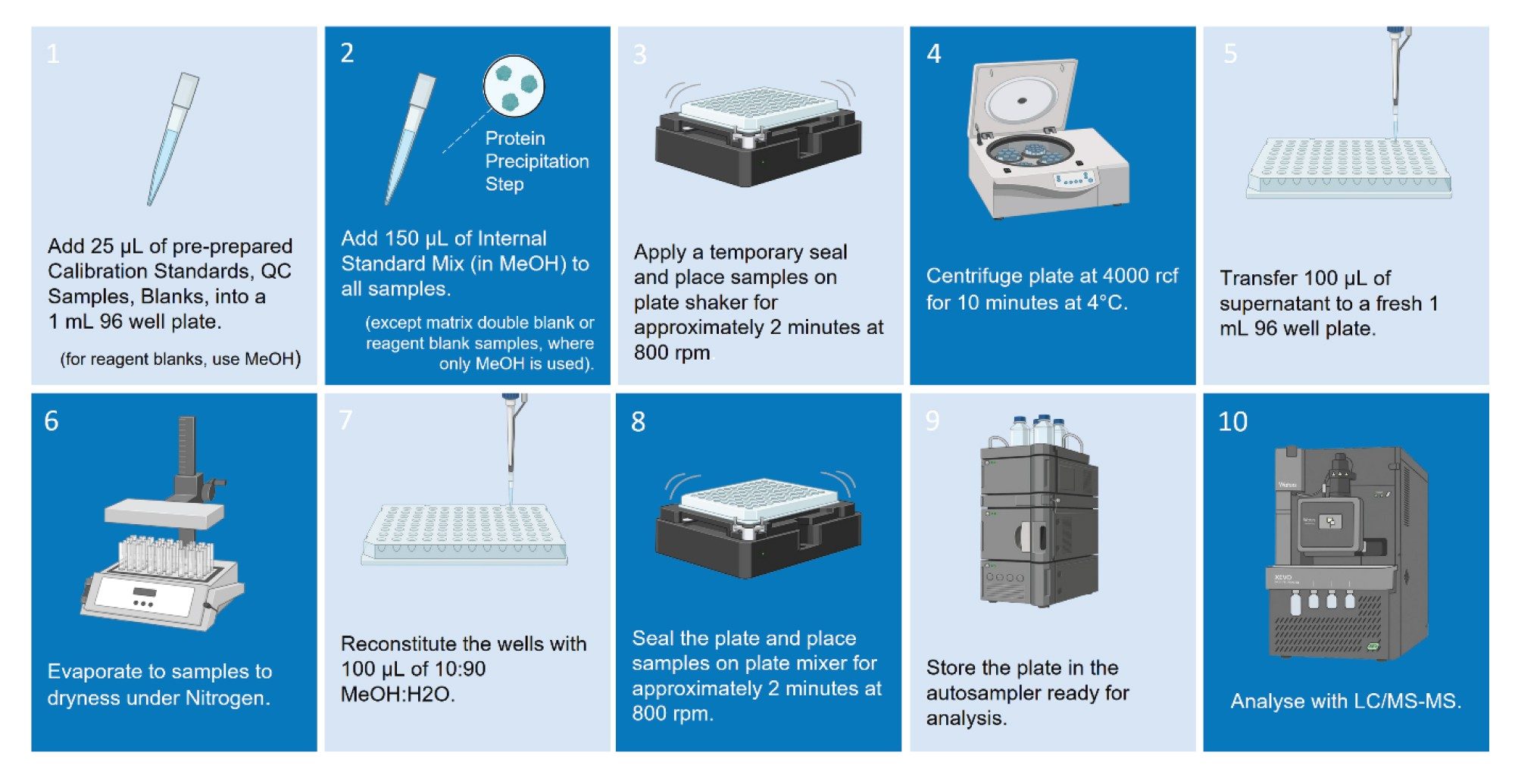
A high-throughput protein precipitation procedure - adapted for robustness evaluation rather than routine analysis - was used to prepare samples in 96-well plates, as detailed in Figure 2.
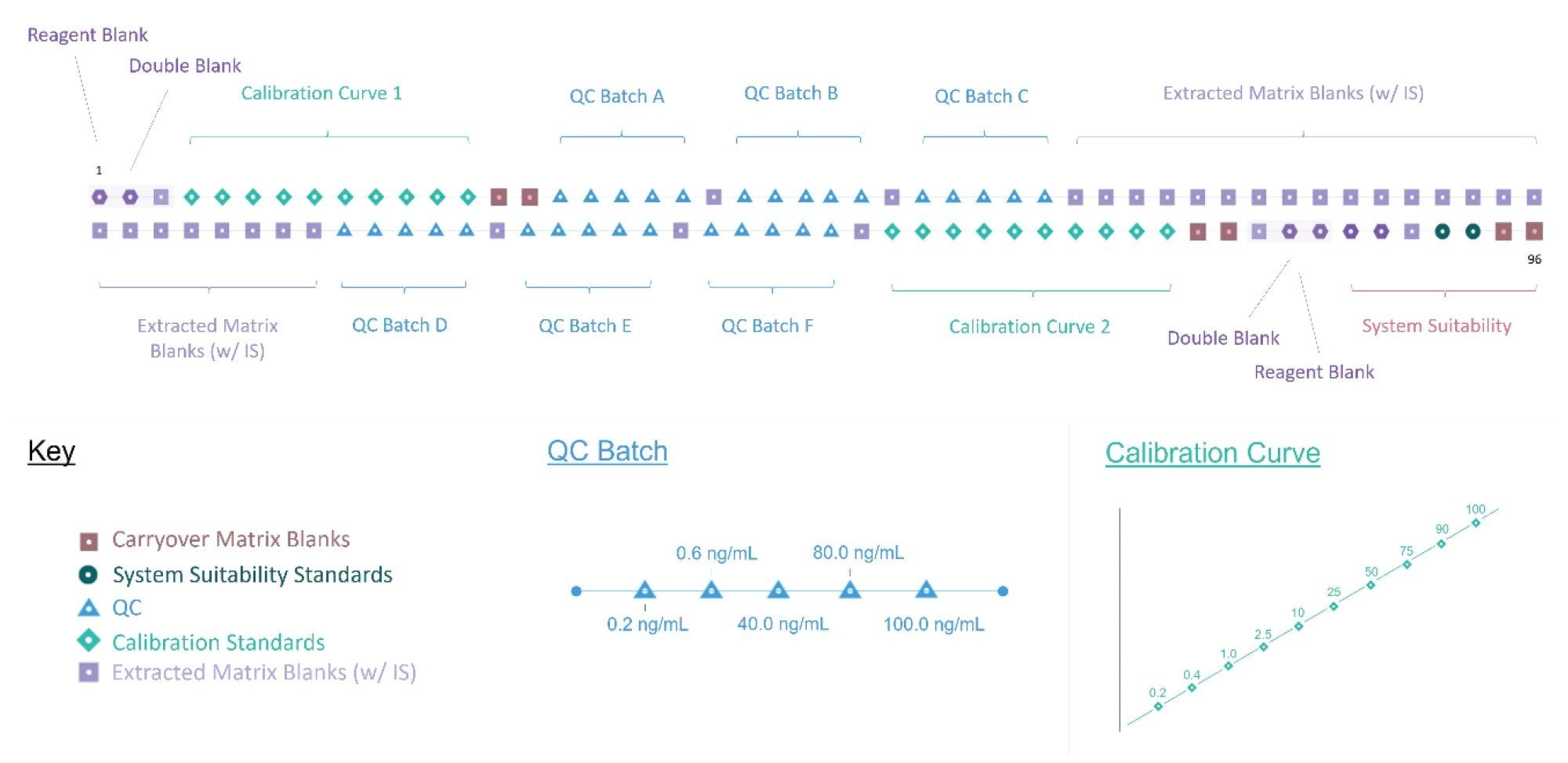
A 96-well plate was prepared as per Figure 3, consisting of a bracketed calibration sequence from 0.2 – 100 ng/mL, QC batch replicates (0.2, 0.6, 40.0, 80.0 and 100.0 ng/mL), matrix extracted blanks, system suitability injections, reagent blanks, double blanks, and carryover matrix blanks. Methanol was used to prepare the two reagent blanks, with the other 94 samples in the plate prepared using matrix.
Throughout the study, a total of 64 sample plates were prepared - with each sample - well injected sequentially, and each plate analyzed five consecutive times before being replaced by a freshly prepared plate, giving a total of 30,720 injections over the duration of the study.
To simulate the typical protocol of a clinical lab, the cone assembly of the sample cone and cone gas nozzle were cleaned at the start of each week of analysis, which was performed without breaking instrument vacuum. A reversed-phase column was used for this analysis, using a column temperature of 60 °C. This limited column lifetime, and therefore the column was replaced when appropriate.
LC Conditions
|
LC system: |
ACQUITY™ UPLC™ System |
|
Sample temperature: |
10 °C |
|
Injection volume: |
5 µL |
|
Flow rate: |
0.8 mL/min |
|
Run time: |
2.1 minutes |
|
Mobile phase A: |
0.1% Formic acid in water |
|
Mobile phase B: |
0.1% Formic acid in methanol |
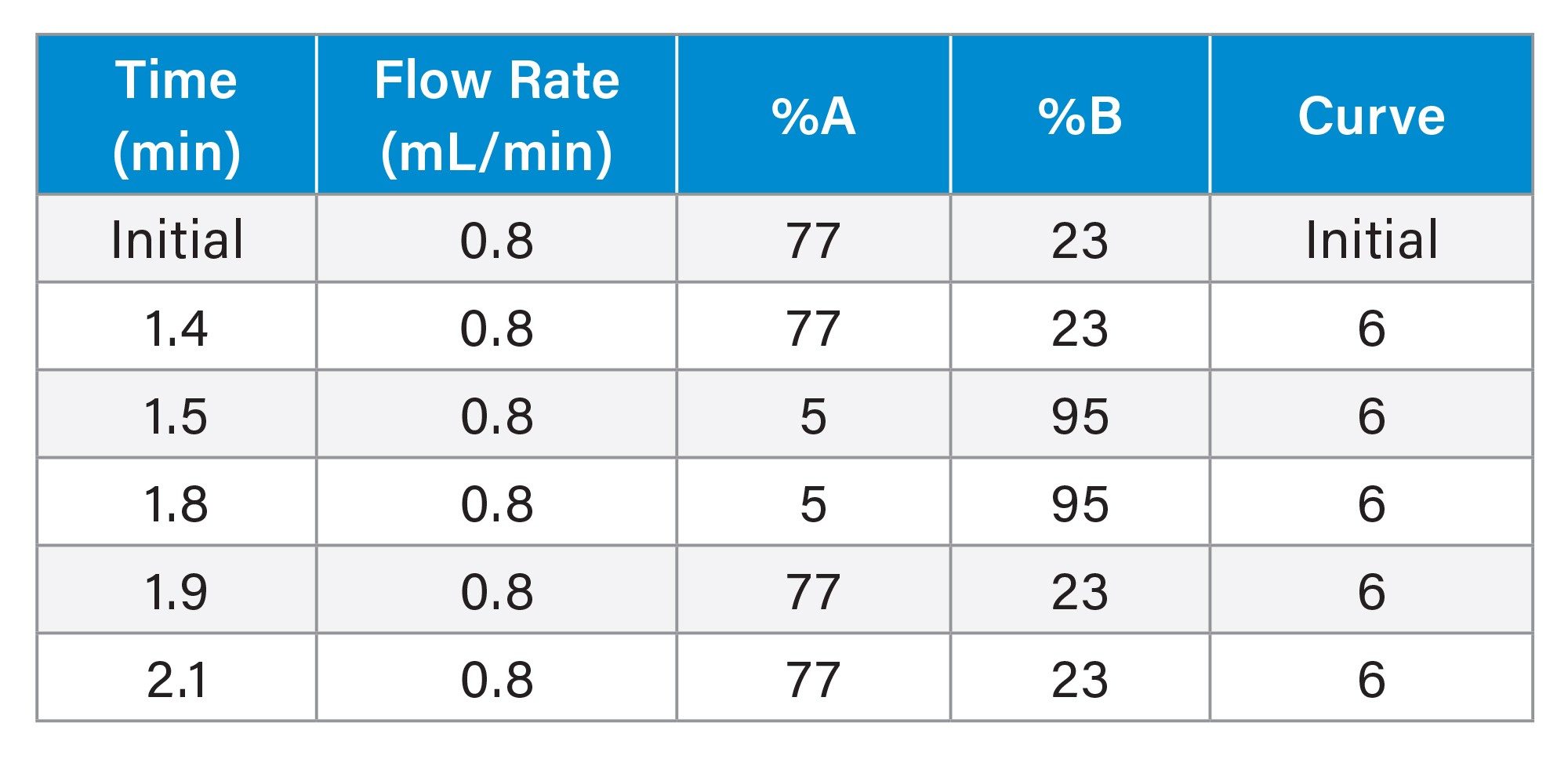
Gradient Table
MS Conditions
|
MS system: |
Xevo TQ Absolute XR Mass Spectrometer |
|
Ionization: |
Positive Electrospray (ESI+) |
|
Capillary voltage: |
0.6 kV |
|
Desolvation temperature: |
800 L/Hr |
|
Desolvation gas flow: |
150 L/Hr |
|
Cone gas flow: |
150 L/Hr |
|
Source Temperature: |
150 °C |
MRM Conditions
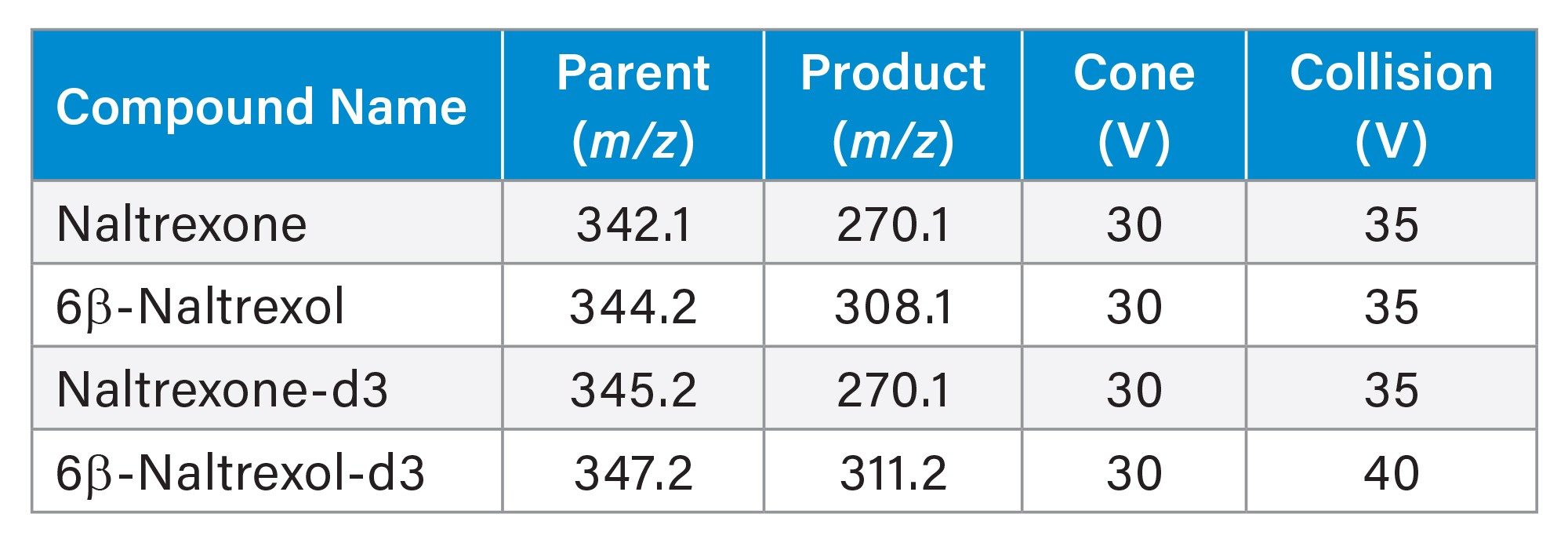
Data Management
|
Software: |
waters_connect with QUAN Review Software |
Results and Discussion
The Xevo TQ Absolute XR Mass Spectrometer demonstrated consistent performance throughout the entire analytical workflow, with no measurable decline in analytical sensitivity, precision, or accuracy over the study period. More than 30,000 injections were successfully analyzed in this study, over more than 55 days of continuous acquisition. More than 21 mL of human plasma was injected onto the system throughout the duration of the study.
QC samples within each 96-well plate replicate were quantified using bracketed calibration curves - generated using a 1/x² weighting - and predefined limits of ± 15 % (or ± 20 % at LLOQ) applied for acceptance. Carryover acceptance was limited to 20% of the LLOQ.
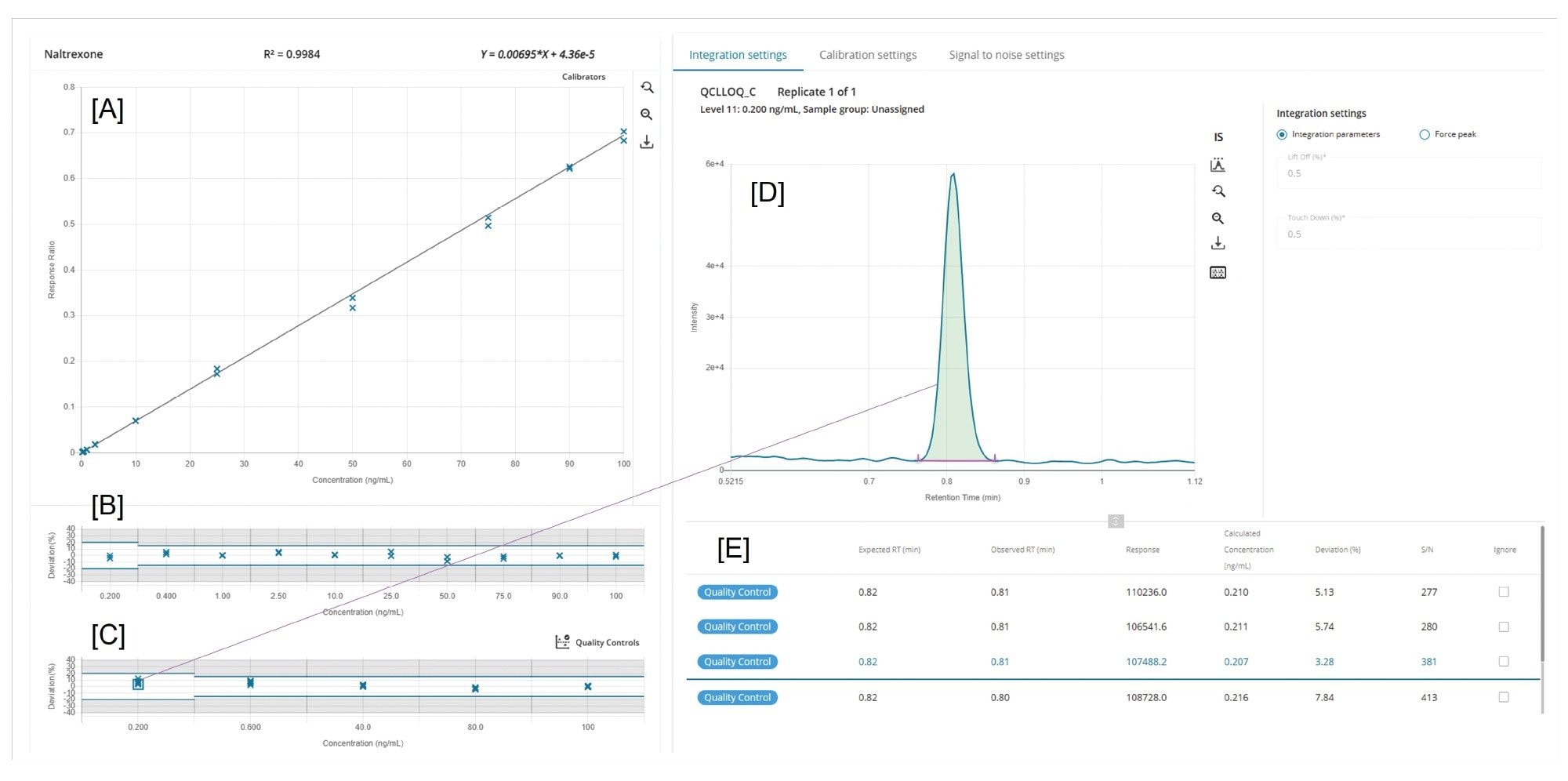
Implementation of the review-by-exception workflow within QUAN Review in waters_connect Software substantially streamlined data processing, flagging any outliers or exceptions in the dataset for manual review. This functionality enabled efficient oversight of parameters such as linearity, QC accuracy, and blank carryover assessment – acceptance criteria for which can be set using a predefined ruleset within the software. This significantly reduced analyst workload in manual processing and data review for high-throughput datasets. Figure 4 shows how calibration and QC samples can be reviewed within QUAN Review.
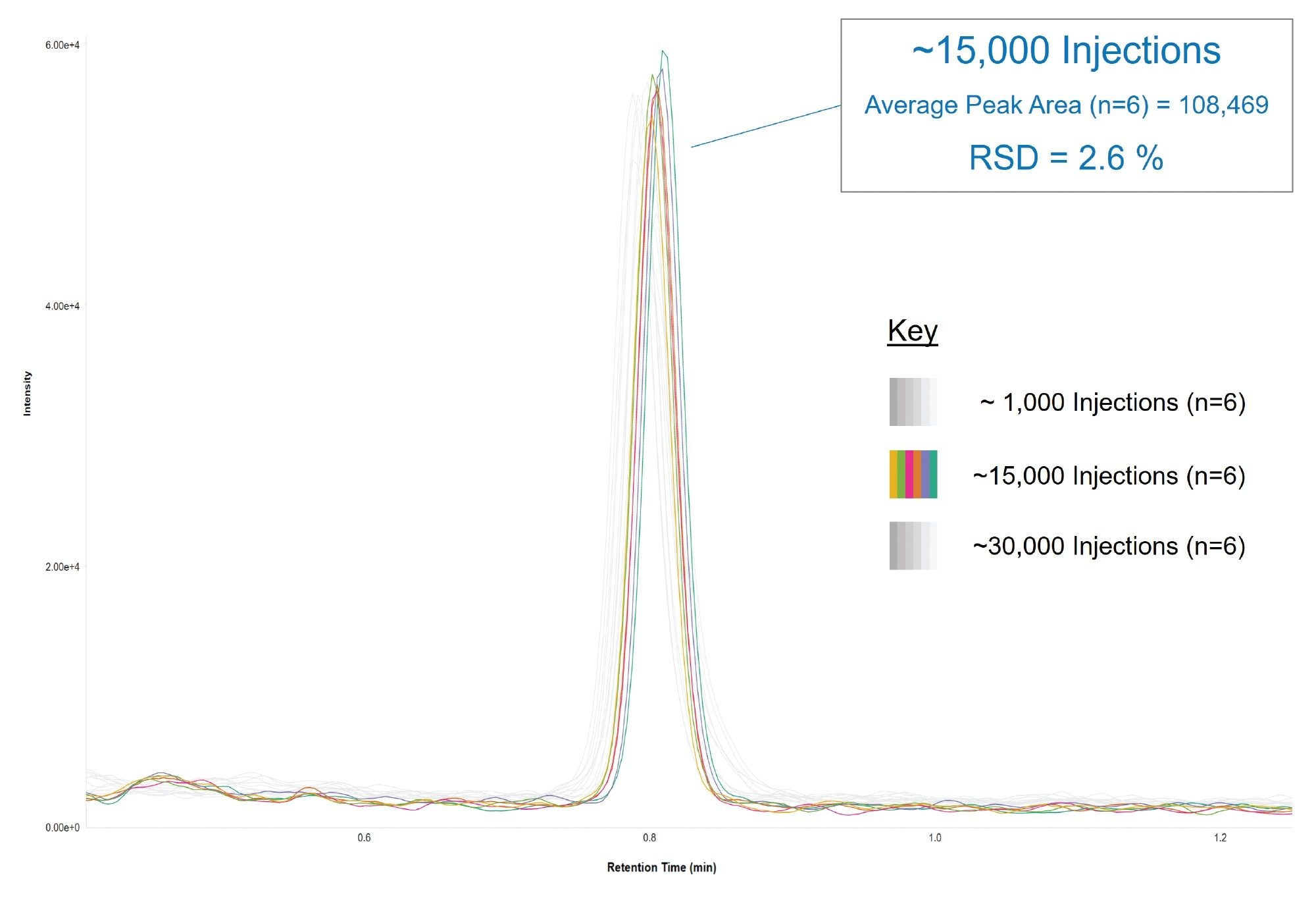
Reproducibility of peak area is a critical indicator of quantitative stability in LC–MS/MS analysis, directly reflecting the precision and consistency of analyte detection across an analytical sequence. Figure 5 illustrates the reproducibility of naltrexone peak area at the method LLOQ, showing (n=6) replicate injections of the 0.2 ng/mL QC sample acquired approximately midway through the study (~15,000 injections). For comparison, replicate injections (n=6) acquired near the beginning (~1,000 injections) and end (~30,000 injections) of the robustness sequence are overlaid in grey, highlighting the consistency of peak area throughout the analysis. Even at sub-ng/mL concentrations, the Xevo TQ Absolute XR Mass Spectrometer maintained exceptional quantitative reproducibility, with a percent relative standard deviation (%RSD) of less than 3.0% across replicate injections.
Consistency in calculated concentrations and precision across repeated injections are direct indicators of instrument stability and method robustness, particularly at trace concentration levels where analytical variability can have a disproportionate impact on pharmacokinetic interpretation. Maintaining such performance is especially critical near to the method LLOQ, where accurate measurement informs the terminal elimination phase of a drug’s pharmacokinetic profile.
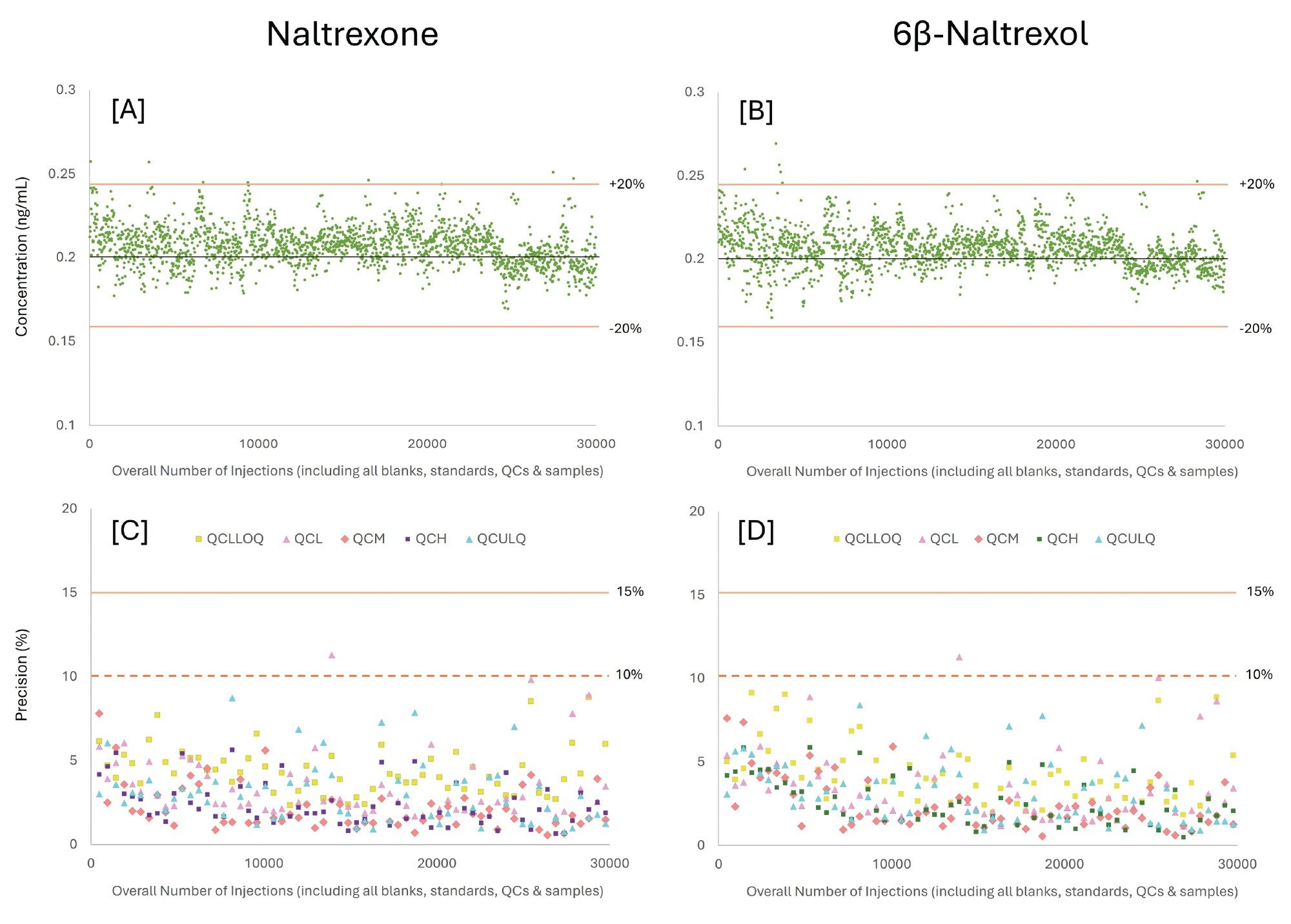
Figure 6 presents the calculated concentrations for the 0.2 ng/mL LLOQ QC samples of naltrexone and 6β-naltrexol monitored over the course of the 30,000-injection robustness study. Both analytes demonstrated excellent quantitative stability, with the majority of calculated concentrations falling within ±10 % of the target concentration. 99.6% and 99.8% of LLOQ QC data points for naltrexone and 6β-naltrexol, respectively, fell inside the 20% acceptance range criteria, underscoring the consistency of quantitative performance over the entire analytical sequence.
This trend was demonstrated across all QC levels, with 99.7% of all QC samples analyzed within the set acceptance criteria (± 15 % in all cases except at the LLOQ, where a ± 20% criteria was used). This can also be illustrated by the precision plots shown in Figure 6. Calculated as (Standard Deviation x 100 / Mean), most precision values for both naltrexone and 6β-naltrexol were below 3.5% for all QC levels across the entire workflow. Calculated precision values were below 10% for both compounds across all QC levels and samples batches, except for a single datapoint for QCL (0.6 ng/mL) observed midway through the sequence - likely attributable to sample preparation variability rather than instrumental drift.
Together, these results illustrate that the Xevo TQ Absolute XR Mass Spectrometer is capable of sustained quantitative accuracy and precision across a 30,000 injection analytical workflow, even at sub-ng/mL levels. Bias and precision values generated across the duration of the study were well within the pre-defined acceptance criteria with blank sample acceptance maintained throughout.
Such long-term robustness supports reliable quantitative measurement and enables laboratories to maintain high-throughput operation with confidence in data quality and consistency, without interrupting analysis for engineer intervention or any maintenance beyond routine source cleaning. Improved instrument availability supports reliable analytical performance and helps laboratories sustain productivity, allowing clinical and analytical teams to keep pace with demanding study and testing schedules.
Conclusion
The Xevo TQ Absolute XR Mass Spectrometer, which is equipped with the novel slotted bandpass StepWave XR Ion Guide, demonstrated exceptional robustness and uptime over more than 30,000 matrix injections for a typical laboratory workflow. Quantitative accuracy and reproducibility were upheld throughout the study, with continuous and reliable operation enabling seamless transitions between sample methods. Analytical sensitivity and selectivity were demonstrated across a high-throughput workflow, in a complex human plasma matrix, even at LLOQ method limits, demonstrating suitability for high-throughput analytical testing applications.
References
- Brünen S, Bekier NK, Hiemke C, Korf F, Wiedemann K, Jahn H, Kiefer F. Therapeutic Drug Monitoring of Naltrexone and 6β-Naltrexol During Anti-craving Treatment in Alcohol Dependence: Reference Ranges. Alcohol Alcohol. 2019 Jan 1;54(1):51-55. doi: 10.1093/alcalc/agy067. PMID: 30260366.
- Stancil SL, Nolte W, Pearce RE, Staggs VS, Leeder JS. The Impact of Age and Genetics on Naltrexone Biotransformation. Drug Metab Dispos. 2022 Feb;50(2):168-173. doi: 10.1124/dmd.121.000646. Epub 2021 Nov 2. PMID: 34728519; PMCID: PMC9621334.
- Shen PT, Liu SC, Huang MC, Liu YL. Development of a Liquid Chromatography-Tandem Mass Spectrometry Method for the Analysis of Plasma Naltrexone and Its Active Metabolite in Patients with AUD. Eur J Mass Spectrom (Chichester). 2025 Oct 3:14690667251384047. doi: 10.1177/14690667251384047.
720009342, May 2026


