

For research use only. Not for use in diagnostic procedures.
- Main
-
For research use only. Not for use in diagnostic procedures.
Thays V. C. Monteiroa, Mariana Fioramonteb, Renan Pirollab, Alexandre Bahia Gontijoc, Cristiano S. Nascimentod, Niro Higuchid, Mário Augusto Gonçalves Jardime, Maíra Fasciottia
aGraduate Program in Metrology and Technology, Laboratory of Organic Analysis, National Institute of Metrology, Quality and Technology (INMETRO), Brazil
bWaters Technologies, Brazil
cForest Products Laboratory/ Brazilian Forest Service (LPF/SFB), Brasília Brazil; Institute of Biological Sciences, Graduate Program in Ecology (UnB/ICB/PPGECL), University of Brasília, Brasília Brazil
dForest Management Laboratory/National Institute for Amazon Research (LMF/INPA), Manaus, Brazil
eMuseum Paraense Emílio Goeldi/Coordination of Botany (MPEG/COBOT), Brazil
Published on June 2, 2026
For research use only. Not for use in diagnostic procedures.
Illegal logging and timber substitution present significant analytical challenges requiring rapid, reliable, and deployable identification tools. This application note demonstrates the use of the Waters RADIAN ASAP™ Direct Mass Detector combined with Waters LiveID™ Software for real-time wood chemotyping. Methanol/water extracts of tropical hardwood species were analyzed without chromatographic separation, generating reproducible chemical fingerprints. Chemometric modeling using principal component analysis (PCA) - linear discriminant analysis (LDA) delivered >95% classification accuracy and 100% correct identification in unknown sample testing. This analytical approach provides a fast, simple, and robust workflow suitable for non-expert users potentially suitable for screening workflows in decentralized or near-field environments.
Accurate identification of timber species is essential for regulatory compliance, sustainable forestry, and combating illegal logging. In many cases, high-value or protected species are substituted with visually similar alternatives, particularly after processing, where traditional botanical features are no longer available. Conventional identification methods based on wood anatomy require specialist expertise and can struggle to differentiate closely related species. As a result, there is a growing need for rapid, objective, and reproducible analytical techniques that can support routine screening. Mass spectrometry-based chemotyping offers a powerful solution by enabling species differentiation and identification through characteristic chemical fingerprints. However, traditional MS approaches are often limited by complex workflows and laboratory-based infrastructure. The RADIAN ASAP Direct Mass Analyzer provides a compact and easy-to-use alternative for direct analysis with minimal sample preparation.1 When combined with LiveID Software, it enables automated chemometric modeling and real-time classification.
This application note demonstrates a rapid workflow for wood species identification using RADIAN ASAP System and LiveID Software, delivering high-confidence results in minutes and supporting applications in regulatory, forensic, and industrial environments. This approach may support enforcement workflows by providing rapid analytical information to complement traditional wood identification methods (Figure 1).2
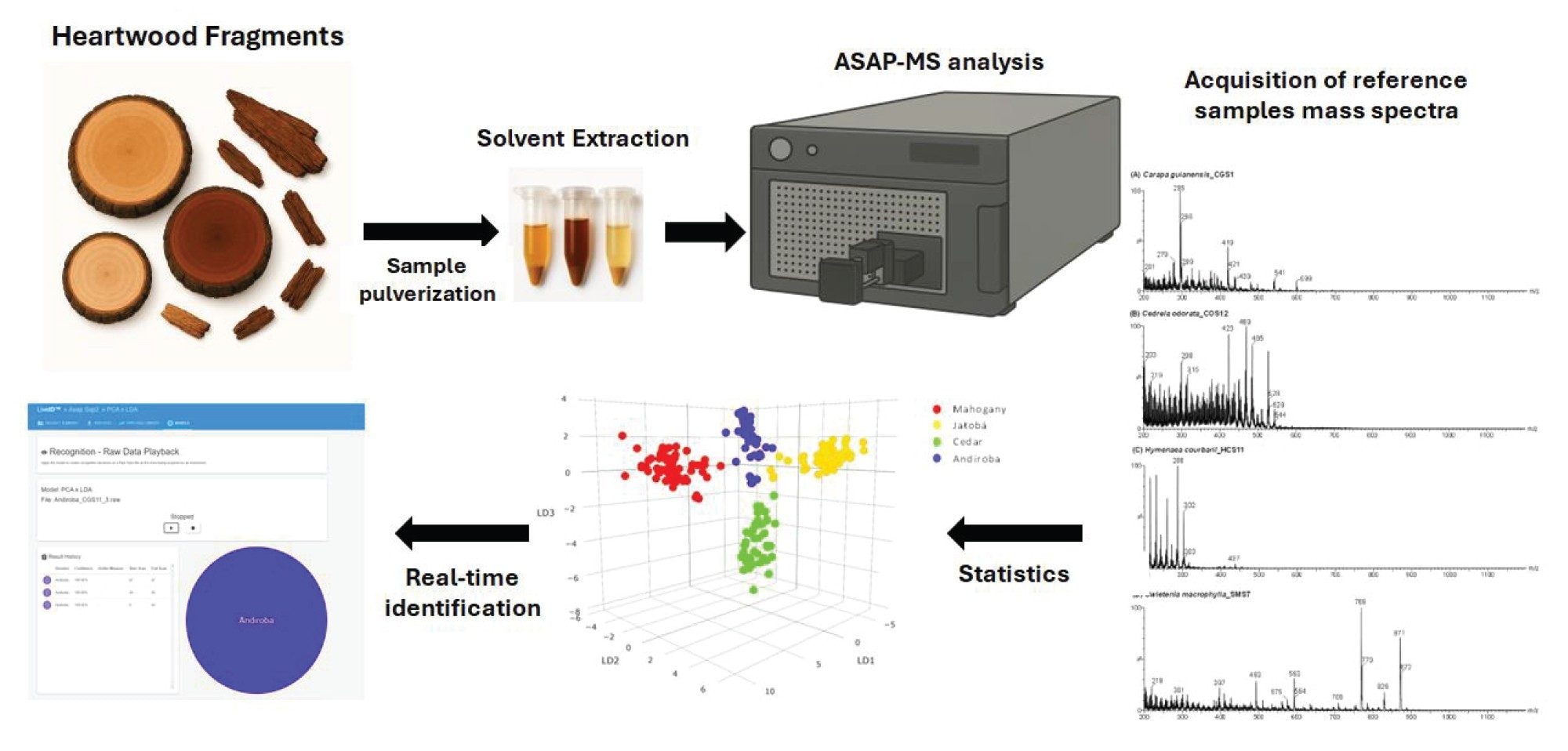
The study evaluated four commercially important tropical hardwood species prone to substitution: Swietenia macrophylla (mahogany) and Cedrela odorata (cedar), both regulated under CITES Appendix II, alongside Carapa guianensis (andiroba) and Hymenaea courbaril (jatoba). A total of 60 heartwood samples were analyzed, sourced from multiple locations across the Amazon region, representing realistic variability encountered in timber supply chains.
Approximately 3–5 mg of wood was extracted using methanol:water (3:1 v/v). Samples were vortexed for 30 seconds prior to analysis. Additional details described elsewhere.1
A pre-cleaned glass capillary was dipped into the autosampler vial containing the sample extracts to full depth and held in contact with the solution. The glass capillary was immediately placed in the RADIAN ASAP sample loader and introduced into the ionization source region.
|
Parameter: |
Setting |
|
Ionization mode: |
ASAP+ |
|
Cone voltage: |
35 V |
|
Source temperature: |
120 °C |
|
Temperature gradient : |
100-600 °C at 100 °C/min |
|
Mass range: |
m/z 200-1200 |
|
Scan rate: |
2 Hz |
|
Corona current: |
5 µA |
Table 1. RADIAN ASAP Direct Mass Detector instrument parameters.
Spectral data were processed using LiveID Software. PCA-LDA models were generated using full spectral range data with cross-validation and outlier detection applied.
Analysis of methanol/water sample extracts using the RADIAN ASAP System generated rich, information-dense mass spectra for all investigated wood species. Typical thermal desorption ion profiles corresponding to the temperature gradient applied are shown in Figure 2.
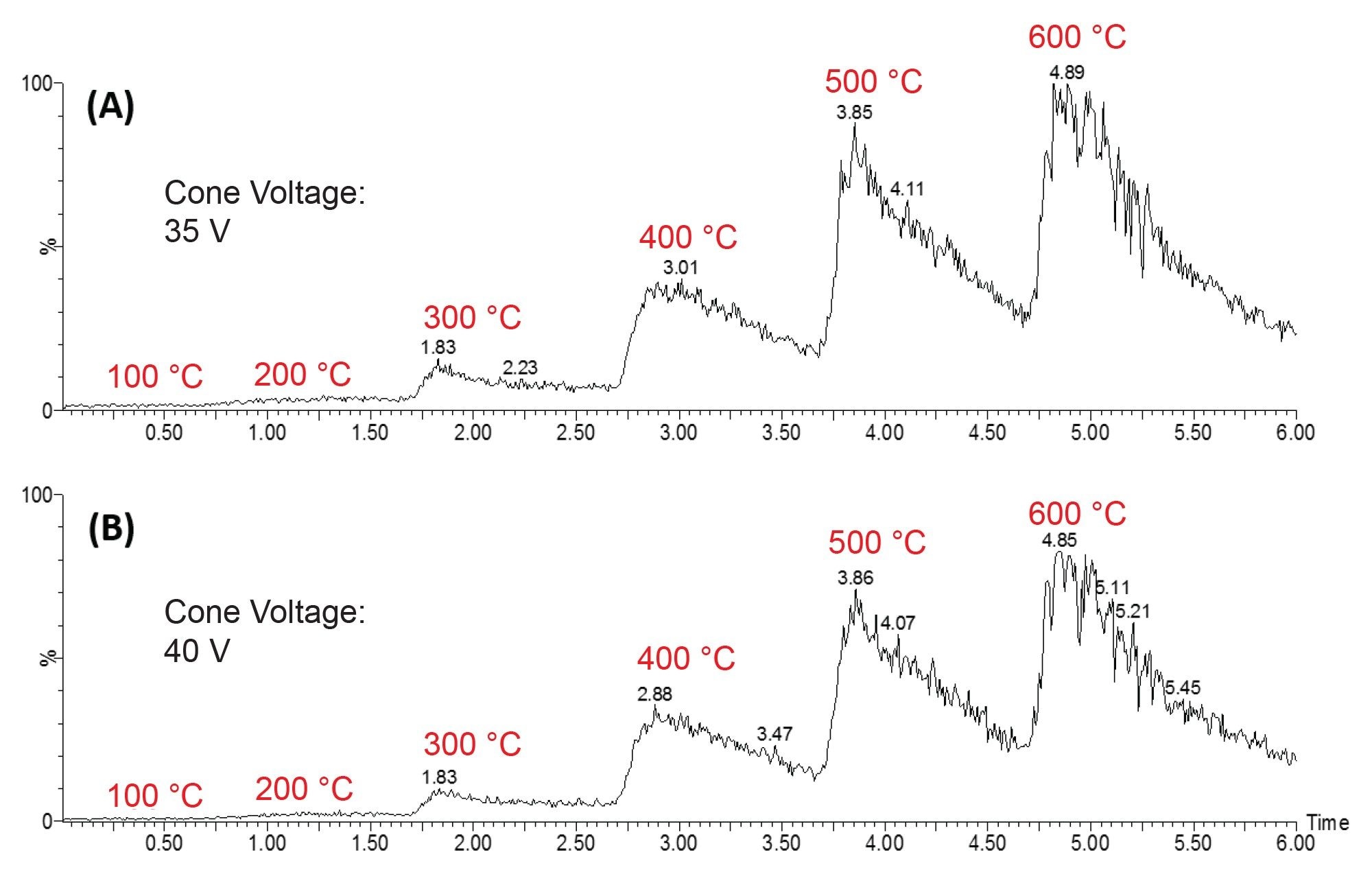
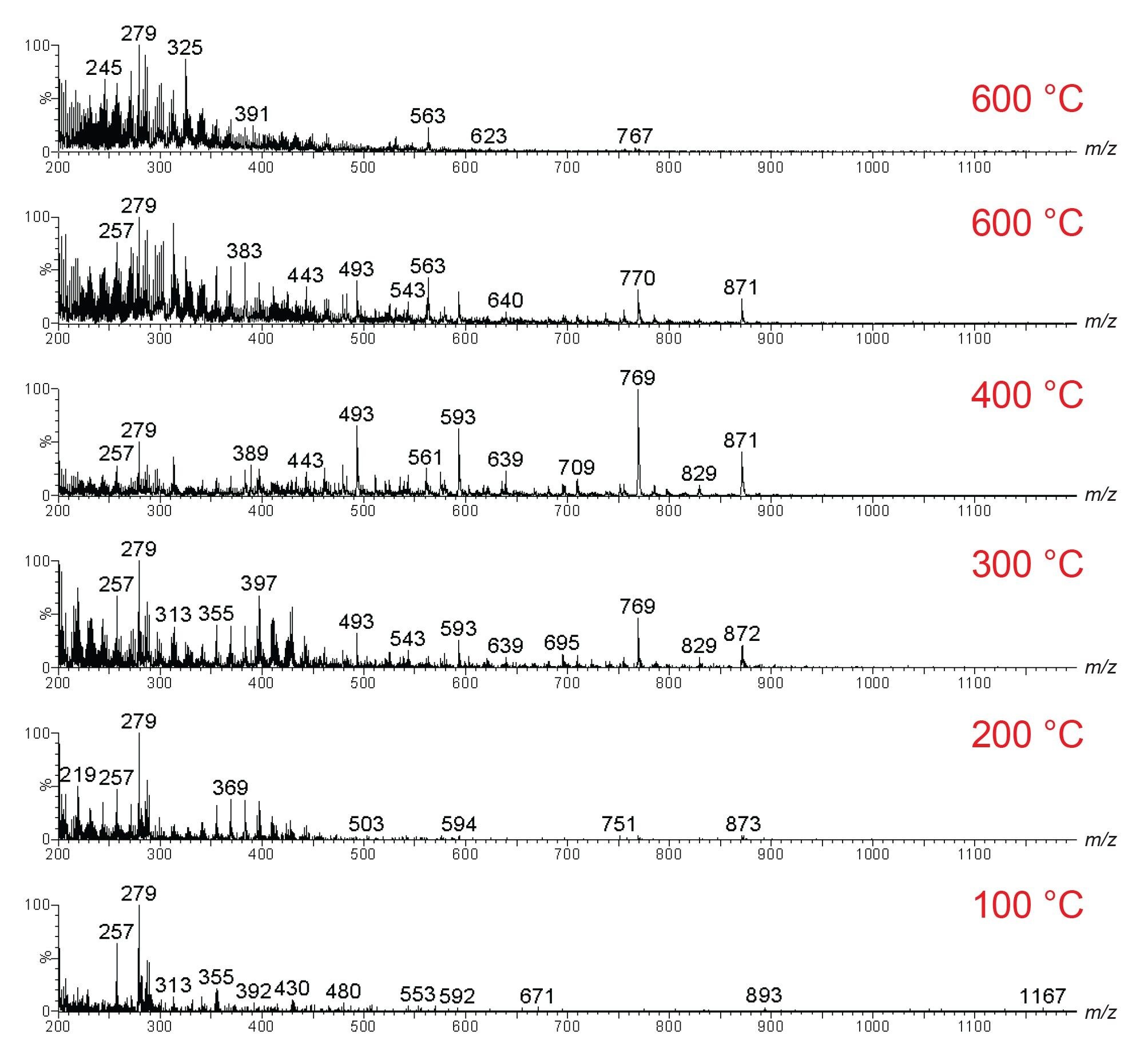
Figure 3 shows the mass spectra of a representative mahogany sample across the temperature gradient applied and at a fixed cone voltage (35 V). Higher‑m/z ion intensities increased up to 400 °C, then decreased at 500 °C, indicating possible fragmentation or degradation. Consequently, 400 °C was selected for subsequent analyses.
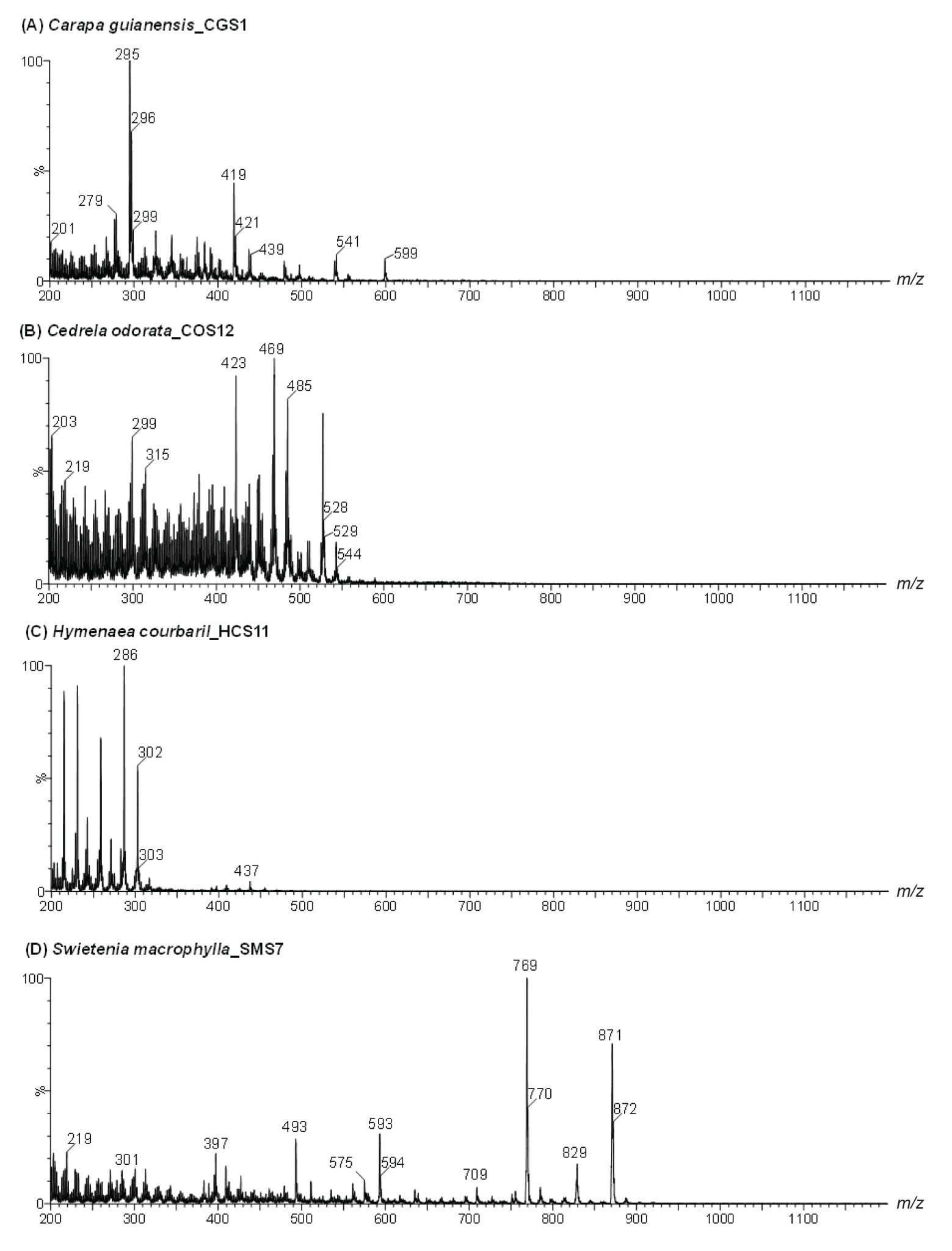
Each species exhibited a distinct distribution of ions across the m/z 200–1200, reflecting differences in secondary metabolite composition. These metabolite-driven fingerprints provide a robust chemical basis for species discrimination, even when anatomical features are indistinguishable. In particular, clear differences in dominant ion regions were observed between species, enabling rapid visual differentiation. The reproducibility of these spectral patterns across replicate analyses demonstrates the stability of the ASAP ionization process and suitability for routine screening workflows.
Unlike high-resolution MS or spectroscopy-based approaches, the RADIAN ASAP platform offers a simplified and compact solution that does not require chromatographic separation or specialized laboratory infrastructure. Also, the use of solvent extracts improves sample representativeness and reduces variability associated with direct solid sampling, contributing to more stable and reproducible spectral profiles.
To fully leverage the multivariate nature of the spectral data, chemometric modeling was performed using LiveID Software. PCA was first applied to reduce data dimensionality while preserving the most significant variance within the dataset. This step enables visualization of clustering trends and identification of key spectral features contributing to differentiation. Subsequently, LDA was applied as a supervised classification approach to maximize separation between predefined species classes. The combined PCA-LDA model provided clear and well-defined clustering of all species, demonstrating strong class separability.
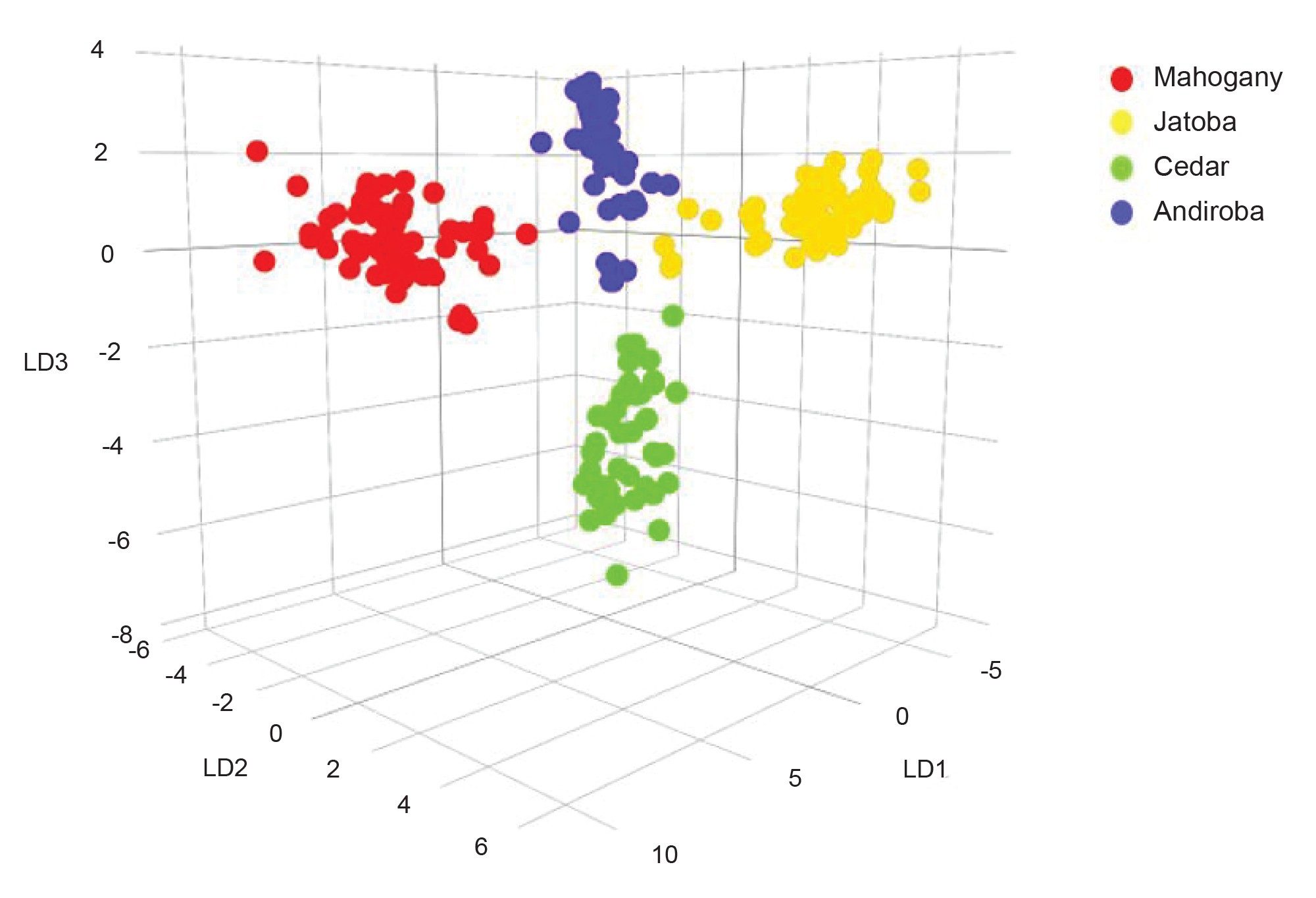
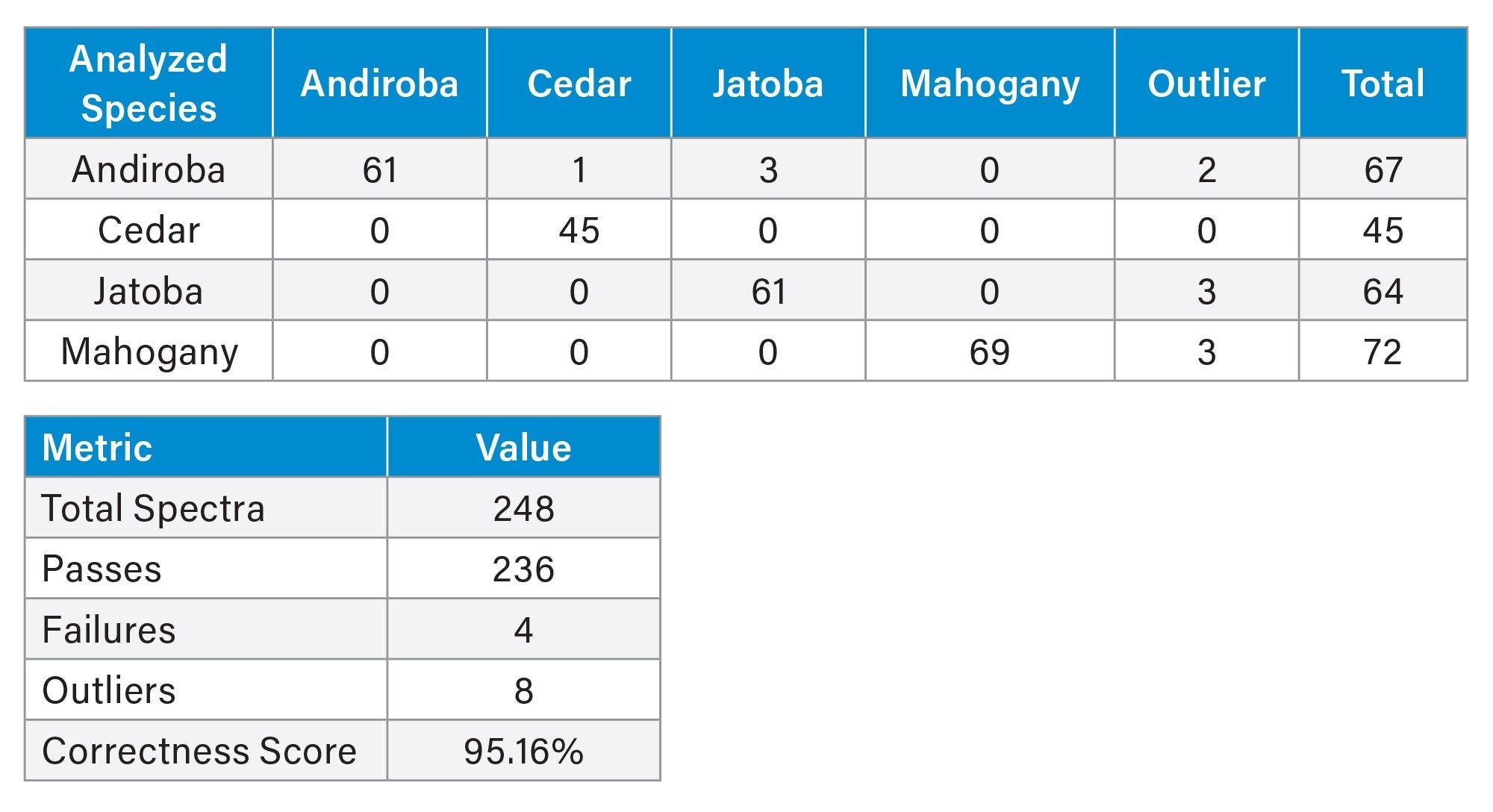
Multiple spectra were acquired per sample, resulting in a total of 248 spectra used for model development. Cross-validation of the PCA-LDA model yielded an overall classification accuracy of approximately 95%, highlighting the robustness of the approach. Misclassifications were minimal and primarily associated with species exhibiting more complex or less distinctive spectral profiles. Importantly, species of high regulatory relevance demonstrated excellent classification performance, supporting the suitability of this method for enforcement applications. Outlier detection thresholds implemented within LiveID Software further enhanced model reliability by preventing forced misclassification of unknown or non-represented samples. To simulate real-world conditions, a subset of samples was excluded from model training and later introduced as unknowns. All samples were correctly classified with 100% confidence, demonstrating the predictive capability and robustness of the model. LiveID Software enables real-time recognition directly at the instrument, providing immediate classification results without the need for extensive data interpretation. This capability significantly reduces analysis time and enables rapid decision-making.
The analytical workflow demonstrated strong robustness under practical operating conditions. The use of solvent extracts minimized contamination of the ion source and ensured consistent signal quality over extended analytical sequences. Additionally, the method showed tolerance to minor variations in sample mass, supporting its applicability in non-controlled environments. The fixed geometry of the RADIAN ASAP source reduces the need for method optimization, allowing users to rapidly deploy the system with minimal training. Combined with the intuitive LiveID Software interface, the workflow is highly accessible to non-expert users. End-to-end analysis, from sample preparation to classification, can be completed in minutes, making this approach well-suited for high-throughput screening applications.
This application note demonstrates rapid wood chemotyping via solvent extraction and direct RADIAN ASAP Direct Mass Detector spectral fingerprinting, with automated PCA-LDA classification in LiveID Software for high-confidence species assignment.
720009389, June 2026


