
Enhancing AAV8 Analysis with Automated ELIT-CDMS Sample Loading - A nESI AutoLoader Coupled to the Waters Xevo CDMS System
Rosie Upton
Waters Corporation, United Kingdom
Published on November 12, 2026

Abstract
Charge Detection Mass Spectrometry (CDMS) is a powerful tool for characterizing large heterogeneous biomolecular assemblies, including adeno-associated virus (AAV) vectors. AAV often exist as heterogeneous mixtures of Full, Empty, Overfull and Partially packaged capsids, making robust and reproducible characterization essential. Coupling the Xevo™ CDMS System with a nano-electrospray (nESI) AutoLoader further strengthens AAV workflows by enabling automated, consistent introduction of multiple samples. Here, injection-to-injection reproducibility with relative standard deviations (RSDs) are demonstrated for Empty capsid ratios of <1.15% and with standard deviations <1.3% for Empty, Full and Overfull capsid ratios within a mixed sample, across 60 injections each. By implementing an effective inter-injection flushing procedure, carried out by the autoloader, upwards of 20 injections per emitter can be achieved with negligible carry-over between Full and Empty injections (0.29–0.45% residual Full).
Benefits
- Measurement Reproducibility and Accuracy: Automated sample loading combined with direct measurement of both mass-to-charge ratio (m/z) and charge (z) for individual ions enable accurate mass determination of AAV capsid populations, supporting reproducible analyzes and providing confidence in the data
- Streamline Laboratory Workflows: Automated sample loading and emitter flushing reduce routine manual tasks between analyzes, freeing up valuable operator time while helping maintain consistent sample introduction and minimizing carryover
Introduction
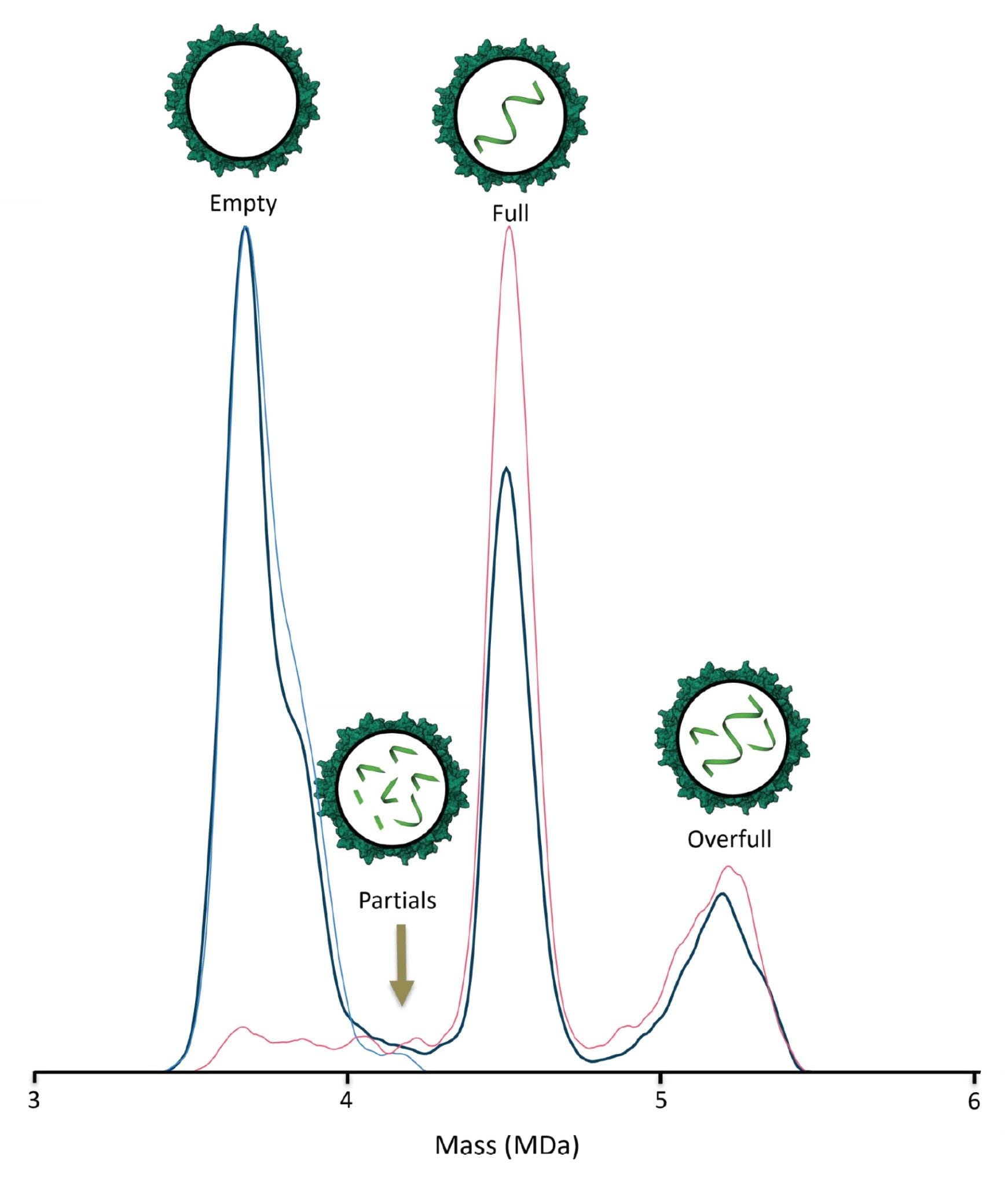
AAVs have emerged as one of the most important delivery vehicles for gene therapies. Accurate characterization of AAV preparations is critical because manufacturing processes generate heterogeneous populations containing Empty, Partially packaged, Fully packaged, and Overfilled capsids (Figure 1). Determining the relative abundance of these populations provide insight into product quality and consistency, supporting process optimization, quality control, and AAV product development.
Conventional mass spectrometry technologies face significant analytical challenges when applied to AAV particles due to their large molecular weights, heterogeneous composition, and broad charge state distributions. These characteristics often result in unresolved charge states in a mass spectrum that complicate accurate mass determination and population assignment. CDMS addresses these limitations by directly measuring both the m/z and z of individual ions, allowing precise determination of particle masses even in highly heterogeneous samples.
The Xevo CDMS Platform utilizes an Electrostatic Linear Ion Trap (ELIT) Detector in which individual ions oscillate within the detection cylinder. Fast Fourier Transform (FFT) analysis of the induced signal provides direct measurements of m/z and z, which are subsequently combined to determine particle mass. This capability has established the Xevo CDMS System as a powerful tool for the characterization of viral vectors and other high-mass biomolecular assemblies.
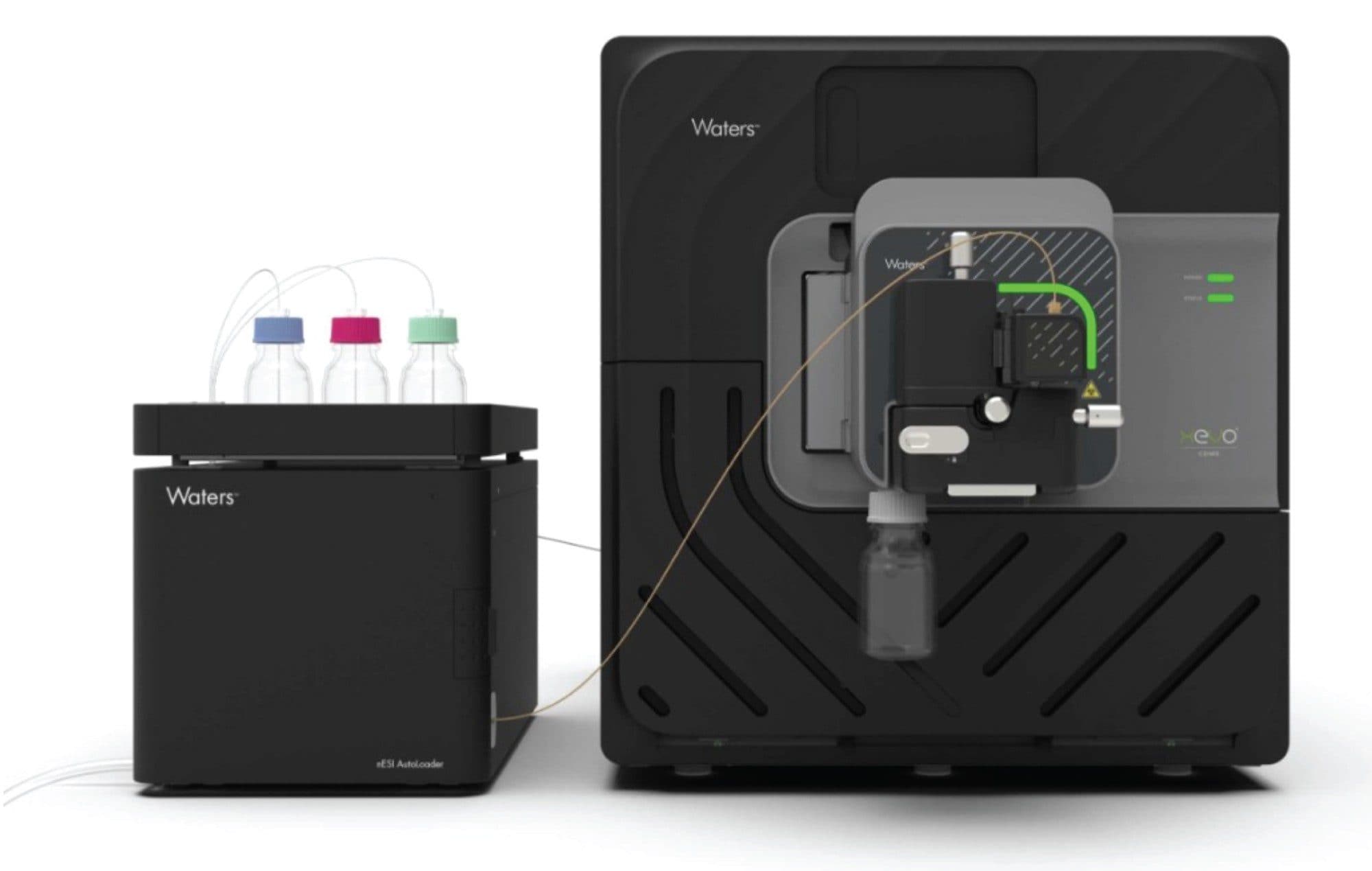
To further improve workflow robustness and throughput, an automated nESI Autoloader was integrated with the Xevo CDMS System as shown in Figure 2. The nESI AutoLoader enables automated sample introduction and emitter flushing, reducing manual user intervention and contamination risk. In this study, the performance of the automated workflow using AAV8 standards was evaluated across five consecutive days, focusing on carryover performance, quantitative reproducibility, and mass measurement consistency.
Experimental
Sample Description
Empty AAV8 and Full (CMVGFP) AAV8 capsid standards were obtained from a third-party commercial vendor at 2 × 10¹³ viral particles (vp)/mL. Samples were buffer-exchanged into 200 mM ammonium acetate containing 0.01% Pluronic F-68 using BioSpin P-6 size-exclusion columns. Full and Empty AAV8 samples were diluted to 4 × 10¹² vp/mL and mixed in a 50:50 ratio to generate a final concentration of 2 × 10¹² vp/mL for reproducibility studies. Separate Empty and Full AAV8 samples at 2 × 10¹² vp/mL were also prepared and used for carryover assessment and instrument performance demonstration.
Reproducibility, precision, and accuracy were determined from 12 replicate injections of a 50:50 v/v mixed AAV8 sample analyzed through a single emitter on each of five independent analysis days. Carryover was evaluated using an alternating injection sequence consisting of 12 Full AAV8 and 12 Empty AAV8 sample injections (24 total injections) per emitter per day.
Method Conditions
A nESI AutoLoader was coupled to the Xevo CDMS System through a transfer line enabling both automated sample delivery and post-acquisition flushing of the emitter. Analyzes were performed in positive ion mode with a trapping time of 100 ms and data was acquired for 20 minutes per injection. The autoloader was controlled using waters_connect™ Sample Submission and Acquisition Method Editor Software, while data processing and capsid population determination were performed using the waters_connect CDMS Toolkit Application.
Between injections, an automated wash sequence consisting of deionized water, Magic Mix (1:1:1:1 H₂O:IPA:MeOH:ACN), deionized water, and ammonium acetate + 0.01% Pluronic solution was applied. The complete wash procedure took approximately one minute and was performed automatically by the nESI AutoLoader. The transfer solution to move the sample to the end of the emitter was deionized water.
Results and Discussion
Accuracy and Precision of Mass Measurements
Mass measurement performance was evaluated using Empty and Full AAV8 populations throughout the five-day study. Average measured masses for Empty capsids ranged from 3.679 to 3.691 MDa, while Full capsids ranged from 4.486 to 4.499 MDa (see Table 1).
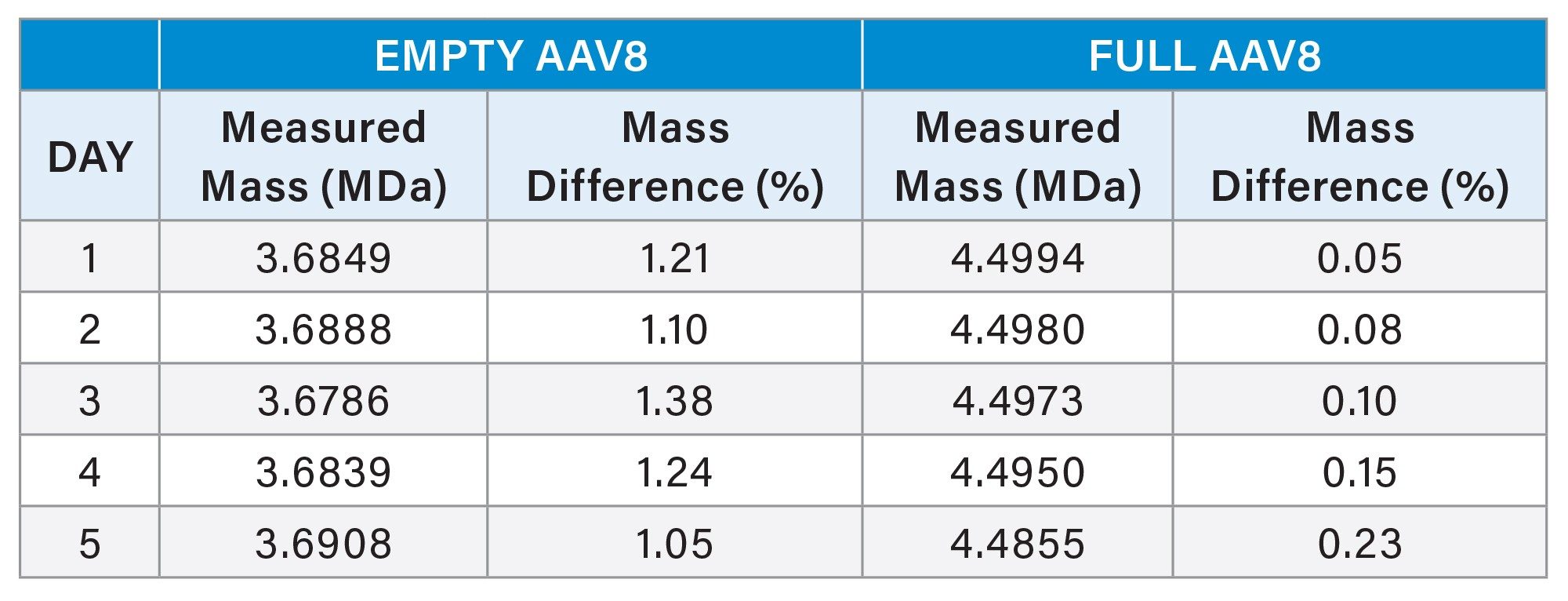
Mass differences for Full AAV8 remained exceptionally low, ranging from 0.05% to 0.23%, while Empty capsid mass differences ranged from 1.05% to 1.38%. Mass precision was highly consistent, exhibiting coefficients of variation below 0.3% across the study.
These results underscore the capability of Xevo CDMS System to provide accurate mass determination for megadalton-scale viral particles while maintaining excellent long-term analytical stability using a single emitter per day.
Reproducibility of Capsid Population Quantification
Relative capsid quantification was performed using the waters_connect CDMS Toolkit Software which calculates the proportion of total detected ions assigned to each user-defined capsid population, with z, m/z, and mass regions selected based on the data.
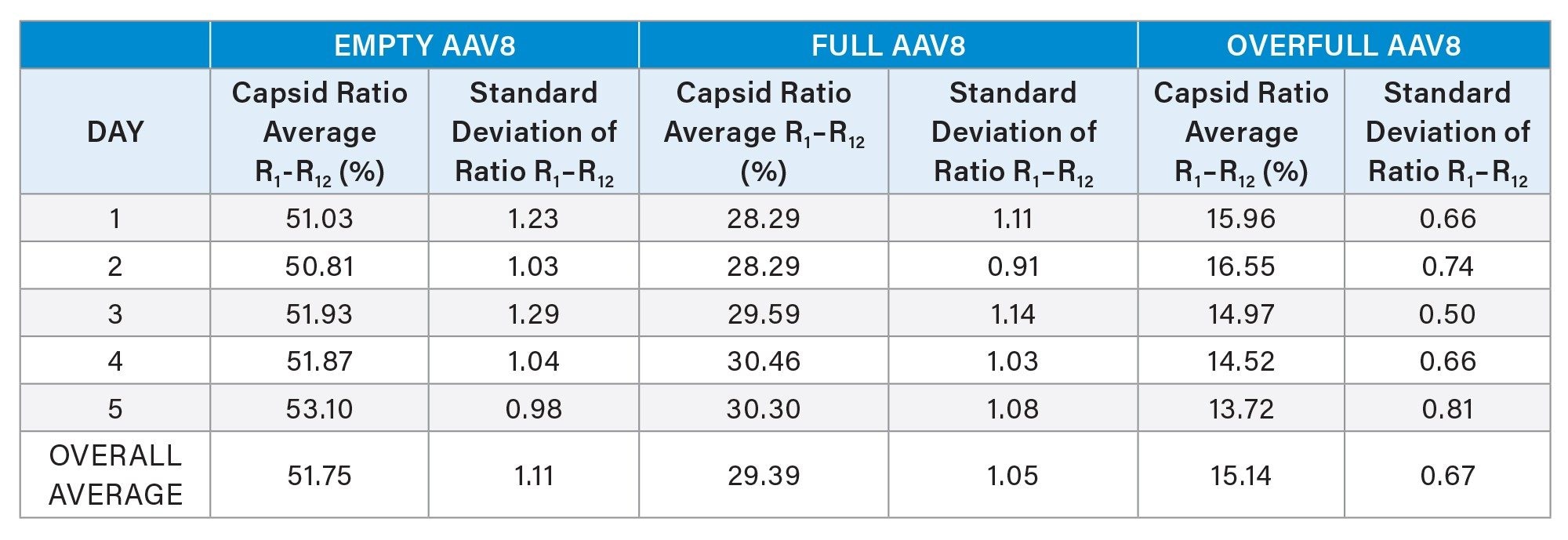
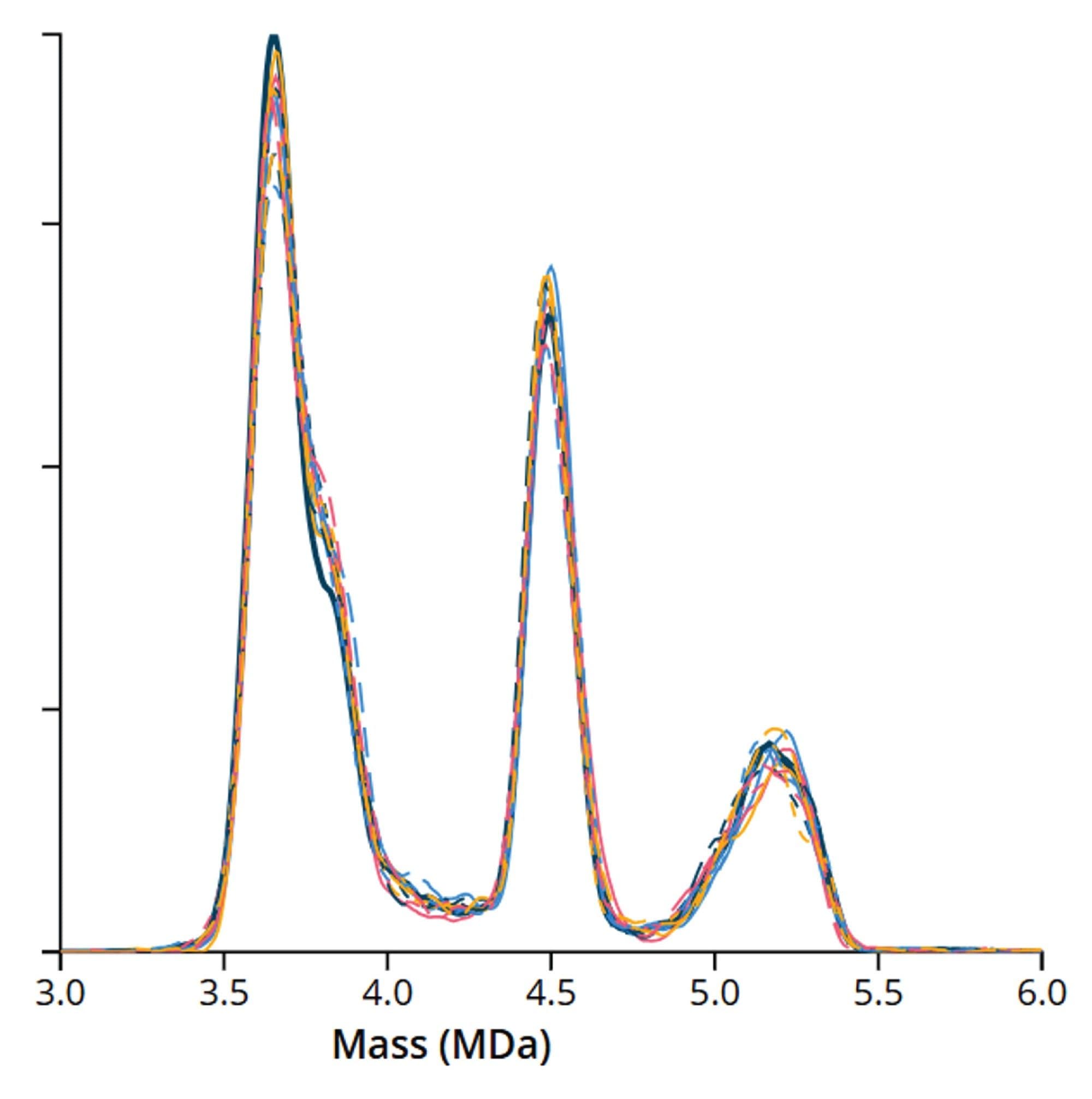
The reproducibility of the automated workflow was assessed using 12 replicate injections per day of a 50:50 mixed Full: Empty AAV8 sample. Measurements were collected over five consecutive days, yielding a total of 60 analyzes. The measured Empty capsid population remained highly consistent throughout the study, averaging 51.75 ± 1.11%. Full capsids averaged 29.39 ± 1.05%, while Overfull capsids averaged 15.14 ± 0.67%. Daily standard deviations remained low across all capsid classes, demonstrating excellent injection-to-injection and day-to-day reproducibility (see Table 2).
Overlayed mass histograms (Figure 3) showed clean and reproducible population distributions with no evidence of anomalous intermediate species or contamination. Preservation of expected AAV8 population profiles throughout the study confirms that automated sample handling does not adversely impact data quality.
Evaluation of Injection-to-Injection Carryover
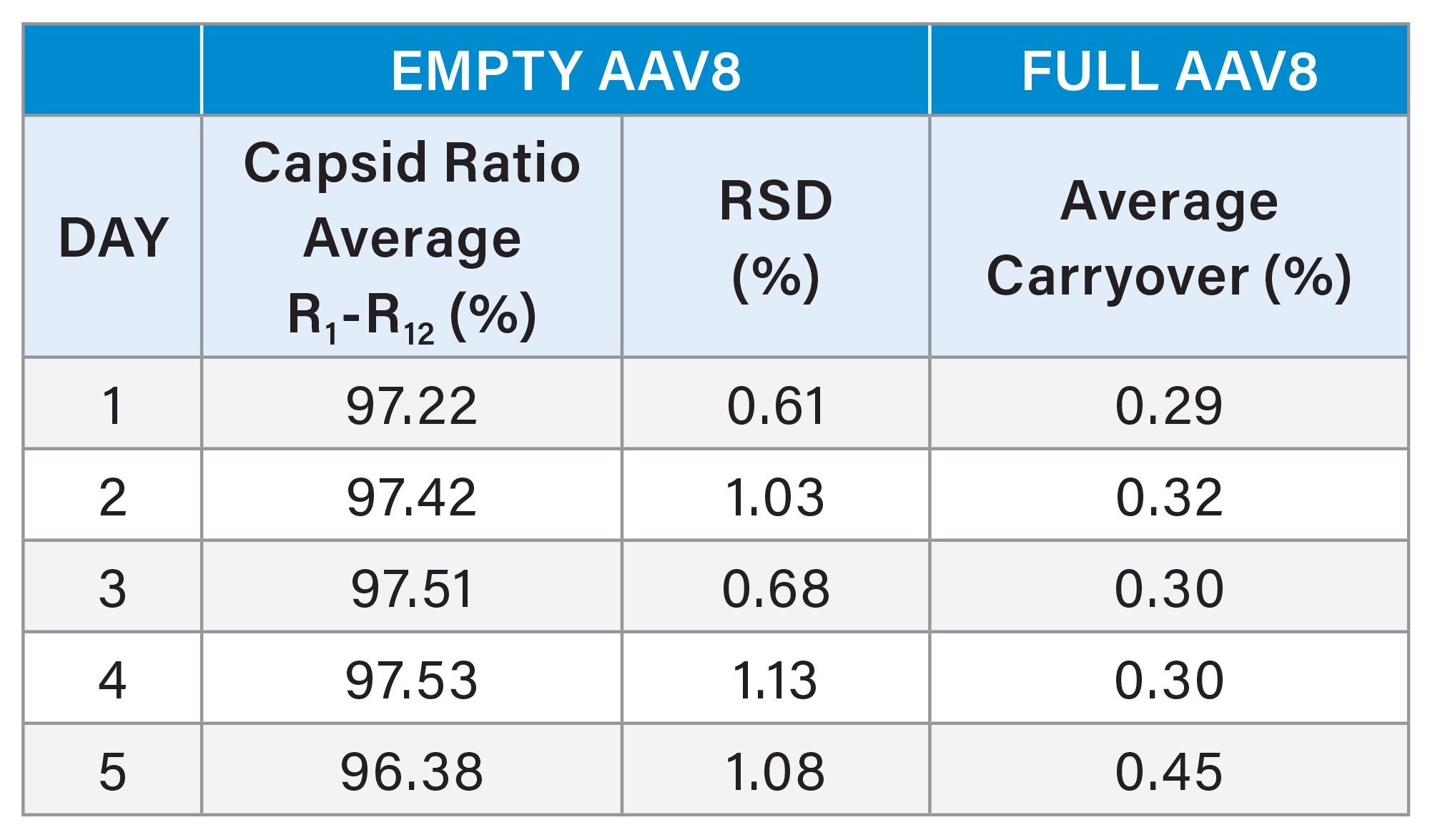
An essential requirement for automated AAV analysis is effective removal of residual analytes between injections. To evaluate carryover performance, Full and Empty AAV8 samples were injected in an alternating sequence over five days. Because Full AAV preparations naturally contain small proportions of Empty, Partial, and Overfull species (see Figure 1), quantification focused on detection of Full and Overfull capsids appearing in subsequent Empty capsid injections.
Across 60 injections (Table 3), average carryover relative to Empty capsids remained between 0.29% and 0.45% and Empty AAV8 capsids consistently represented greater than 96% of the measured capsid population in the Empty control injections. These data demonstrate that the automated flushing protocol effectively removes residual viral material and confirms the precision of the system.
The combination of low sample carryover and automated sample delivery supports efficient multi-sample AAV characterization workflows. Following initial setup, 24 injections were acquired automatically over more than eight hours with no user intervention, reducing hands-on operation while maintaining consistent sample introduction and minimizing cross-sample interference.
Conclusion
The combination of automated nano-electrospray sample delivery with Xevo ELIT-CDMS provides a robust solution for high-throughput characterization of AAV vectors. Automated sample introduction and flushing substantially reduce manual intervention while maintaining excellent analytical performance.
The workflow demonstrated negligible carryover between injections, highly reproducible capsid population quantification across five days, and accurate intact mass determination of Empty and Full AAV8 capsids. These attributes are essential for applications requiring reliable comparative analysis, including process development, formulation studies, and quality assessment of gene therapy products.
By combining the quantitative power of CDMS with automated sample handling, the nESI AutoLoader and Xevo CDMS expands the accessibility of advanced viral vector characterization and delivers the throughput, reproducibility, and confidence required for modern AAV analytical workflows.
References
Featured Products
720009789, November 2026


