

For forensic toxicology use only.
For forensic toxicology use only.
Nayan S. Mistry
Waters Corporation, United Kingdom
Published on September 18, 2026
For forensic toxicology use only.
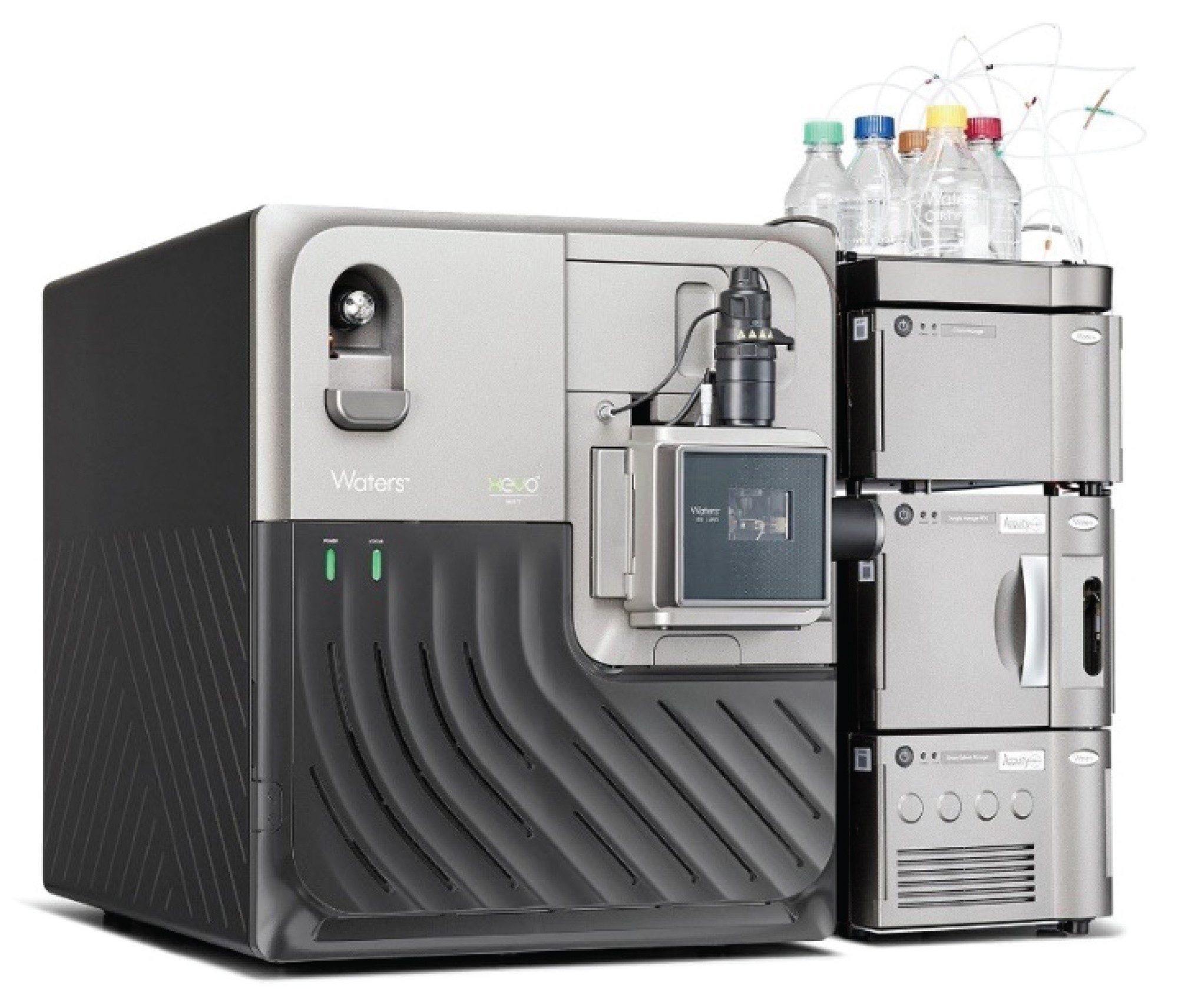
Forensic toxicology laboratories demand analytical platforms capable of delivering robust, rapid and accurate screening of complex biological matrices. The Xevo™ MRT Mass Spectrometer, a next generation multi-reflecting time-of-flight (Tof) system (Figure 1), provides routine parts-per-billion (ppb) mass accuracy, enabling high-confidence identification of drug compounds and toxicants. This application brief provides a comparative evaluation of two different acquisition strategies: targeted data-dependent (Tof MRM) and data-independent (MSE) modes.
The results demonstrate the comparative advantages, limitations, and operational compromises inherent to each acquisition mode in routine forensic toxicology workflows, enabling laboratories to make evidence-based decisions aligned with their specific analytical requirements and laboratory priorities.
Drug screening constitutes a critical component of effective treatment programs worldwide, supporting both compliance monitoring and the detection of illicit substance use. Conventional laboratory workflows typically employ an initial immunoassay screen followed by confirmatory analysis using LC‑MS/MS. More recently, some service providers have consolidated these steps by implementing a single targeted LC‑MS/MS method focused on a predefined panel of priority analytes. Although both strategies are suitable for limited analyte sets, their targeted nature restricts the analytical breadth required to detect a wider spectrum of drug substances.
HRMS instrumentation is becoming increasingly recognized in forensic toxicology as a comprehensive, broad‑spectrum screening approach. It is most commonly implemented using data‑independent acquisition modes, such as MSE, which provides highly specific compound identification by simultaneously capturing precursor ions under low‑energy conditions and rich, mass-range-wide fragment ion spectra under elevated‑energy conditions.1–4 Quadrupole time-of-flight (QTOF) platforms can also operate in a targeted acquisition mode, such as Tof MRM, enabling high‑specificity identification and quantitative analysis when the objective is to detect a defined panel of analytes.5
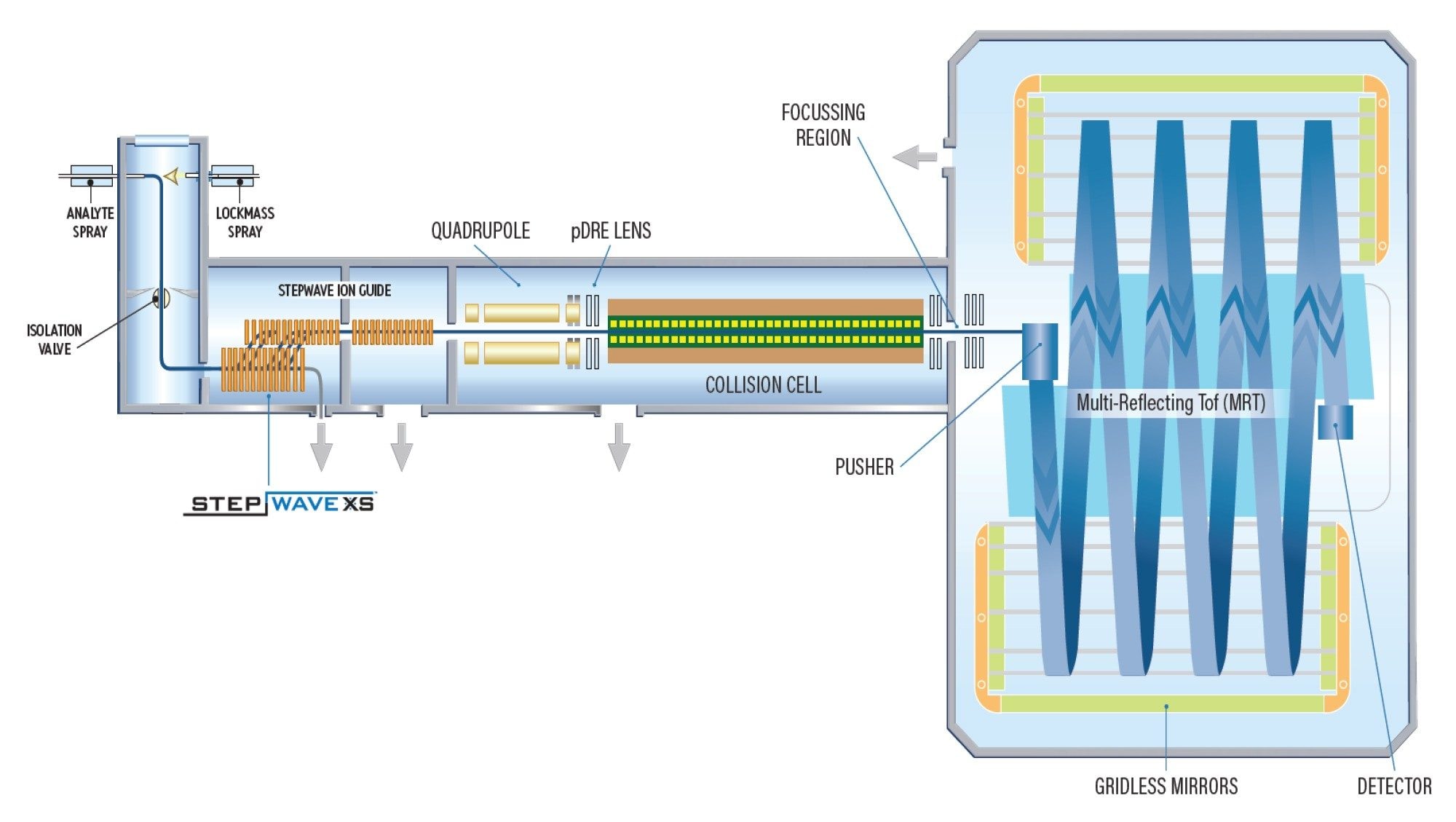
This application brief compares Tof MRM and MSE methodologies to evaluate their ability to individually meet established service criteria while expanding analytical versatility for comprehensive drug screening on a single instrument platform (Figure 2).
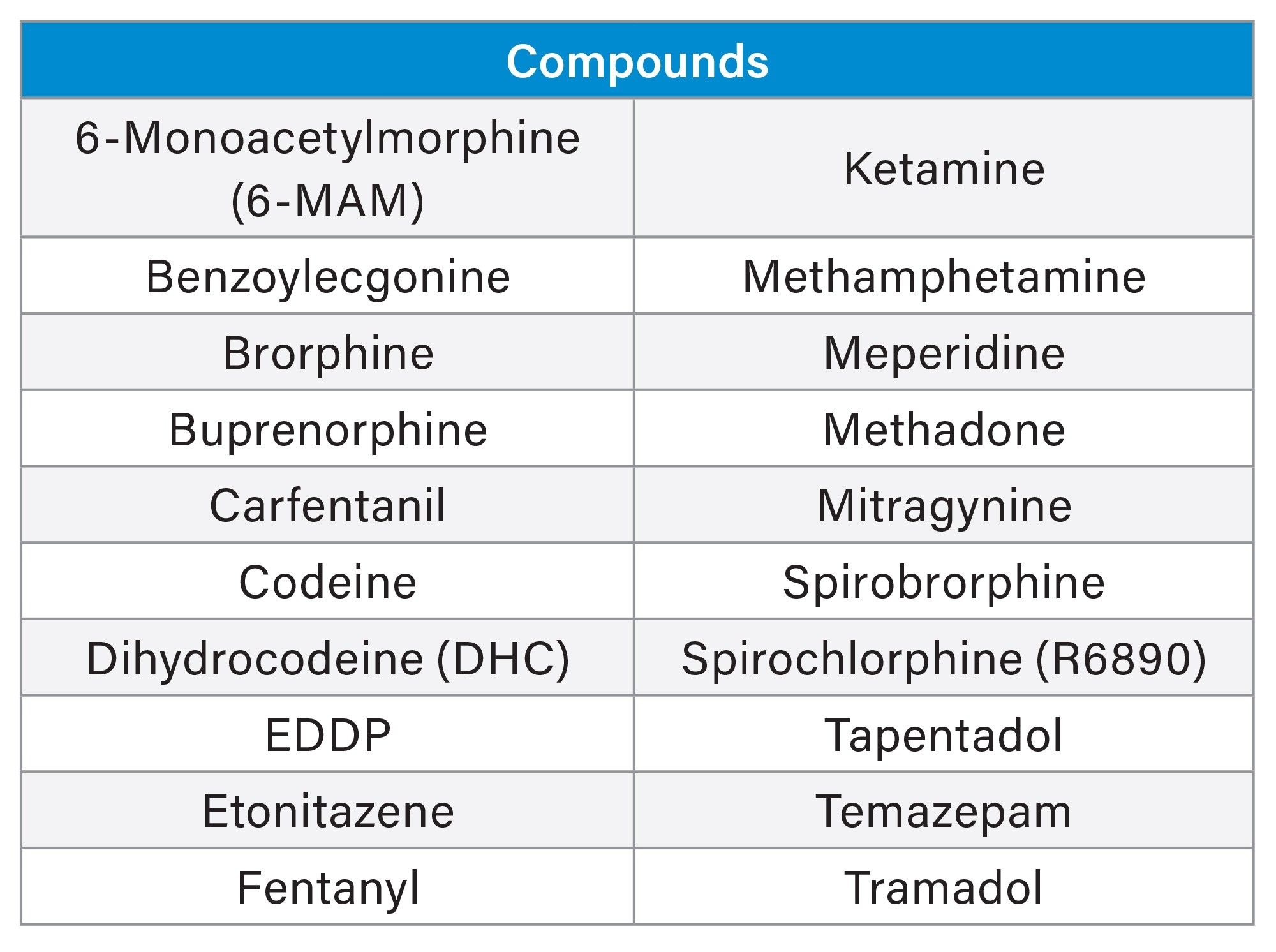
The Waters system suitability commercial reference standard (p/n: 186007361) was prepared at a final concentration of 25 ng/mL by performing a 1:20 dilution of the supplied 500 ng/mL stock solution. Urine calibration samples were prepared by fortifying pooled volunteer blank urine (n = 6) with twenty target analytes (Table 1) across a concentration range of 0.01–2500 ng/mL. A cohort of twenty anonymized authentic urine samples were analyzed together with a certified commercial reference urine standard, (Drug Confirmation Test, DCT; ACQ Science, Germany). All matrix samples underwent a five-fold dilution with mobile phase A prior to analysis.
A Waters ACQUITY™ UPLC™ I-Class PLUS System with Sample Manager-Flow Through Needle (SM-FTN) was coupled with the Xevo MRT Mass Spectrometer. Chromatographic separation for both acquisition modes was achieved on a Waters ACQUITY HSS C18 Column utilizing ESI+ ionization conditions, employing a 15-minute gradient elution, using ammonium formate adjusted to pH3 (mobile phase A) and acetonitrile containing 0.1% formic acid (mobile phase B).6–8
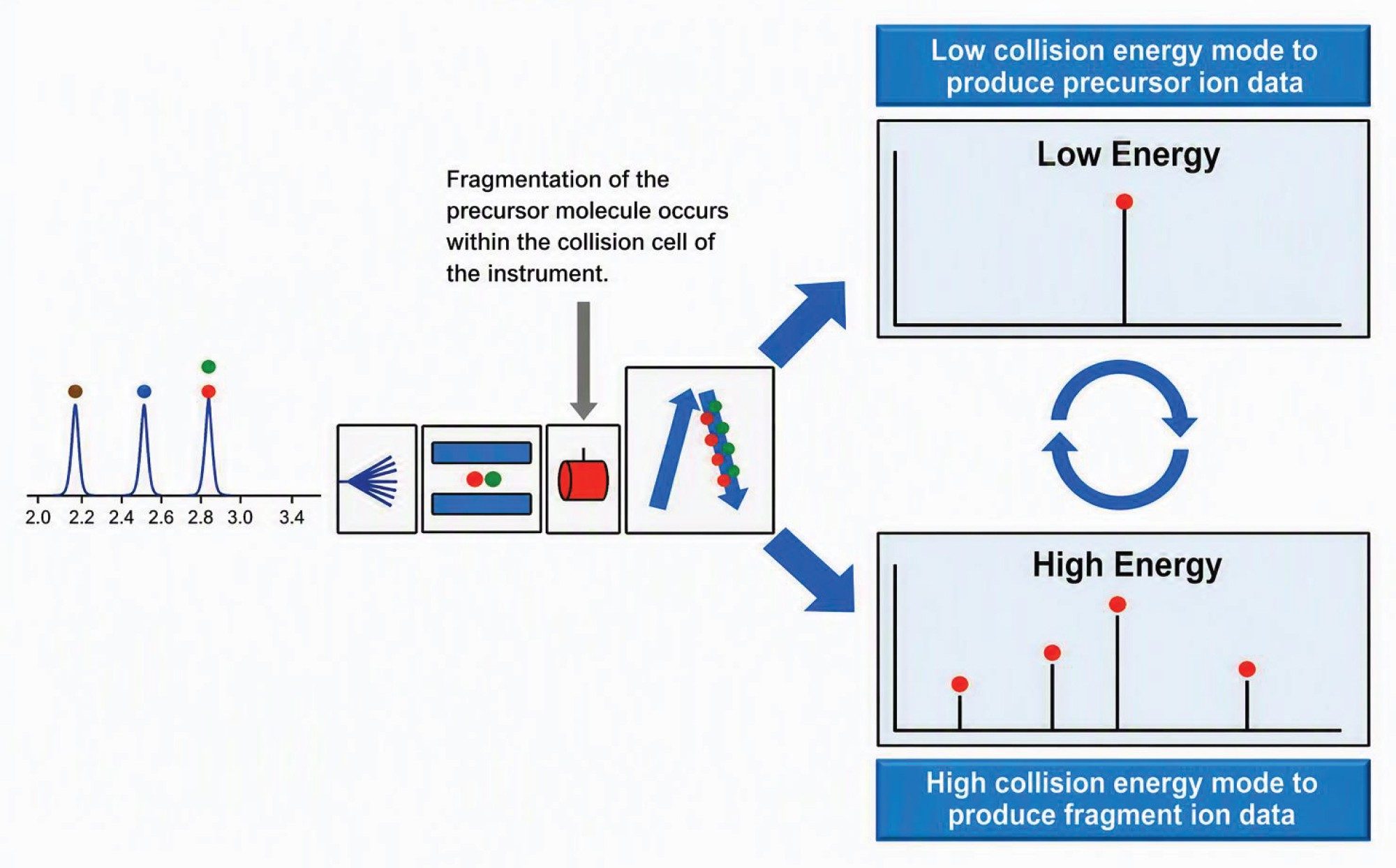
MSE, a data‑independent acquisition mode, alternates between low‑ and high-collision energy functions without precursor ion selection (Figure 3). This approach simultaneously captures intact precursor ions in the low‑energy trace and comprehensive, mass‑range–wide fragment ion spectra in the high‑energy trace. The resulting dataset is highly information‑rich, preserving all acquired spectral detail for unbiased screening, robust spectral‑library matching, and confident identification across targeted, semi‑targeted, and non‑targeted (“Discovery”) workflows from a single injection.
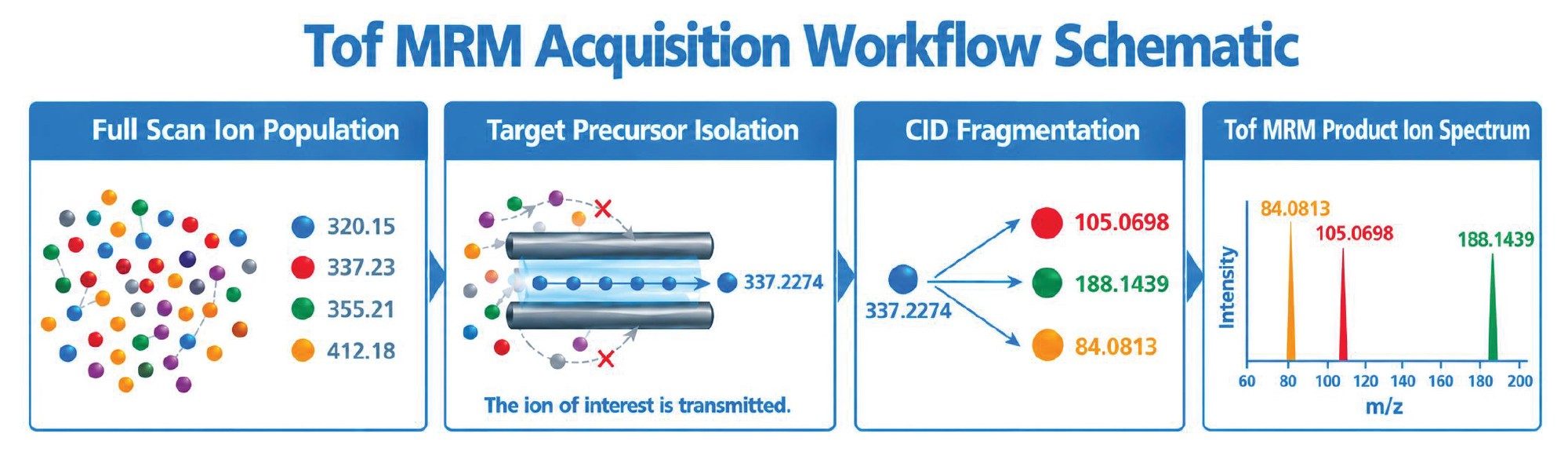
Time‑of‑flight mass spectrometers are most commonly operated in non‑targeted acquisition modes, such as MSE, to support broad, discovery‑oriented forensic screening.4,5,9 When the analytical objective is focused on monitoring a defined panel of target compounds, the same QTOF platform can be operated in targeted Tof MRM mode (Figure 4) to maximize sensitivity and selectivity. In this acquisition strategy, precursor ions of interest are selectively transmitted by the quadrupole and fragmented under optimized collision-energy conditions, while the time-of-flight analyzer acquires accurate-mass product ion spectra for both quantifier and qualifier ions. By restricting data acquisition to predefined analytes and transitions, Tof MRM significantly reduces spectral complexity, enhances signal specificity, and improves signal-to-noise (S/N) performance relative to broad-spectrum MSE acquisition. These improvements translate into enhanced analytical sensitivity, making Tof MRM particularly well-suited for the detection and quantification of trace-level analytes, low-abundance toxicants, and compounds analyzed using streamlined sample preparation approaches, including dilution-only workflows.
The forensic toxicology workflow uses the waters_connect Software Platform, together with UNIFI and MS Quan Applications, to convert complex MSE and Tof MRM mass spectrometry data, respectively, into actionable results. Guided, standardized workflows streamline method setup, promote operational consistency, and automate key processing steps, including peak detection, spectral deconvolution, and stringent mass-accuracy verification (precursor mass ≤ 2 ppm), reducing manual review and accelerating results delivery.
Analysis of fortified urine calibrators demonstrated the enhanced analytical performance afforded by Tof MRM acquisition, achieving limits of detection (LODs) ranging from 0.05 to 0.5 ng/mL across the monitored analytes, remaining consistent with the expected sensitivity gains associated with targeted precursor ion selection and optimized product ion monitoring. By comparison, the broader, data-independent, MSE workflow yielded LODs between 0.5 and 5 ng/mL. These results highlight the ability of Tof MRM to extend detection capabilities for trace-level analytes, while MSE continues to provide the broader analyte coverage and retrospective interrogation advantages inherent to data-independent acquisition. A comprehensive summary of LOD performance for all monitored analytes is presented in Table 2.
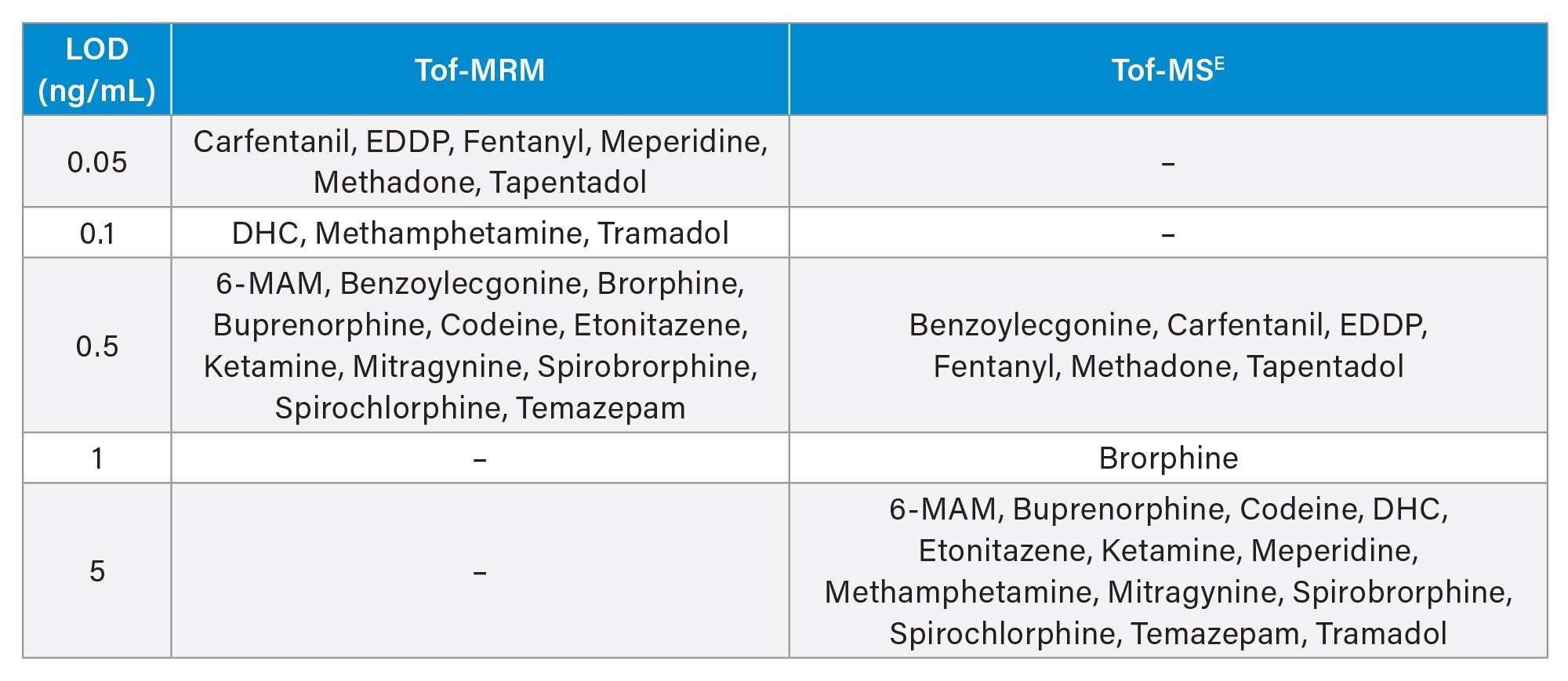
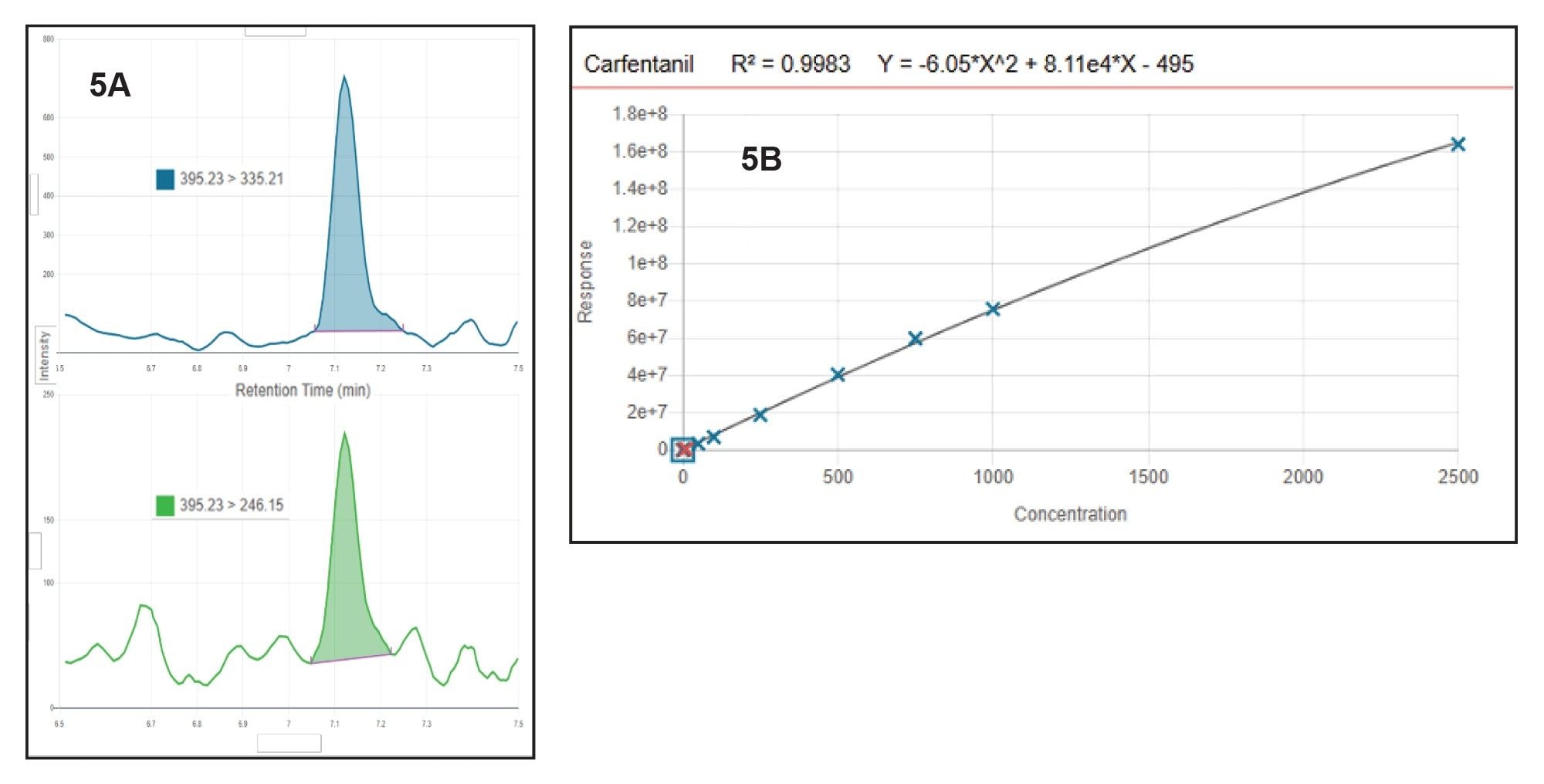
Figure 5 demonstrates the sensitivity and quantitative performance of the Tof MRM method presenting representative quantifier and qualifier ion responses for carfentanil at its experimentally determined LOD of 0.05 ng/mL, together with the corresponding calibration profile derived from fortified urine calibrators.
The two acquisition strategies were subsequently evaluated using a cohort of twenty authentic urine specimens to assess qualitative performance under representative real-world analytical conditions. For compounds included within the targeted screening panel, excellent agreement was observed between the approaches, demonstrating the robustness, sensitivity, and reliability of targeted Tof MRM analysis for routine testing.
A further advantage of the Xevo MRT MS was demonstrated through its MSE acquisition capability. While maintaining the confidence, sensitivity, and quantitative performance associated with targeted workflows, MSE full-spectrum data enabled retrospective interrogation of samples and the identification of compounds beyond the predefined target list. Coupled with sub-1 ppm mass accuracy, this approach provides exceptional confidence in compound identification and supports highly selective, reliable screening. This significantly expands analytical coverage, facilitating the detection of therapeutic drugs, benzodiazepines, antidepressants, novel psychoactive substances (NPS), and illicit compounds that may be overlooked by conventional targeted methods.
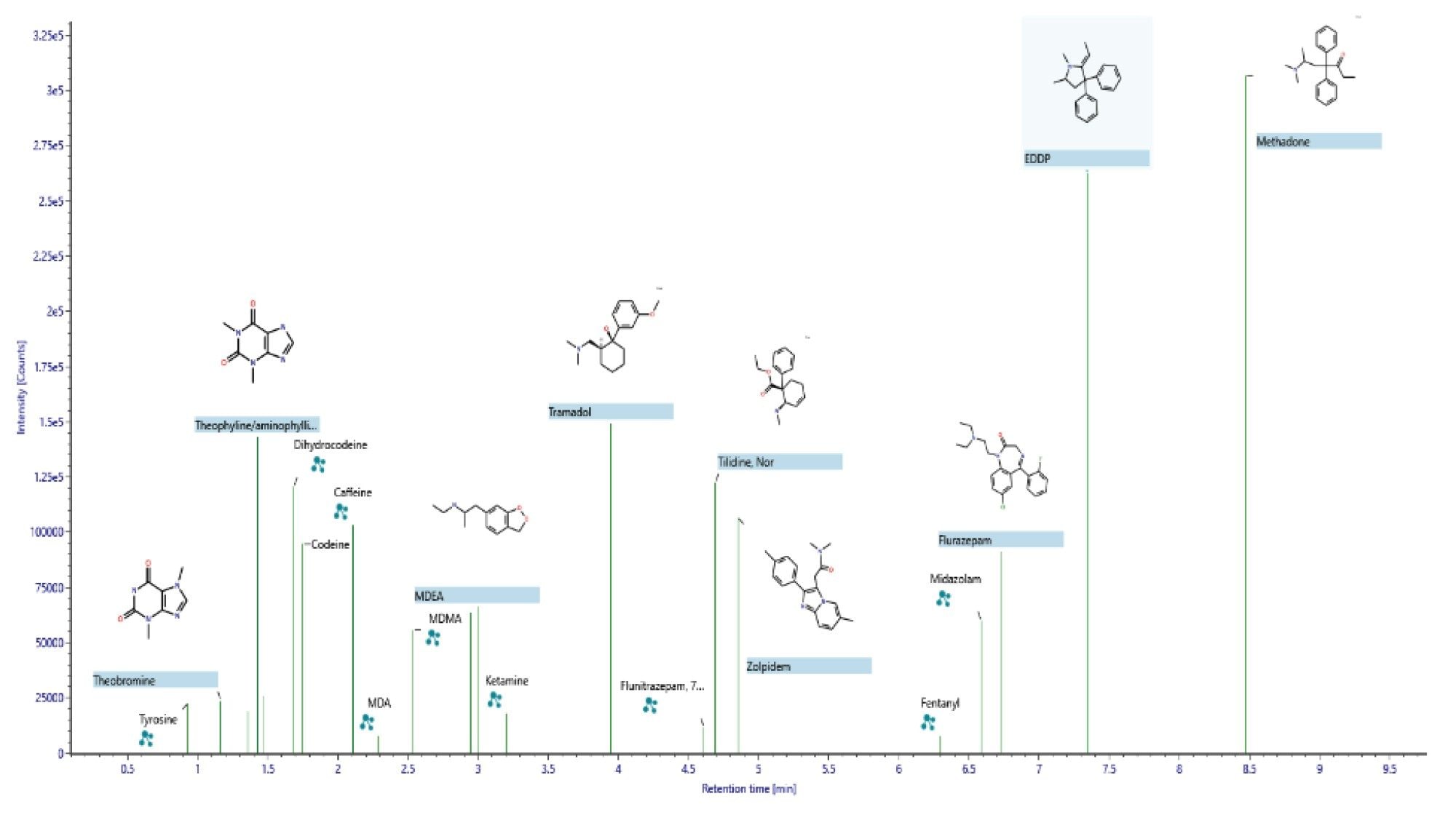
Figure 6 further highlights the comprehensive screening capabilities of the MSE workflow through the analysis of a commercial reference urine standard (DCT). Detected analytes spanned a broad concentration range, from approximately 0.75 ng/mL for fentanyl to 225 ng/mL for codeine and dihydrocodeine. These findings underscore the strength of non-targeted acquisition for the characterization of complex toxicology samples, enabling the simultaneous detection of both low-level analytes and highly abundant compounds within a single analysis.
This study demonstrates that the Xevo MRT mass spectrometer delivers an exceptional balance of analytical sensitivity, qualitative performance, and screening versatility, making it uniquely suited to the evolving demands of forensic toxicology laboratories. Targeted Tof MRM acquisition achieved excellent sensitivity, with limits of detection of ≤0.5 ng/mL and excellent agreement with established workflows across authentic urine specimens, confirming its suitability for routine high-confidence targeted screening. In parallel, MSE full-spectrum acquisition, provided comprehensive broad-spectrum screening with limits of detection of ≤5 ng/mL.
The key attributes of the Xevo MRT MS is its ability to seamlessly combine highly sensitive targeted analysis with high-resolution, full-spectrum data acquisition within a single analytical platform. The sub-1 ppm mass accuracy and comprehensive fragmentation data provide exceptional confidence in compound identification, while enabling the detection of drugs and emerging substances beyond predefined target lists. This capability significantly expands toxicological coverage and allows laboratories to retrospectively interrogate datasets for new compounds of interest without the need for sample reanalysis.
Collectively, these capabilities provide forensic laboratories with a versatile and future-proof analytical platform capable of addressing diverse toxicological testing requirements. The findings presented in this application brief underscore the practical advantages, limitations, and operational considerations associated with each acquisition mode, enabling laboratories to make informed decisions when selecting the most appropriate strategy based on sensitivity requirements, screening scope, workflow demands, and overall analytical objectives.
720009575, September 2026


