
From Extractables Screening to Targeted Leachables Quantitation Using DDA and Tof-MRM on the Xevo™ MRT Mass Spectrometer
Rachel Sanig, Jayne Kirk, Lee Gethings, Richard Lock
Waters Corporation, United Kingdom
Published on August 20, 2026

Abstract
Due to the concern about the safety of components from plastic, it is crucial to screen for potential extractables and leachables (E&L) from pharmaceutical packaging and medical devices. Regulations and standards are in place to ensure safety limits are met. Analytical instrumentation needs to be highly sensitive to detect low level chemical species to meet expected screening thresholds. A data dependent acquisition (DDA) mode can be used to determine markers of interest in a complex mixture providing highly specific MS/MS spectra. The DDA-generated product ions can then be utilized for compiling targeted quantitative assays for leachables with time-of-flight multiple reaction monitoring (Tof-MRM). This application note describes a DDA approach to qualitatively determine markers. Curated fragment ions were then packaged for a targeted leachable quantitative analysis which was subsequently undertaken using the highly sensitive Tof-MRM mode.
Benefits
- Screening and quantitation on one high-resolution platform - The Xevo MRT Mass Spectrometer enables extractables characterization and targeted leachables quantitation on the same instrument.
- Highly specific MS/MS data for fragment ion selection for quan optimization - DDA mode generates clean, precursor-specific MS/MS spectra.
- Highly sensitivity quantitation using scheduled Tof-MRM - Tof-MRM with enhanced duty cycle improves sensitivity whilst retaining the advantages of high-resolution mass spectrometry (HRMS).
- Integrated acquisition-to-results workflow - The waters_connect™ Software Platform with UNIFI™ Software and MS Quan Application provides an integrated workflow from acquisition to data processing and reporting.
Introduction
Medical devices, pharmaceutical packaging, and manufacturing components, contain different chemicals, including polymers, polymer additives such as antioxidants, slip agents, colorants, and other compounds. These chemicals, their impurities, and degradation products can migrate out of the materials resulting in potentially unsafe substances. Due to this, there are regulations, standards, and guidance in place to ensure that safety limits for the consumer are met.1-3
Worst case studies are undertaken to find extractables at levels above the analytical evaluation threshold, and these must be identified and reported for toxicological assessment.4 Extractables then deemed to be leachables under normal use need to be routinely quantified. Analytical instrumentation needs to be highly sensitive to detect low level chemical species to meet expected screening thresholds.
Historically, extractables screening has been undertaken using HRMS, whilst leachables quantitation has been done with tandem quadrupole mass spectrometry due to the increased sensitivity and linear dynamic range. Multi-reflecting time-of-flight mass spectrometry (MRT-MS), however, now demonstrates comparable sensitivity and linearity.5 High mass accuracy is combined with the selectivity of Tof-MRM6 meaning that screening and quantitation can be undertaken on one instrument.
While quantitation is typically undertaken using product to precursor transitions, the data are not always readily available for the vast variety of potential E&L compounds that could arise. Using the Xevo MRT Mass Spectrometer System, DDA can be used to determine markers of interest in a complex mixture providing highly specific MS/MS spectra (Figure 1). The resulting product ions can then be utilized for targeted quantitation of leachables with Tof-MRM.
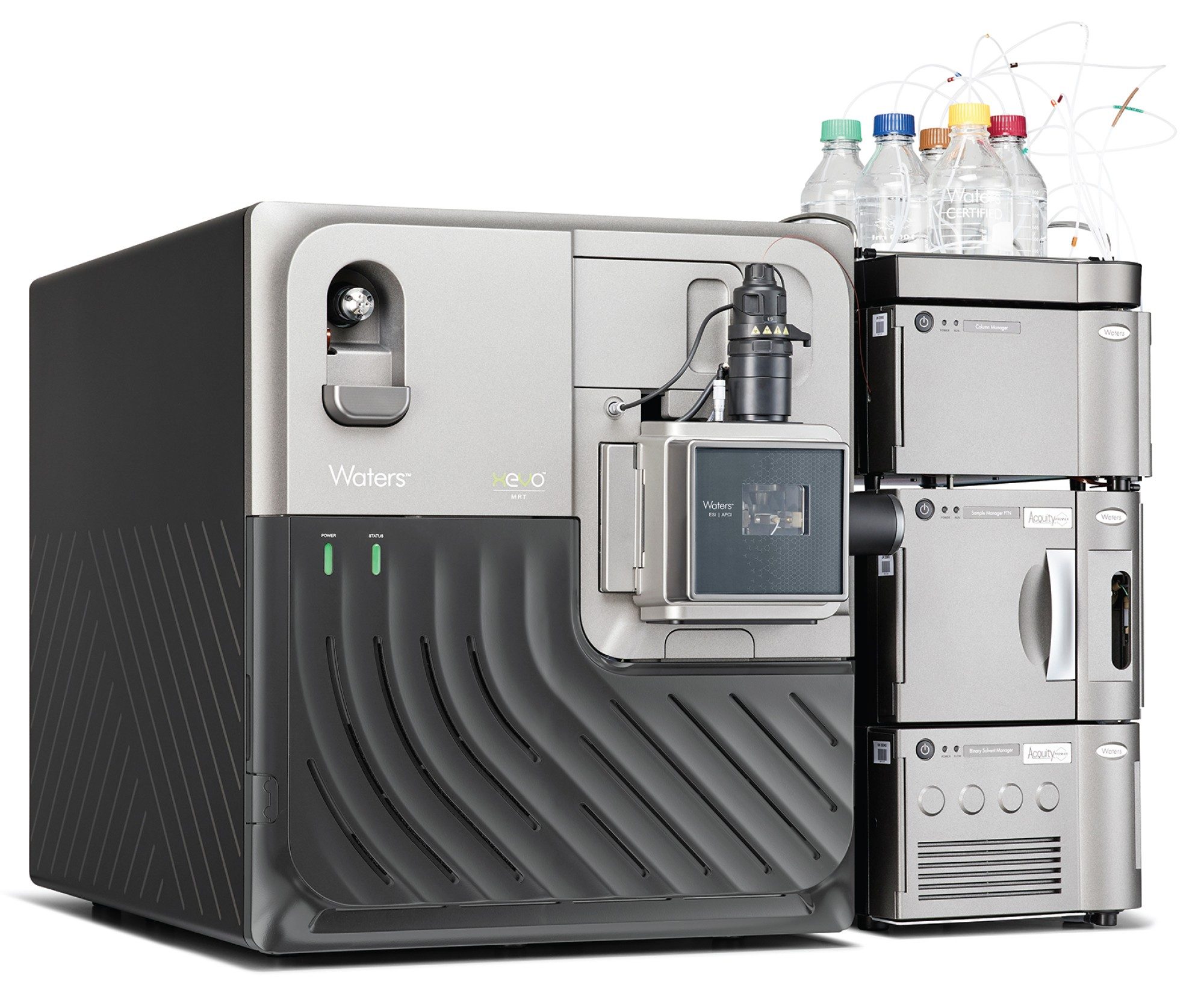
This application note describes a DDA approach to qualitatively determine markers. Curated fragment ions were then packaged for a targeted leachable quantitative analysis which was subsequently undertaken with the highly sensitive Tof-MRM acquisition mode.
Experimental
Sample Description
A commercial nasal spray was purchased and the neat solution was removed for analysis. The nasal container closure system was extracted and previously acquired and reported.7 The nasal spray solution was diluted 1 in 10 with isopropanol and spiked with the Waters E&L System Suitability Test (SST) mix (p/n: 186008063) and injected in triplicate.
Method Conditions
Data were acquired using a DDA method to determine appropriate fragment ions which were used to build the subsequent Tof-MRM method. Survey data were collected with a 10/20 Hz scan rate over the m/z range of 50-1200 m/z. MS/MS utilized a scan rate of 20/50 Hz with the top ten ions chosen for MS/MS. The switch criteria from survey to MS/MS used an intensity threshold exceeding 20,000 counts per second (cps), while the switch back to survey was below 10,000 cps or a 3 seconds timeout. Fragmentation utilized a collision energy ramp from 10-75 V over the full m/z range.
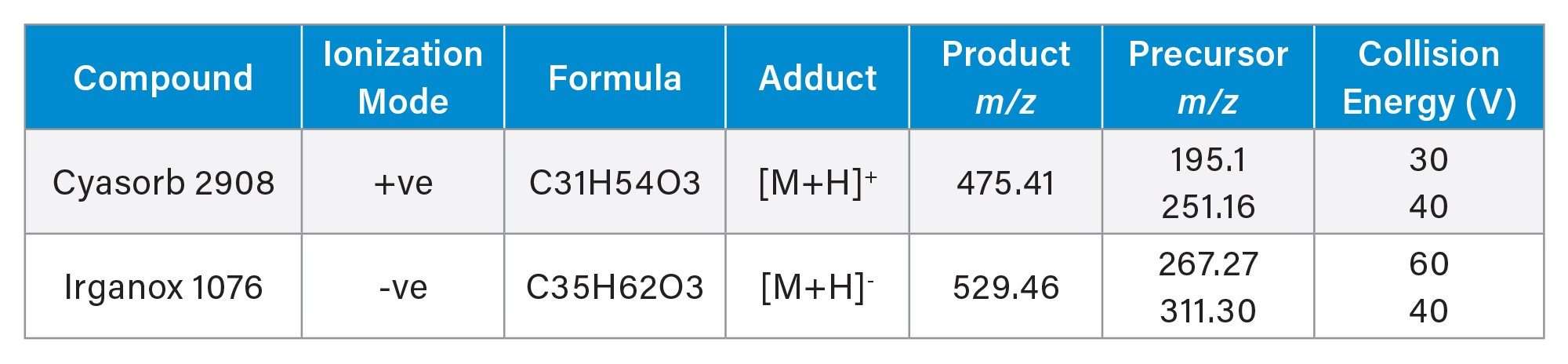
A Tof-MRM method was optimized using the identified DDA fragments and then used to quantify the SST mix spiked into the solution from the nasal spray device, as highlighted in Table 1.
LC Conditions
|
LC system: |
ACQUITY Premier System |
|
Column: |
CORTECS™ C18 Column, 90Å, 1.6 µm, 2.1 x 100 mm (p/n: 186007095) |
|
Column temperature: |
50 °C |
|
Injection volume: |
1 µL |
|
Flow rate: |
0.3 mL/min |
|
Mobile phase A: |
Water + 1 mM ammonium acetate + 0.1% formic acid |
|
Mobile phase B: |
Methanol |
|
Gradient: |
Mobile phase B was held at 2% for 0.5 minutes before being ramped to 98% over 5.5 minutes then held for 7 minutes. It then dropped to 2% for 2 minutes. |
MS Conditions
|
MS system: |
Xevo MRT Mass Spectrometer |
|
Ionization mode: |
ESI+ / ESI- |
|
Acquisition range: |
50-1200 m/z |
|
Source temperature: |
120 °C |
|
Desolvation temperature: |
550 °C |
|
Desolvation gas flow: |
800 L/hr |
|
Cone gas flow: |
50 L/hr |
|
Capillary voltage: |
2.5 kV |
|
Collision energy: |
Collision energy ramp: 10-75 eV |
|
Cone voltage: |
40 V |
Data Management
The waters_connect Software Platform was used for data acquisition with the UNIFI and MS Quan Applications used for data processing.
Results and Discussion
Initial assessment of the DDA method was undertaken by acquiring DDA acquisitions of the E&L SST mix and comparing it with MSE data (a data independent acquisition (DIA) technique reported previously7). All compounds in the SST mix were identified across all modes with a mass accuracy across all DDA injections and analytes ≤1 ppm (RMS).
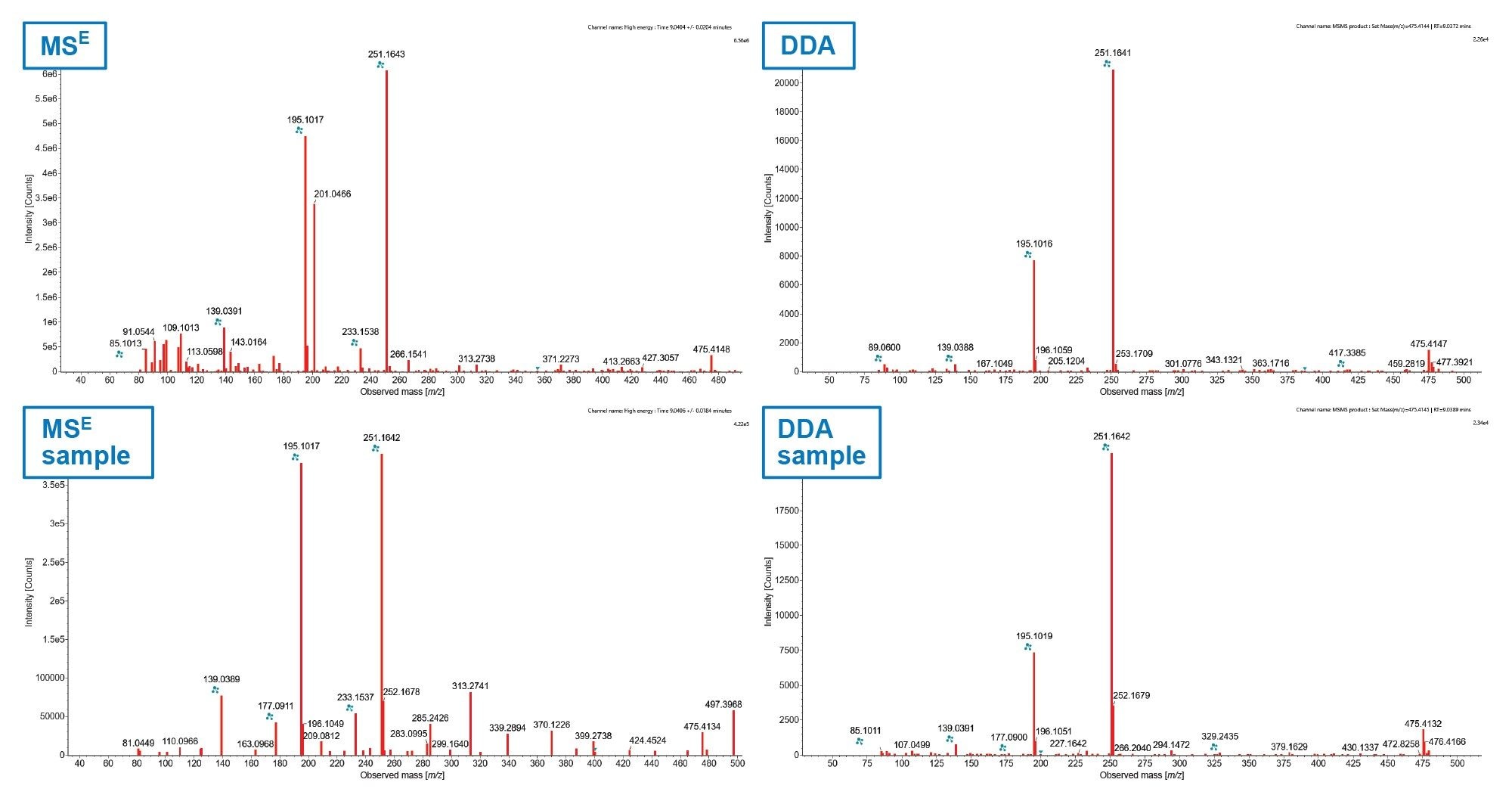
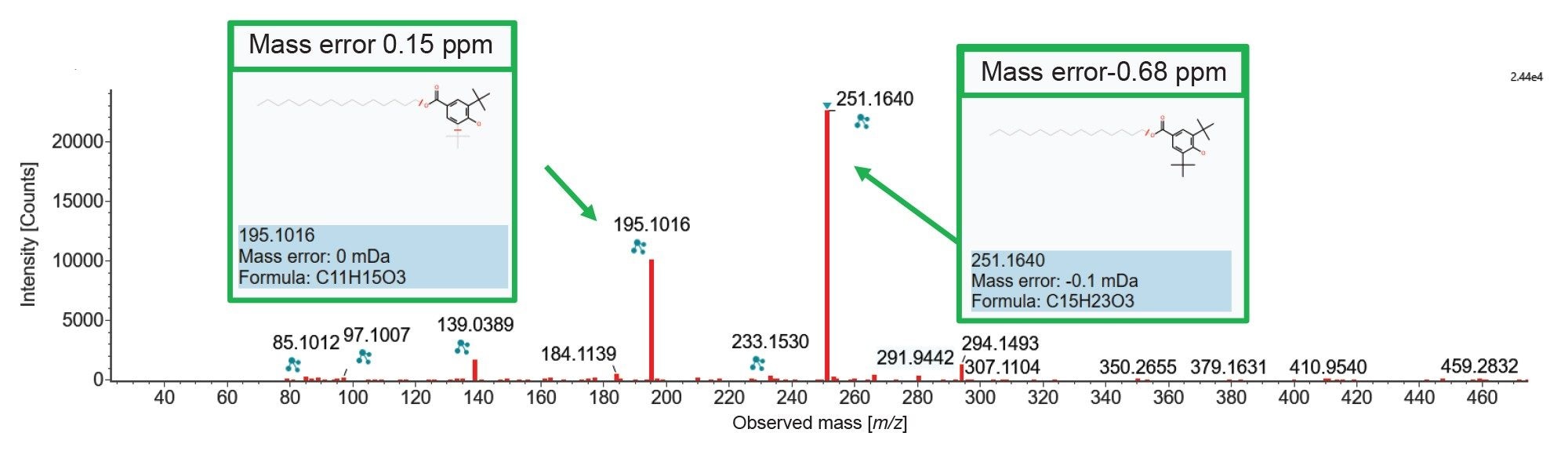
The DDA MS/MS spectra were compared to the MSE MS/MS spectra, highlighting highly specific spectra due to the reduction in fragment spectral peaks that were not attributed to the precursor. For example, for Cyasorb 2908, the number of peaks in the MS/MS spectra at retention time 9.08 minutes, was reduced by 33% in the DDA spectra (Figure 2). For the standards spiked into matrix, the number of peaks was reduced by 48% in the DDA spectra of Cyasorb 2908 compared to MSE (Figure 2). Compound specific peaks from the DDA processed spectra were selected for Tof-MRM transitions and optimized for quantitation (Figure 3).
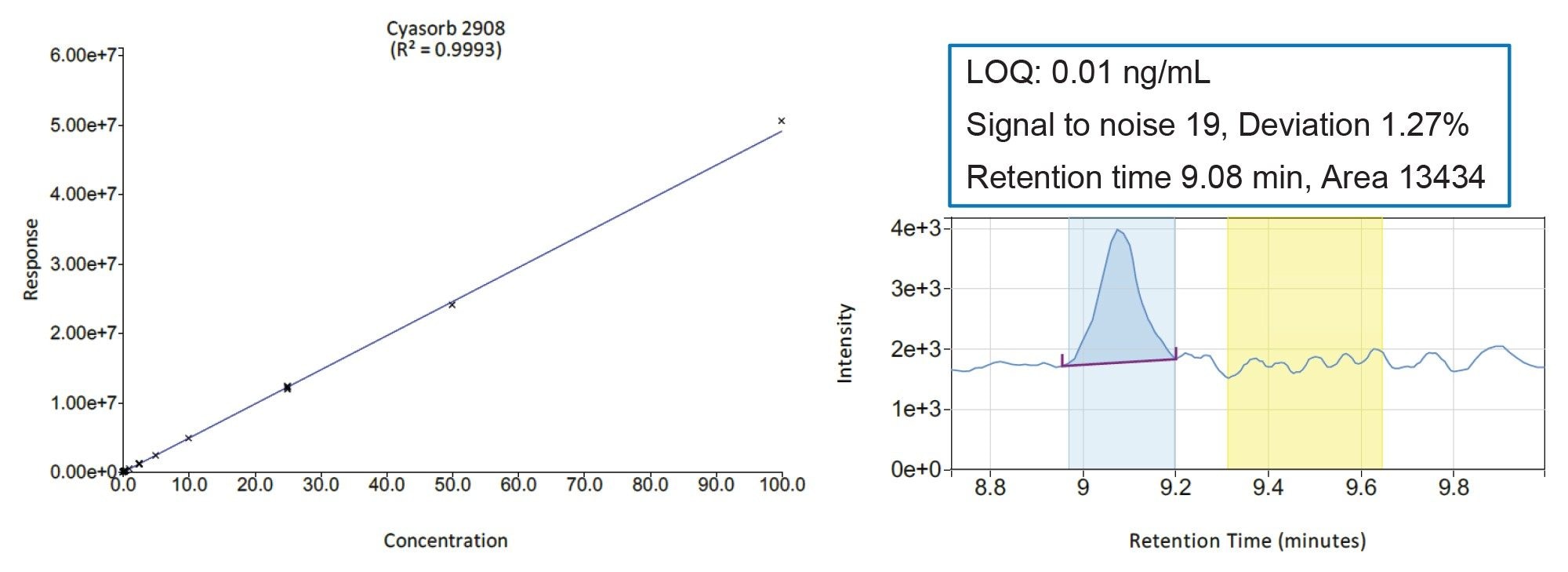
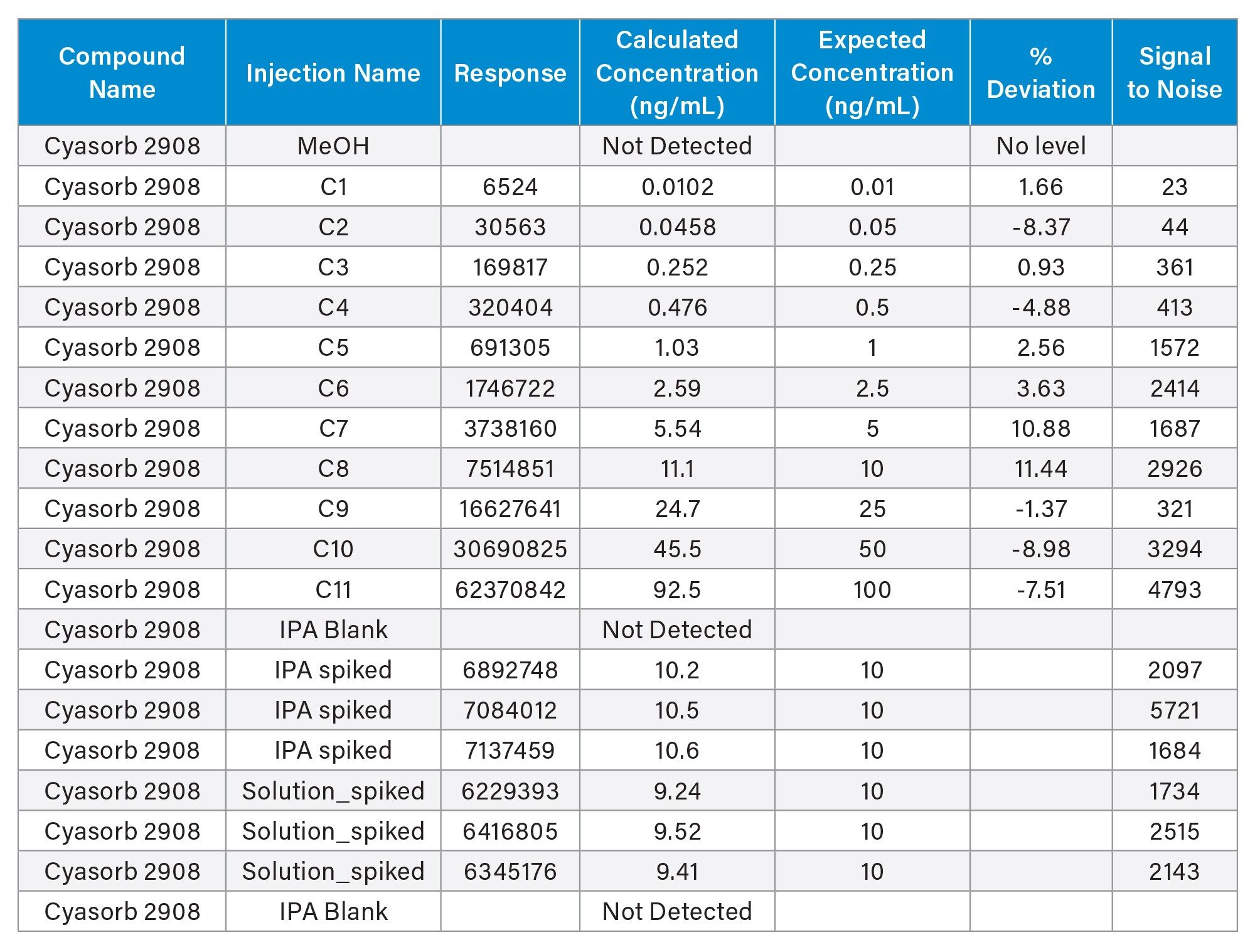
Tof-MRM mode utilizes an enhanced duty cycle (EDC) mode, where target ions are trapped and released from the collision cell to synchronize with the timing of the pusher for a given m/z range. Ion utilization over a specific m/z range approaches 100%, highly increasing the sensitivity of the assay.5 Calibration curves were created and acquired alongside the spiked nasal solution. The Cyasorb 2908 calibration curve was linear from 0.01 ng/mL (S/N = 19) to 100 ng/mL (R2 = 0.999) (Figure 4). The concentration of the spiked compound in the sample was calculated to be 9.39 ng/mL (actual concentration- 10 ng/mL) (Table 2).
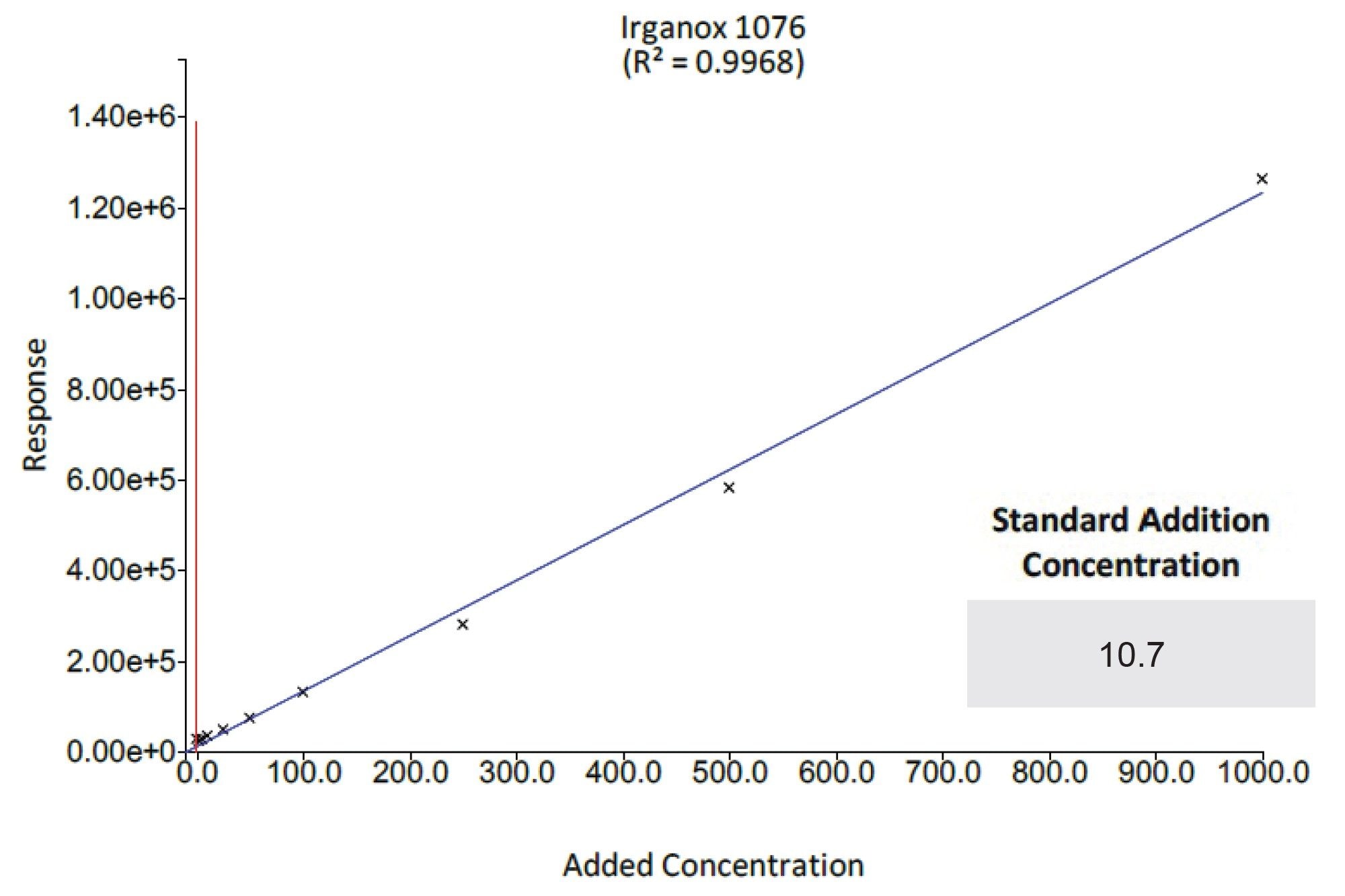
With leachable type compounds, it can be challenging to remove all presence from the blanks as these types of compounds potentially arise from the analysis process itself. When doing extractable screening, an extracted blank can be used to only screen for compounds relevant to the sample extraction, but this is not possible for quantitation. Where a true blank might not be possible, the MS Quan Application utilizes a standard addition tool to take this into account, where the background concentration is incorporated. Figure 5 highlights standard addition being applied to Irganox 1076, with which it is difficult to get a total blank. The concentration of the spiked compound in the sample was calculated to be 10.7 ng/mL (actual concentration- 10 ng/mL).
Conclusion
Compared with MSE, DDA produced more specific MS/MS spectra by substantially reducing fragment ion peaks that were not associated with the selected precursor. For E&L analysis, DDA isolates key fragment ions that can then be utilized to optimize targeted Tof-MRM methods. When combined with EDC acquisition, Tof-MRM enables highly sensitive, targeted quantitation using HRMS. Calibration curves and standard addition workflows in the MS Quan Application were used to calculate spiked concentrations in the nasal spray solution, with measured values within 10% of the expected concentrations.
The Xevo MRT Mass Spectrometer is an effective platform for both characterization of extractables with high mass accuracy data for confident identifications and also for targeted leachables analysis with the highly sensitive Tof-MRM mode.
References
- USP-NF/PF, <1664> Assessment of Drug Product Leachables Associated with Pharmaceutical Packaging/Delivery Systems. https://doi.usp.org/USPNF/USPNF_M7127_03_01.html
- USP-NF/PF, <1663> Assessment of Extractables Associated with Pharmaceutical Packaging/Delivery Systems. https://doi.usp.org/USPNF/PNF_M7126_03_01.html
- Norwood, D.; et al. Pharmaceutical Research. 25. 727–39, 2008.
- ISO 10993-18:2020 Biological evaluation of medical devices — Part 18: Chemical characterization of medical device materials within a risk management process, https://www.iso.org/standard/64750.html
- Daly, M.; Gethings, L.; Hughes, C.; Lock, R.; Syed, N. Tof MRM for the Quantification of Peptide Biomarkers in Human Glioblastoma with the Xevo MRT Mass Spectrometer. Waters Application Note 720008972. October 2025.
- Tomcyzk, N.; Wallace, A.; Richardson, K.; Grzyb, A.; Wildgoose, J. Targeted High Resolution Quantification with Tof-MRM and HD-MRM. Waters Application Brief, 720004728. June 2013.
- Sanig, R.; Kirk, J.; Gethings, L.; Lock, R. Increased Identification Confidence for Extractables Screening Using the Xevo MRT Mass Spectrometer. Waters Application Note 720008970. August 2025.
720009557, August 2026


