
Separating and Identifying Site-Specific Isomeric Amino Acids in GLP-1 Receptor Agonists on the Cyclic™ IMS P20 Mass Spectrometer
Dale Cooper Shepherd, Isabella Jones, Emma Marsden-Edwards
Waters Corporation, Wilmslow, United Kingdom
Published on July 06, 2026

Abstract
Isomeric amino acid impurities present a significant analytical challenge in the characterization of peptide-based therapeutics such as glucagon-like peptide receptor agonists (GLP-1RA). Modifications such as D-amino acid incorporation do not change peptide mass and often co-elute chromatographically, limiting detection and localization using conventional LC-MS workflows. These impurities have a potentially detrimental impact on stability and biological activity, and therefore a workflow to successfully analyze such molecules and address these analytical challenges would be advantageous.
This application note describes a workflow utilizing the unique geometry of the Waters Cyclic IMS P20 Mass Spectrometer to achieve site-specific identification of isomeric impurities in the GLP-1RA liraglutide. The high-resolution IMS enabled by multiple passes of the cyclic mobility device resolves isomers that remain inseparable by LC alone. In addition, product ion-level mobility analysis following pre-IMS fragmentation in combination with Wideband Enhancement (WBE) facilitates localization of structural differences within the peptide sequence for confident characterization of low-abundance isomeric impurities.
Benefits
- Strengthen peptide therapeutic characterization by adding isomer separation to routine workflows, using an integrated IMS-based approach
- Improve peptide structural insight with confident D-amino acid localization through Cyclic IMS separation of product ions
- Increase confidence in data through enhanced detection of low-abundance fragments with WBE across a broad m/z range
Introduction
Peptide‑based therapeutics have become an increasingly important class of medicines, with GLP‑1RAs playing a central role in the treatment of type 2 diabetes and obesity.1 These compounds combine high biological specificity with complex primary sequences and chemical modifications, placing significant demands on analytical workflows used for drug substance and product characterization.2,3 As interest grows in novel GLP-1RAs, robust impurity profiling strategies are required to ensure product quality, safety, and consistency.
During peptide synthesis, purification, and storage, degradation can occur and introduce structurally subtle impurities. Among the most challenging of these are isomeric amino acid variants, including D‑amino acid incorporation and other stereochemical modifications. Although such impurities do not alter the molecular mass of the peptide, they can perturb conformation, stability, and biological activity, making their detection and characterization particularly important. The analytical similarity between these isomeric species presents a significant challenge for conventional techniques.4–6
Reversed‑phase LC‑MS is routinely employed for peptide impurity analysis, yet isomeric peptides often exhibit highly similar retention behavior and indistinguishable MS spectra.3 Even when chromatographic resolution is improved through extended gradients, co-elution occurs, preventing confident identification of low-level isomeric impurities. Furthermore, while tandem MS provides sequence information, it cannot readily differentiate stereochemical differences, limiting its ability to localize isomeric amino acid residues within the peptide chain.
Ion mobility spectrometry (IMS) offers an orthogonal dimension of separation based on gas‑phase ion shape, size and charge, providing the capability to distinguish subtle structural differences.7 The Cyclic IMS P20 Mass Spectrometer enables high-resolution IMS by allowing ions to make multiple passes around the cyclic ion mobility device, making it well suited for resolving closely related peptide isomers that cannot be distinguished by LC or m/z alone. Indeed, this work demonstrates the additional separation afforded by multipass cyclic ion mobility to detect three distinct isomeric forms of liraglutide not separable by LC-MS alone.
However, while high-resolution precursor IMS can distinguish isomeric peptide species, it does not provide information on the location of structural differences within the peptide sequence itself. Therefore, this work employs a unique capability of the Cyclic IMS instrument geometry, namely pre-IMS fragmentation, to interrogate product ion-level ion mobilities to provide more localized structural insights. Using this approach, it is possible to narrow down or localize the exact amino acid site at which isomeric residue incorporation has occurred. A key challenge in applying this fragment‑level IMS approach to impurity analysis is the inherently low abundance of many isomeric species, which can limit confidence in structural interpretation. To address this, the WBE acquisition mode was used to increase signal intensity across a broad m/z range, improving sensitivity for product ions. For the liraglutide standard herein, pre-IMS fragmentation was used to show D-serine incorporation at positions 8 and 11, showing the potential to simplify downstream characterization efforts of isomeric impurities in GLP-1RAs and other synthetic peptide products.
Experimental
Sample Description
Liraglutide standard (Merck-Sigma SML3925) was prepared at 10 µg/mL in water and placed into a Waters QuanRecovery™ Vials with MaxPeak™ High Performance Surfaces (HPS) (12 x 32 mm) vials to prevent nonspecific binding to vials and improve recovery of peptides for reliable, consistent MS analysis.
LC Conditions
|
LC system: |
Waters ACQUITY™ Premier UPLC™ System (Binary) |
|
Vials: |
Waters QuanRecovery Vials with MaxPeak HPS (12 x 32 mm) Polypropylene 300 µL Screw Cap Vials (p/n: 186009186) |
|
Column: |
ACQUITY UPLC Peptide BEH™ C18 Column 130 Å 1.7 mm 2.1 x 100 mm (p/n: 186003555) |
|
Column temperature: |
45 °C |
|
Sample temperature: |
8 °C |
|
Injection volume: |
10 µL |
|
Flow rate: |
0.3 mL/min |
|
Mobile phase A1: |
H2O 0.1% formic acid |
|
Mobile phase B1: |
ACN 0.1% formic acid |
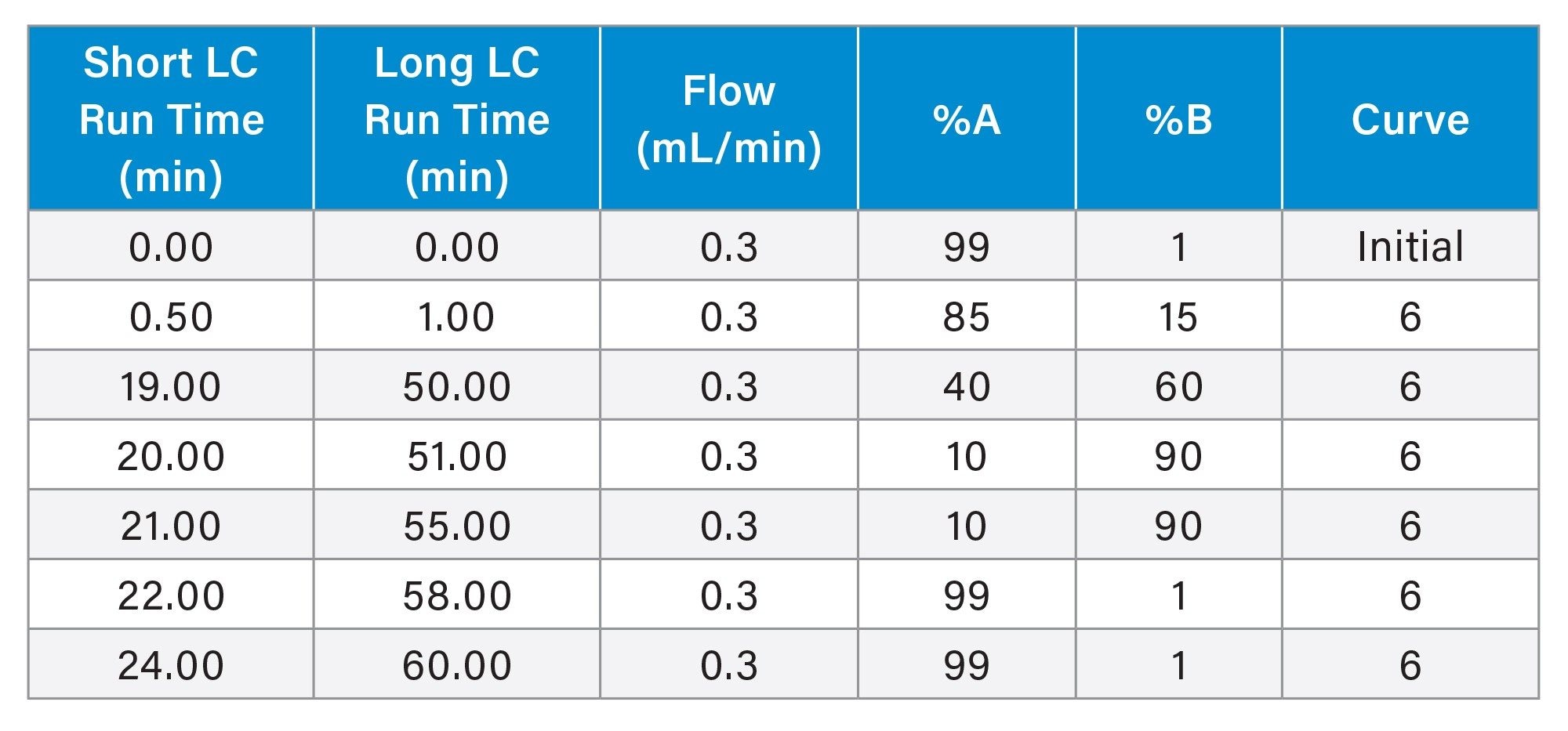
Gradient Table
MS Conditions
|
MS system: |
Waters Cyclic IMS P20 Mass Spectrometer |
|
Mode: |
Sensitivity |
|
Mass range: |
50-4000 m/z |
|
Polarity: |
Positive |
|
Scan time: |
0.3 seconds |
|
Cone voltage: |
40 V |
|
Source temperature: |
100 °C |
|
Desolvation temperature: |
550 °C |
|
Capillary voltage: |
2.0 kV |
|
Trap collision energy: |
45 eV |
Results and Discussion
In this work, an integrated LC–Cyclic IMS–MS workflow was applied to the GLP‑1RA liraglutide to investigate the separation and structural characterization of isomeric amino acid impurities present at sub‑percent levels. High‑resolution cyclic ion mobility was used to resolve co‑eluting isomeric species, while fragment‑level ion mobility analysis enabled site‑specific localization of amino acid isomerization. Multiple fragmentation techniques were employed prior to ion mobility separation to improve confidence in structural assignments and support interpretation of arrival time distribution (ATD) comparisons.
Separation of Coeluting Isomers
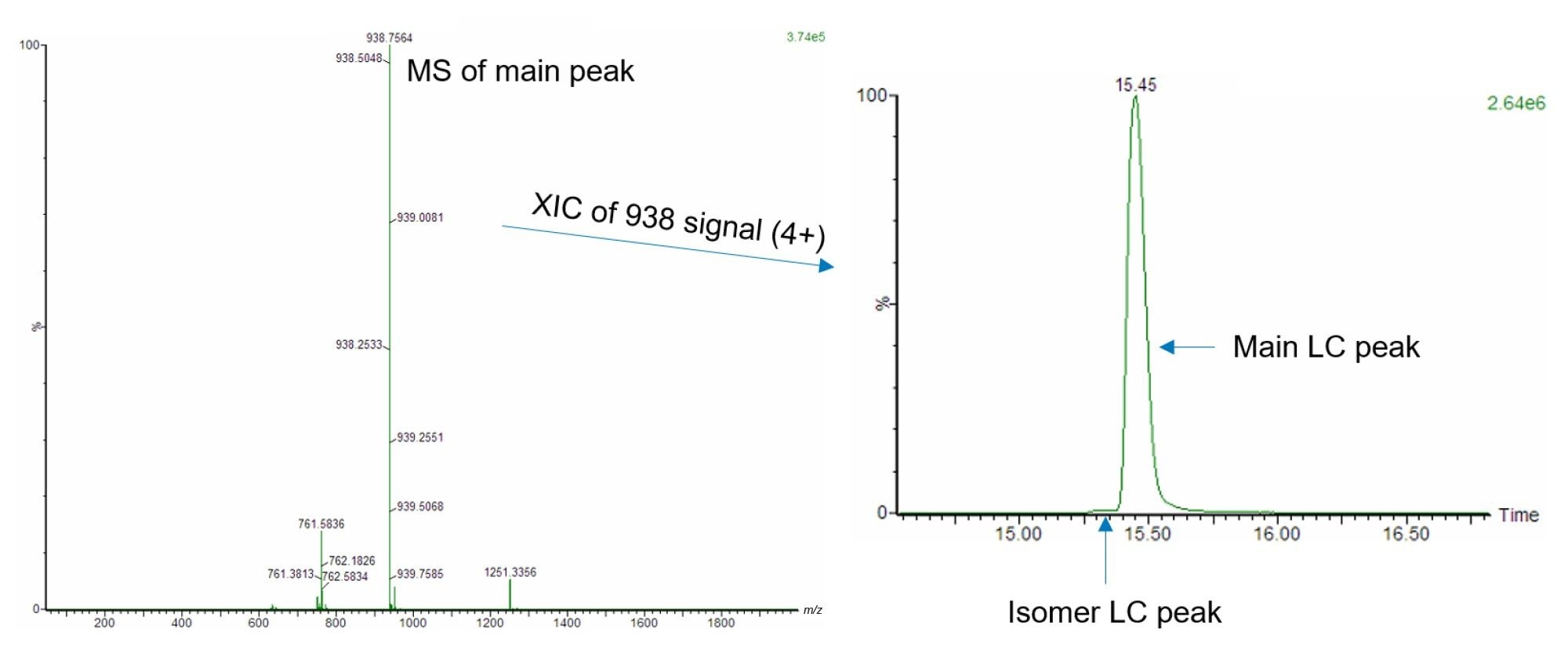
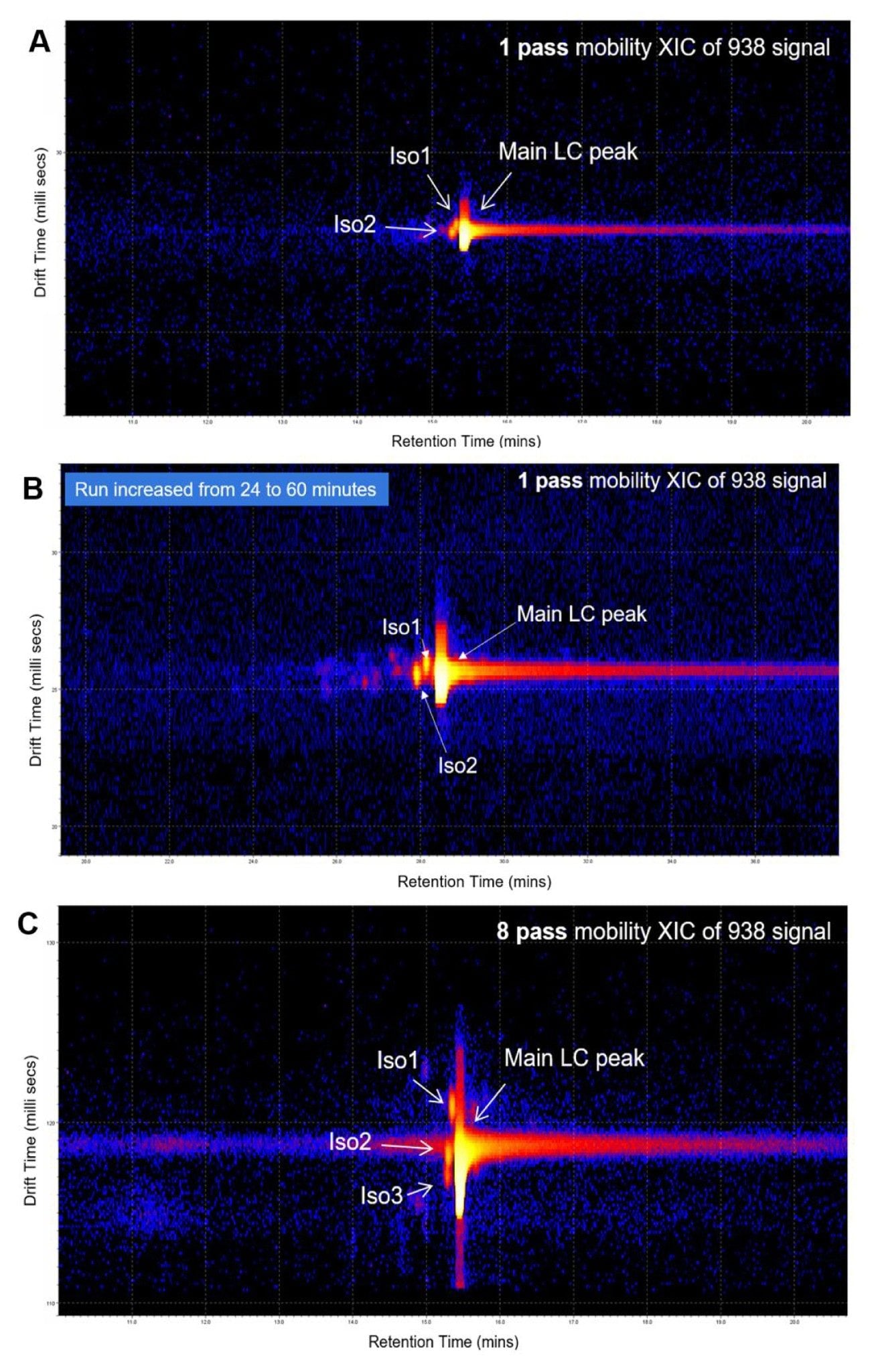
LC-MS analysis of liraglutide displayed an isomeric peak eluting prior to the main species (Figure 1). Upon inspection of the ion mobility data (Figure 2A), it was clear that the isomeric peak was in fact two species, Iso1 and Iso2 at 0.24 and 0.61%, respectively. To improve separation of these isomers, the LC method length was increased from 24 to 60 minutes and combined with single-pass IMS (Figure 2B). Next, high resolution cyclic IMS was employed, using multiple passes of the ion mobility device to provide yet more separation (Figure 2C). Indeed, after undergoing 8 passes around the cyclic device, a third, very low intensity species (Iso3, 0.09%), was observed, which was completely invisible in the long gradient single pass data.
Employing Pre-IMS Fragmentation to Localize Isomeric Amino Acid Incorporation
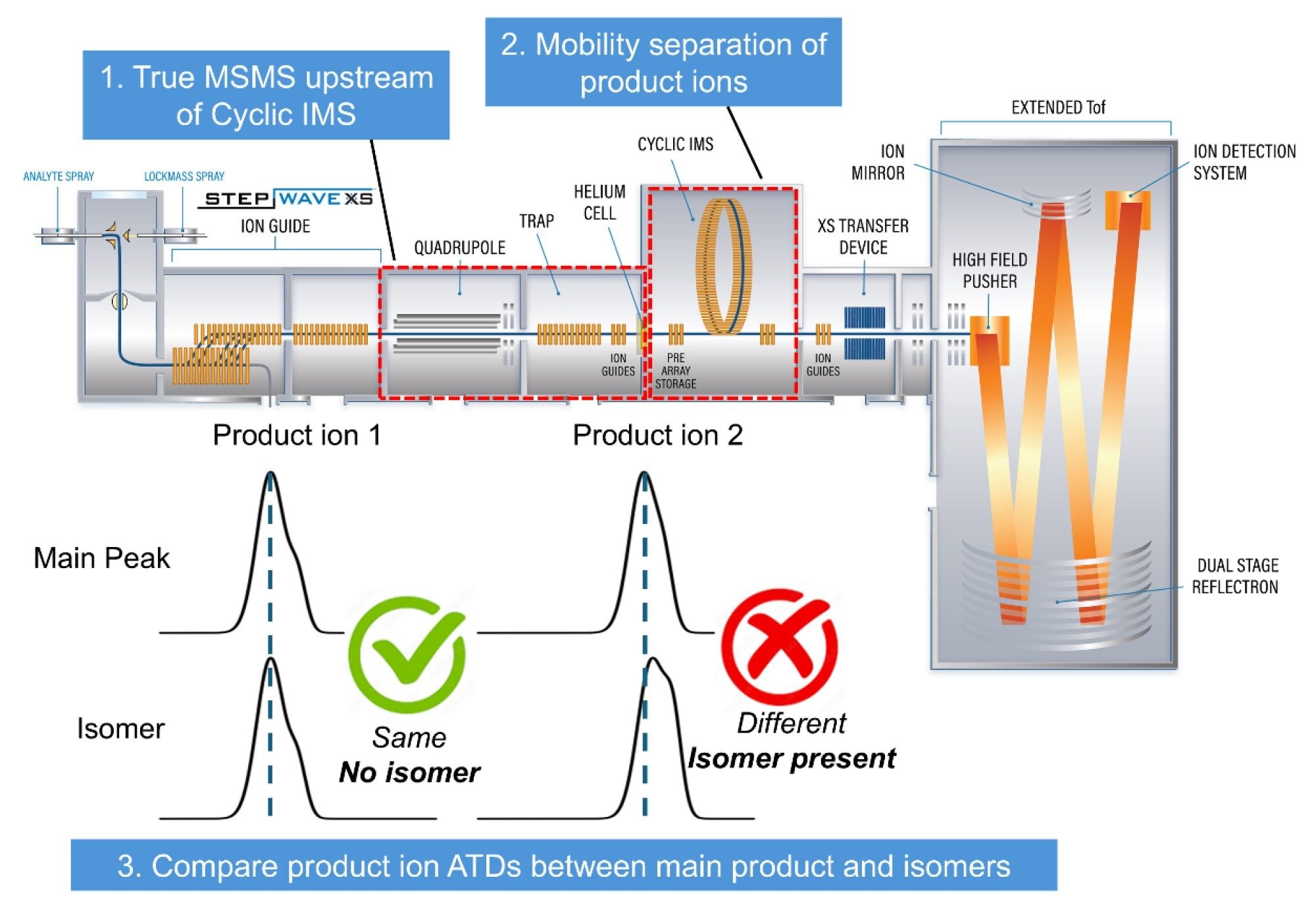
Synthetic peptide products are susceptible to impurities resulting from synthesis, impure starting materials and storage, resulting in potential isomeric residues such as isoaspartic acid and D-amino acid incorporation. To determine the specific site of isomerization, the unique geometry of the Cyclic IMS P20 Mass Spectrometer can be utilized. Given the position of the quadrupole prior to the cyclic ion mobility device, true MS/MS can be performed, either by CID or optional ECD, followed by mobility separation of the resulting product ions. This capability provides detailed structural information on the product ions, which can be compared between the peptide main product and any isomeric impurities (Figure 2). It generally follows that any fragment ions that show differences in appearance of their ATDs, be it peak apex or distribution shape, between the main product and the isomer, must contain the isomeric amino acid residue. This is akin to localization of post-translational modifications, where a mass difference observed at the intact peptide level is traced to a specific amino acid by virtue of mass shift at the fragment level. In practice, the extracted ion ATDs for the product ions are compared, pairwise, between the main product and the isomers to determine the residue where the differences begin to be observed.
WBE is Essential for Confident Product Ion Characterization
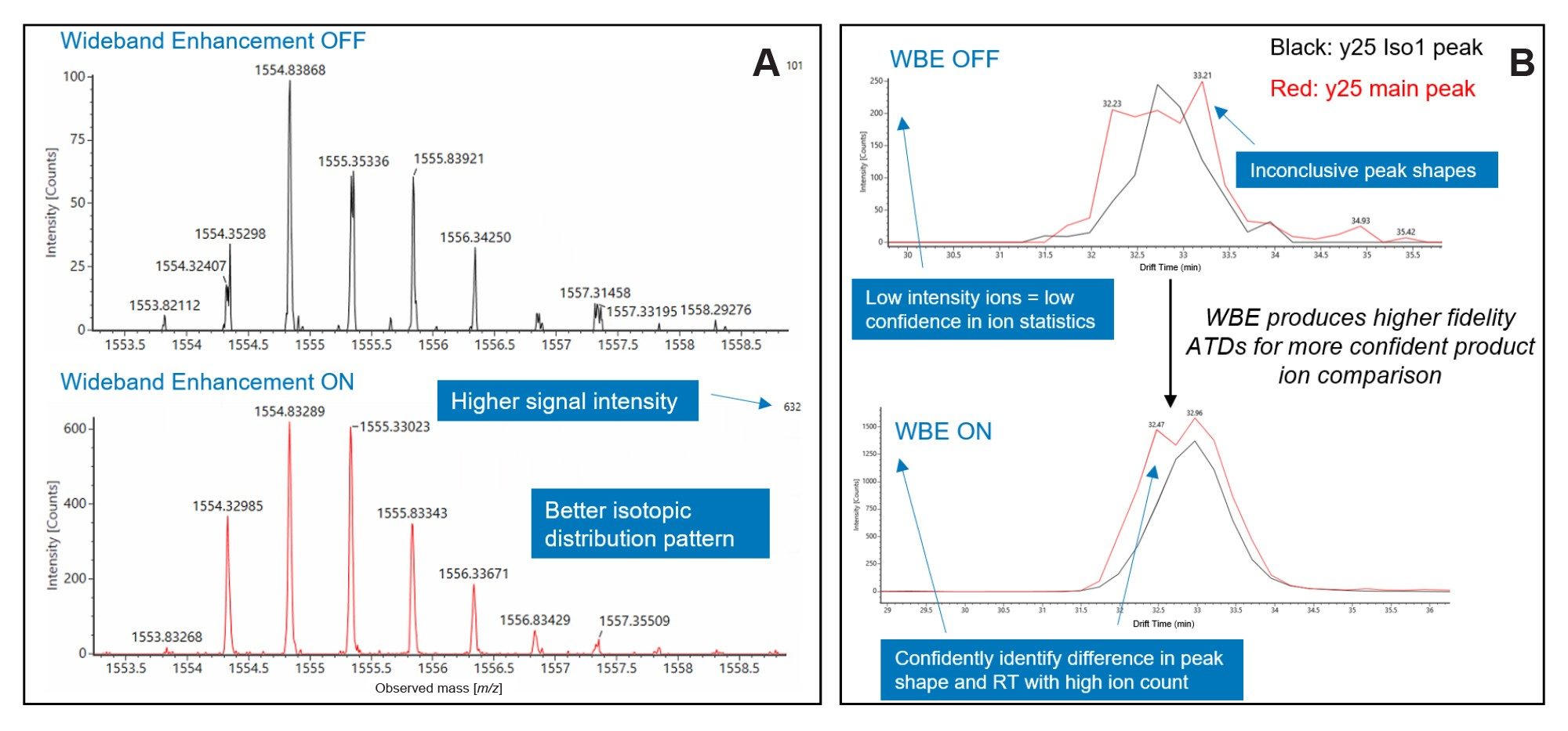
The pre-IMS fragmentation method relies on good signal intensity for the product ions in question in order to be able to make confident comparisons between ATDs. Although data can be sufficient for mass confirmation, in some cases low abundance leads to poor ATD peak fidelity, hampering the ability to compare their appearance. A new operating mode, WBE, drastically improves signal intensity (Figure 4A) while retaining ion mobility information, allowing confident comparison of ATD to determine the sites of isomeric residue incorporation (Figure 4B).
Localizing D-amino Acid Incorporation
For the two isomeric species above 0.1%, Iso1 and Iso2, a comprehensive series of b- and y- product ions were generated by pre-IMS CID, using WBE to enhance the sensitivity and improve fidelity for ATD comparison between the product ions of the isomers. ECD was also employed as an alternative fragmentation technique pre-IMS, generating c- and z- ions that support and provide further confidence in the results obtained. Single-pass and multi-pass IMS were used to confirm results and generate pair-wise comparisons of ATDs across the b- and y- ion series.
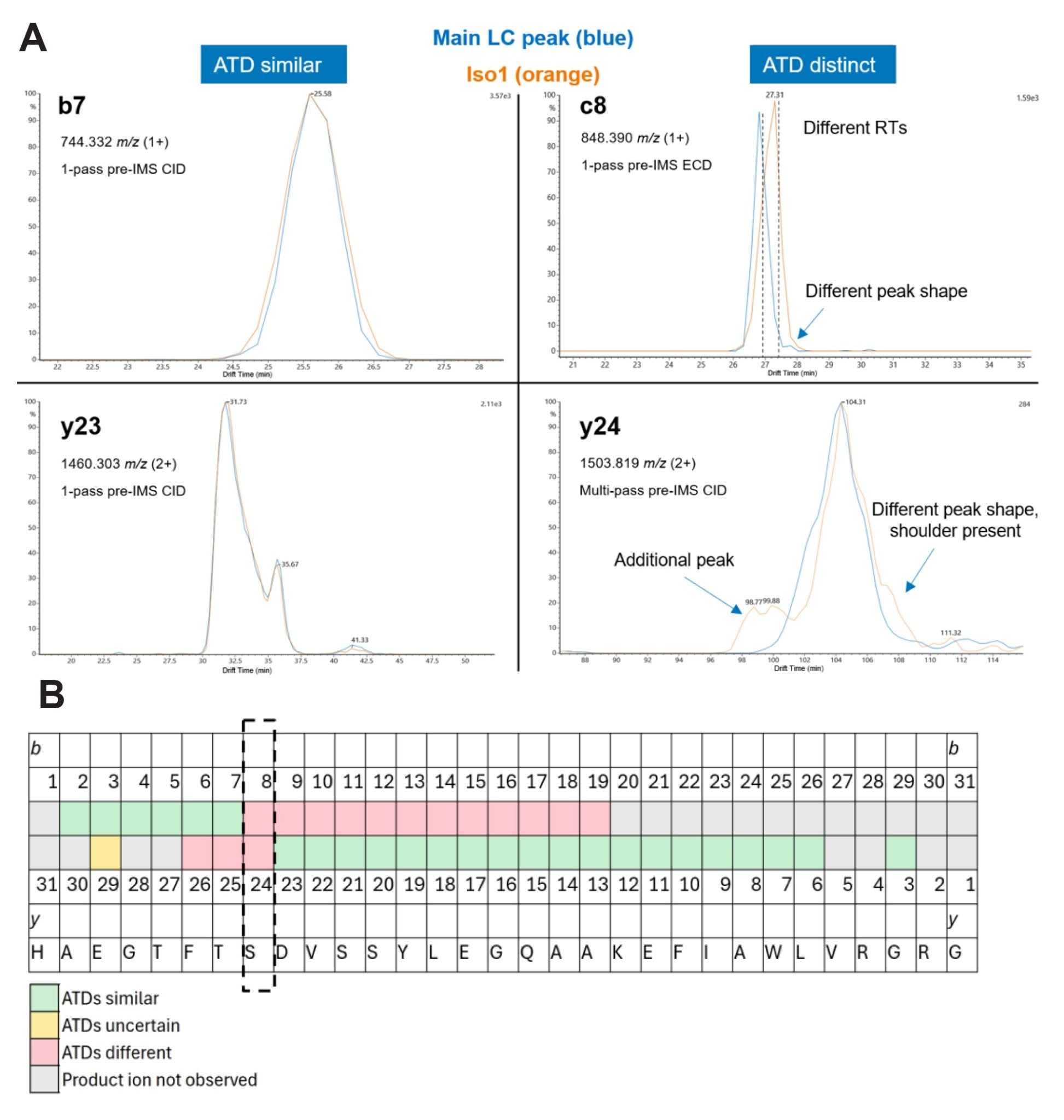
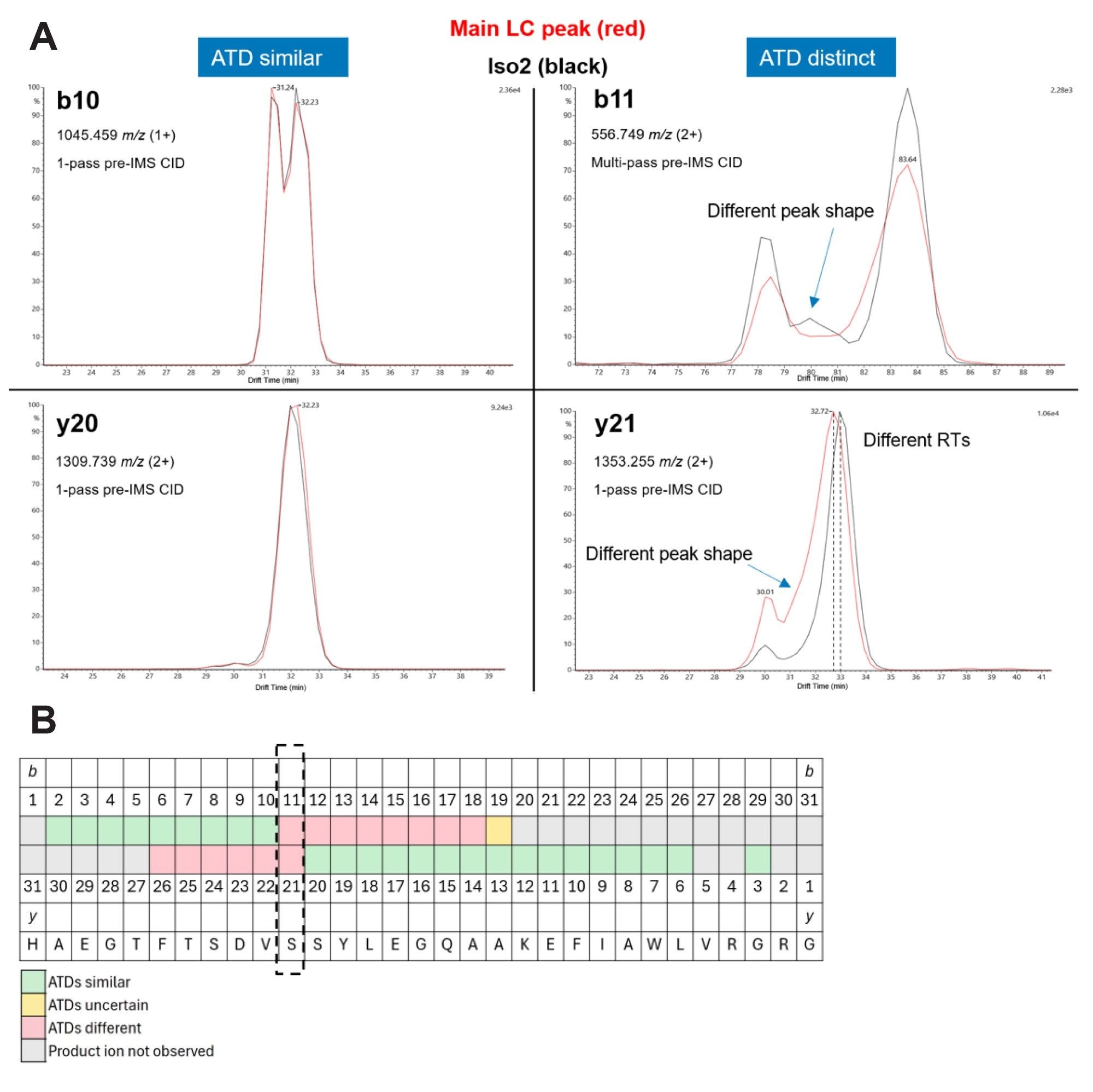
The comparison of the main product and Iso1 peak indicates isomerism at serines 8 (Figure 5) while comparison of main product and Iso2 peak pinpoints serine 11 as the site of isomerization (Figure 6). Both the ATD comparisons for the corresponding product ions determine the specific residue containing the D-amino acid, demonstrating the benefit of using high-resolution cyclic ion mobility technology with WBE capabilities to study and characterize GLP-1 peptide product ions.
Conclusion
As GLP-1RAs grow in therapeutic importance, reliable detection and characterization of isomeric species is critical for robust impurity profiling and structural understanding of these complex peptide drugs. In this application note, the Cyclic IMS P20 Mass Spectrometer is demonstrated to address this need by enabling characterization of structurally similar species that challenge conventional LC-MS, delivering deeper structural insight into complex mixtures. Using a liraglutide standard as an example, it was shown that high resolution multipass cyclic ion mobility enabled the detection of three low-lying isomeric impurities, one of which was invisible to standard LC-MS, even with a long gradient. Furthermore, the instrument’s unique geometry enabled pre-IMS fragmentation to localize two of the detected isomerizations to serines 8 and 11, suggesting D-amino acid incorporation. In combination with WBE, which improves ion transmission across a broad m/z range, sensitivity and arrival time distribution fidelity for low-intensity ions are increased.
Together, these capabilities enable clear separation of low-abundance isomeric species with product ion-level mobility providing residue-level localization of amino acid isomerization and more confident interpretation of fragment-level mobility data, potentially minimizing downstream characterization. Collectively, this establishes the Cyclic IMS P20 Mass Spectrometer as a powerful platform for confident resolution and structural characterization of complex isomeric peptide therapeutics.
References
- Mattingly, T.J.; Duru, E.E.; Conti, R.M. Adverse events administering glucagon-like peptide-1 receptor agonists: a cross-sectional study. Health Aff Sch. 2026;4(2):qxag023. doi:10.1093/haschl/qxag023
- Peri, R.V.; Anchan, H.; Jonnalagadda, K.; Varghese, R.; Gupta, P. Designing GLP-1 delivery: structural perspectives and formulation approaches for optimized therapy. Nutrition & Diabetes. 2025;15(1):53. doi:10.1038/s41387-025-00397-4
- Jones, K. Tools and Techniques for GLP-1 Analysis. June 9, 2025. https://www.chromatographyonline.com/view/tools-and-techniques-for-glp-1-analysis
- Jones, K. Analytical Challenges and Emerging Strategies for GLP-1 Analysis. LCGC International. October 31, 2025. https://www.chromatographyonline.com/view/analytical-challenges-and-emerging-strategies-for-glp-1-analysis
- Zhang, B.; Xu, W.; Yin, C.; Tang, Y. Characterization of low-level D-amino acid isomeric impurities of Semaglutide using liquid chromatography-high resolution tandem mass spectrometry. Journal of Pharmaceutical and Biomedical Analysis. 2023;224:115164. doi:10.1016/j.jpba.2022.115164
- De Groot, A.S.; et al. Immunogenicity risk assessment of synthetic peptide drugs and their impurities. Drug Discovery Today. 2023;28(10):103714. doi:10.1016/j.drudis.2023.103714
- Dodds, J.N.; Baker, E.S. Ion Mobility Spectrometry: Fundamental Concepts, Instrumentation, Applications, and the Road Ahead. J Am Soc Mass Spectrom. 2019;30(11):2185-2195. doi:10.1007/s13361-019-02288-2
Featured Products
720009476, July 2026


