
Considering Adopting the Cloud in Your Lab? What to Consider When Choosing Cloud Software

For many laboratories, the conversation around cloud and SaaS software has shifted from if to when. The benefits are well understood—reduced infrastructure, greater flexibility, and continuous updates—but the decision itself is rarely simple. Moving to the cloud is not just a technical change. It reshapes how your lab operates, scales, and collaborates.
The key is knowing what really matters as you evaluate your options.
Trusting the foundations: Data security, integrity, and compliance
Data sits at the heart of every lab, and understandably, it’s often the first concern when considering cloud adoption. For some, handing over responsibility for data storage can feel like a loss of control.
In reality, the right SaaS provider should enhance your control, not reduce it. Strong providers, like Waters, build platforms around security and compliance from the ground up, embedding best practices into everyday use rather than treating them as add-ons.
When assessing vendors, it’s worth focusing on a few critical areas:
- How data is encrypted both in transit and at rest
- The level of auditability and traceability built into the system
- Compliance with standards such as SOC 2® Type II, ISO 27001, and other, third-party risk assessments
- How user access and permissions are managed
A well-designed cloud platform often brings a level of consistency and robustness that’s difficult to maintain internally.
Scaling without friction
Growth is a positive challenge—but it can quickly expose the limitations of traditional systems. Whether it’s increasing sample volumes, new instrumentation, or expanding across sites, many on-premises platforms struggle to keep pace without significant intervention.
Cloud software changes that dynamic. It allows labs to expand naturally, without the need for new servers, complex upgrades, or long lead times. New users can be added quickly, additional workflows configured with minimal disruption, and multi-site operations supported more seamlessly. What this really means is that your systems stop being a constraint. Instead, they become an enabler of growth.
Looking beyond the headline cost
Cost is often one of the first comparisons made—and one of the most misunderstood. While SaaS introduces a subscription model, the true comparison lies in the total cost of ownership over time. On-premises systems come with ongoing demands that are easy to underestimate: maintaining hardware, managing backups, handling upgrades, and allocating internal IT resources.
Cloud solutions shift much of that burden externally. It’s not just about reducing costs, but about making them more predictable and easier to manage. A useful way to frame the decision is to consider:
- The hidden operational costs that are tied to your current system
- The internal effort required to maintain and support it
- The financial and operational impact of downtime or system failures
Often, the value of SaaS becomes clearer when these factors are taken into account.
Creating a connected lab environment
Laboratories rarely operate with a single, isolated system. Instruments, laboratory information management systems (LIMS), electronic notebooks (ELNs), reporting tools, and business systems all need to exchange data efficiently. Cloud platforms are typically designed with this interconnected reality in mind. They make it easier to integrate systems, automate data flows, and reduce manual intervention.
That said, it’s important to look closely at how any new solution will fit into your existing ecosystem. Considering things like whether the platform offers modern APIs for integration, how easily it can exchange data with your current systems, and the flexibility to adapt as your technology landscape evolves is important.
The goal isn’t just to replace one system, it’s to create a more cohesive and efficient digital environment.
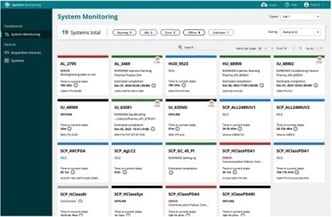
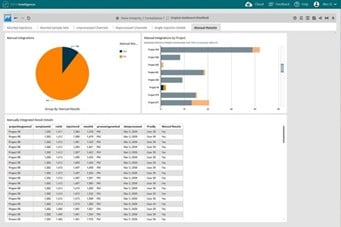
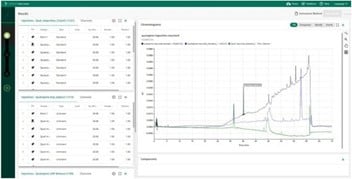
With on-premises solutions, data remains in a silo, and it can be difficult to consolidate instruments, software, and collaborators. Software solutions built on cloud platforms can overcome these challenges. With Waters Data Intelligence Software, you can reduce risk and strengthen data integrity, while maintaining confident audit-readiness through dynamic dashboards that enable vigilant monitoring of key data integrity measures, which reduces the high cost of audit preparation and the risk of adverse findings. Cloud solutions like Waters System Monitoring Software support scalability of your lab by providing detailed information on the usage and performance of instruments, so you can optimize system and lab efficiency and make data-driven decisions on your lab productivity. Finally, cloud technologies, like Empower Data Viewer take the connected lab even further by providing the capability to share data across labs and partners and easily grant your team members or partners worldwide, web-based access to explore data, minimizing productivity delays.
Adoption hinges on user experience
User experience plays a critical role in whether a new platform is embraced or resisted. Cloud-based software has, in many cases, raised the bar here. Cleaner interfaces, browser-based access, and more intuitive workflows can make a noticeable difference to day-to-day usability. This isn’t just about convenience. Better usability leads to:
- Faster onboarding for new team members
- More consistent data entry
- Reduced errors and workarounds
- Higher overall engagement with the system
Ultimately, the success of any software investment depends on the people using it.
Choosing a partner, not just a platform
One of the defining characteristics of SaaS is that it evolves continuously. Updates are delivered regularly, features improve over time, and the platform grows alongside its users. That makes your choice of provider particularly important. You’re not just selecting a system as it exists today; you’re aligning with a team that will shape its future.
| What to look for what choosing a cloud software partner | |
| Transparency | Can they effectively communicate a clear and active product roadmap? |
| Expertise | Do they have a strong understanding of laboratory environments? |
| Support | Do they show a commitment to customer support and long-term success? |
The right partner won’t just deliver software—they’ll help you keep moving forward.
Moving forward with confidence
Adopting cloud software doesn’t have to be a leap into the unknown. Many laboratories take a phased approach, building confidence over time and expanding their use as they see value. What matters most is having the right guidance at each stage—from initial evaluation through to implementation and beyond.
At Waters, we work with laboratories to make that journey practical, manageable, and worthwhile. Our focus is not just on delivering cloud solutions, but on supporting the people and processes that make them successful.
Because moving to the cloud isn’t just about modernizing your technology. It’s about creating a lab that’s ready for whatever comes next. Learn more about Waters Cloud Platform and our software solutions.
Or, if you’d like to take the next step, arrange a demo of any of our cloud software solutions:
Arrange a Demo of Waters System Monitoring Software
Related posts

Two Truths and a Lie About Solid‑Core Particle Efficiency
Solid‑core (or superficially porous) particles are the foundation of solid core HPLC columns and have earned a reputation for delivering higher efficiency separations than similarly sized, fully porous particles. Chromatographers see this play out repeatedly across small- and large-molecule applications under a wide range of operating conditions. But why solid‑core particles are more efficient is…
Advancing Oligonucleotide Analysis with GTxResolve Microflow Columns with MaxPeak Premier Technology
As modern biopharma pipelines evolve toward increasingly complex modalities, such as therapeutic oligonucleotides, analytical scientists face a familiar pressure: obtain higher sensitivity from smaller samples, while reducing solvent consumption and workflow burden. Microflow liquid chromatography (LC) has emerged as a powerful strategy to meet these demands, and recent column technology innovations are pushing performance even…

Unlocking Faster, More Confident Antibody Analytics with Modern Protein A Affinity Chromatography
Biologics developers today face unprecedented pressure: tighter timelines, increasingly complex antibody formats, and a growing need for real-time process understanding. Yet many analytical workflows still rely on methods that can’t deliver the speed, sensitivity, or depth required for modern bioprocessing. That’s where advances in Protein A (ProA) affinity chromatography are making a meaningful difference, reshaping…
Popular Topics
ACQUITY QDa (17) bioanalysis (12) biologics (17) biopharma (50) biopharmaceutical (59) biotherapeutics (24) case study (20) chromatography (14) data integrity (23) food analysis (12) HPLC (15) informatics (12) LC-MS (27) liquid chromatography (LC) (25) mass detection (16) mass spectrometry (MS) (61) method development (13) particle analysis (21)